How to Choose a Selectorised Strength Machine
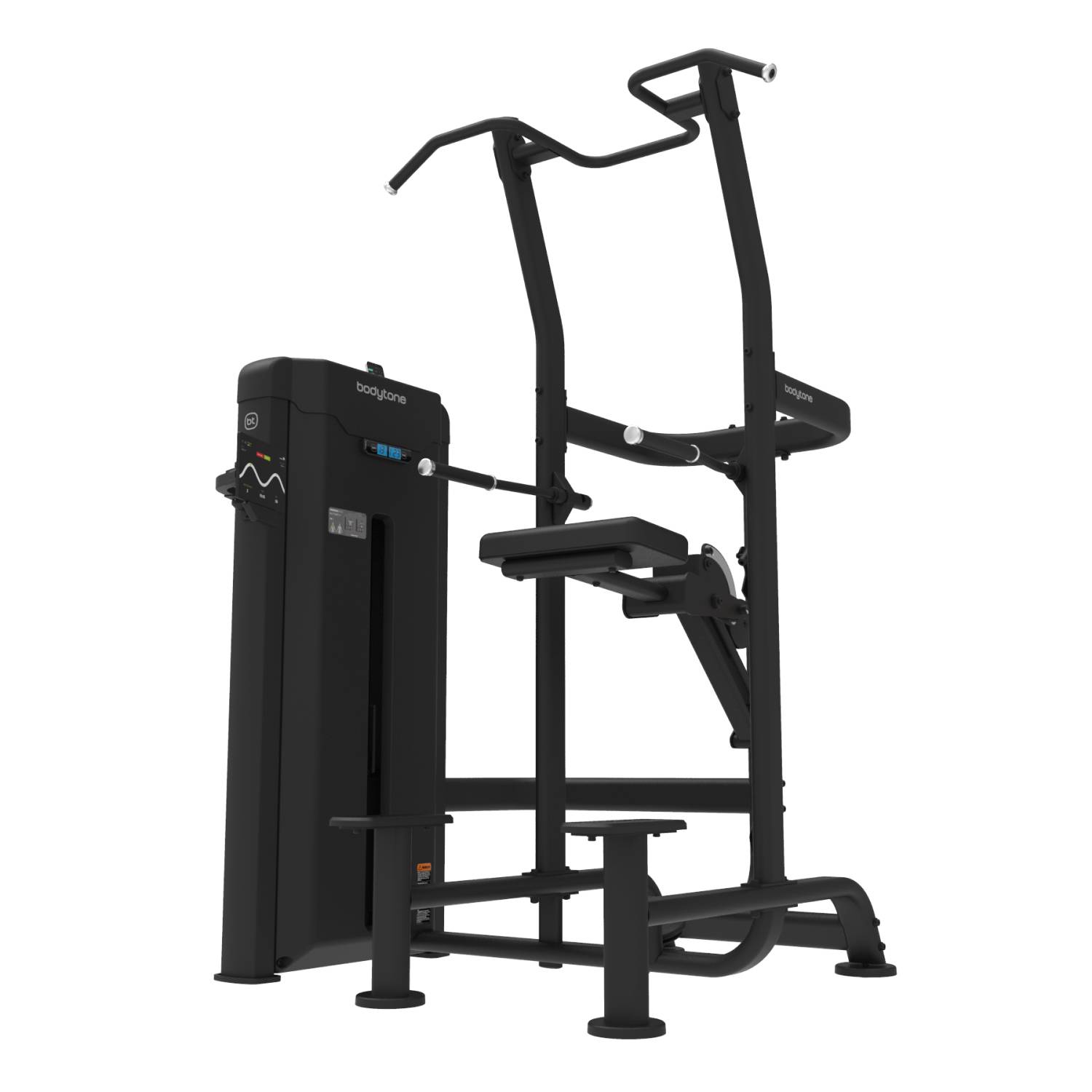
A selectorised machine is the safest way to put an untrained user under load, which is exactly why so much of a commercial gym floor is built around it. Choosing the right one is not a matter of brand preference: it is a sequence of six checks – objective, user profile, available floor area, load range and adjustability, build quality and safety, and finally budget over the service life. This buying guide runs through them in the order a specification should be written.
1. Start from the objective of the room
Define what the room is meant to deliver before naming a single station. Strength development, general conditioning, body composition, return to activity after injury – each objective pulls the selection in a different direction. A room built for strength needs a chest press, a leg press, a lat pulldown and a row as its backbone. A room built for general conditioning benefits more from a broader spread of smaller stations covering every major muscle group. A room built for reconditioning needs low starting loads and easy entry and exit above everything else.
This first decision also settles the number of stations. It is better to cover the main muscle groups completely with eight well-chosen machines than to cover them partially with twelve.
2. Match the machine to the user profile
Selectorised machines exist because beginners need stability and a controlled path. The weight stack and pin format is immediately readable, the movement is constrained, and the risk of a badly loaded joint is low. That makes them the right first answer for open-access sites, hotels, corporate rooms and municipal facilities where no instructor is permanently on the floor.
Where the user base is mixed, check that the adjustment range genuinely covers it: seat height, back pad, lever arm and range-limiter settings should suit a short beginner and a tall experienced user without tools. Ask the supplier for the adjustment ranges in the technical sheet rather than assuming them.
3. Measure the floor area honestly
Measure the zone where the equipment will stand, then deduct circulation aisles and the safety distance around each moving part. The number that matters is not the footprint of the frame but the footprint plus the user envelope declared by the manufacturer. Compact multi-station units make sense where floor area is genuinely tight, since several exercises share one base and one set of clearances. Where space allows, separate stations are easier to service and let several users train at once.
Two practical points get forgotten at this stage: the door and corridor dimensions on the delivery route, and the floor loading of the room once every machine and weight stack is in place.
4. Check the load range and the adjustability
An adjustable stack lets a user start light and progress in controlled steps. Two things matter more than the maximum figure: how small the smallest increment is, because that is what governs progression for beginners and for reconditioning work, and whether an add-on weight is available for the strongest users. A stack that only steps in large jumps will frustrate exactly the two populations a guided machine is meant to serve.
Multi-function stations that offer several exercises on one frame are attractive on paper. They are the right choice when floor area is the binding constraint, and the wrong one when throughput is, because only one person can use the frame at a time.
5. Judge build quality and safety, not the finish
Robustness is where professional and consumer equipment separate. For indoor stationary training equipment the applicable reference is EN ISO 20957-1 class S, the class intended for professional and commercial use, and it should appear in the quotation, not just in a sales conversation. Beyond the standard, look at the frame section and welds, the bearing and pulley quality, the cable specification and its replacement interval, the upholstery grade, and the weight-selection system: the pin must seat positively and the stack must be shrouded so that nothing can be trapped.
Ask two commercial questions at the same time: how long spare parts remain available, and what the warranty actually covers on frame, moving parts and upholstery. Those answers separate suppliers far more reliably than the catalogue photographs do.
6. Set the budget over the service life
Selectorised machines exist at very different price points, and the honest comparison is not purchase price but cost per year of commercial service. On a floor running from early morning to late evening, the difference in bearings, cables and upholstery shows within the first year. The sensible compromise is fewer stations of the correct class rather than more stations of a lighter one, with the remaining stations added in a second phase.
Two ranges illustrate the two ends of a professional specification: the Gold Line selectorised machines for a full commercial floor, and the Bodytone Forza FH stations where a compact, high-traffic layout is required. The complete selectorised machines range sits between and around them.
Frequently asked questions
Which stations should a first order cover?
Cover the major movement patterns before adding isolation work: a push, a pull, a leg press or squat pattern, a hip pattern and a trunk station. Isolation machines are a second-phase purchase in almost every project.
Do selectorised machines suit experienced users?
Yes, as accessory and volume work alongside a free-weight area. They are not a replacement for barbell training for an experienced athlete, and they are not meant to be.
What maintenance should be planned?
A written inspection schedule covering cable condition, pin and stack function, bolt torque, pad condition and machine levelling. Cables and upholstery are the consumable items; agree their availability with the supplier before ordering.
Can a room be equipped in phases?
Yes, and it is often the better plan. Specify the full layout at the start so that the second phase drops into reserved positions instead of forcing a rearrangement of the whole floor.
From specification to layout
Choosing a selectorised strength machine is a specification exercise, not a shopping exercise: objective, users, space, load range, build quality, budget. Work through those six points and the shortlist writes itself. Send us the room dimensions and the intended use and we will return a station-by-station layout with a costed proposal: request a quote.