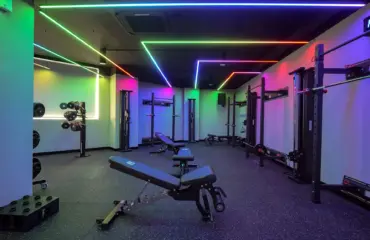
What a Gym Offers: 10 Benefits of Strength Training

Strength training is now one of the most widely practised forms of physical activity, and the growth of the sector is visible everywhere: fitness clubs in every neighbourhood, supplements on every supermarket shelf. For an operator, that popularity translates into a simple planning question, because the benefits members come for are produced by a specific kind of floor and a specific kind of equipment. This article sets out what a gym actually offers its members, through ten benefits of regular strength training, and what each of them asks of your equipment list.
Why strength training is worth the floor space
A well-shaped physique and its aesthetic side are only the surface benefits of strength training. There are many further positives tied to health and general wellbeing. Just as importantly, strength training has a positive effect on the body at every age. Whether a member is 15, 30, 45 or 70, training in a gym can improve their health, and that is what makes the strength floor the most durable part of a commercial offer rather than a passing trend.
Ten benefits of strength training
Strength training carries many benefits. Not all of them are visible at first glance, the way greater muscle mass or lower body fat are. Some of them relate to wellbeing or to health improvement. The benefits can therefore be felt on several levels at once.
A lack of physical activity will sooner or later have a negative impact on daily life. Any physical activity, and regular exercise in particular, will have a positive impact on wellbeing and health.
1. Improving body composition
This is the main reason most people start strength training. Gym exercise strengthens the skeletal muscles and builds significant muscle mass. Physical activity in a gym also burns a large amount of fat tissue, and HIIT training is the most effective format for that purpose, dumbbell complexes among them. Remember that building muscle mass is a far harder and above all far longer process than reducing body fat: increase training volume session by session.
2. Increased strength
Strength training is the best way to increase strength. The level reached depends not only on the muscular system but mainly on the nervous system. To increase maximal strength, sets of one to five repetitions work best, although maximal testing should be performed relatively rarely.
3. Stronger joints, tendons and ligaments
A major benefit of strength training is the reinforcement of the skeletal system. Strength training strengthens not only the muscles but every tissue involved in a given movement. It is no accident that the benefits of strength training are used at various stages of rehabilitation.
Strengthening joints and tendons matters particularly for older people. Regular training acts as a preventive measure against fractures and musculoskeletal injuries, which is why care homes and rehabilitation centres now specify guided-load equipment as standard.
4. Better wellbeing
Strength training also affects mental health. Research shows that physical exercise increases the secretion of the so-called happiness hormones, the endorphins, which has a positive impact on the body and on general wellbeing. Many people train in the morning before work and are more effective at work as a result, an effect linked to the release of endorphins and dopamine.
5. Lower injury risk
Stronger muscles, joints and tendons mean a lower risk of mechanical injury. This is another aspect of strength training that gym users often underestimate.
The reduction in injury risk comes indirectly from greater stabilisation. Strength exercises reinforce the deep muscles, which influences overall stability and protects the body in the situations most likely to cause injury. Better stability means, among other things, a lower risk of falling.
6. Greater muscular endurance
The benefits of strength training are valuable to athletes from other disciplines too. A well-built gym programme is useful for footballers, volleyball players, combat athletes and even motorsport competitors. Better endurance, better jumping ability and greater strength all transfer into specific sporting disciplines.
7. Lower risk of excess weight
Regular physical activity makes it harder to put weight on. Thanks to gym training, calorie requirements are far higher than for someone with a sedentary lifestyle. That means that even with a diet that is not entirely healthy, fat tissue is stored to a lesser extent.
8. Better consistency and routine
Regularity and consistency in training carry over into other areas of life. Many people notice similar mechanisms between sport and business: in both, regular and demanding work contributes to the eventual result.
Strength training is built on consistently repeated activity. Taking on regular strength sessions makes it easier to hold discipline at work or in other daily activities.
9. Correct posture
Strength training builds muscle mass, but it also strengthens the skeleton and the core muscles. Efficient, strong muscles contribute to good body posture.
Postural faults very often result from muscular imbalance, the body compensating for weakened tissue elsewhere. Strength training is therefore not only a matter of prevention but also of correcting postural faults.
10. Improved stabilisation
This point was partly covered under injury risk. Strength training improves the level of stabilisation by reinforcing the deep muscles.
If this aspect matters particularly to your members, multi-joint exercises are worth programming, such as:
- squats,
- deadlifts,
- bench press,
- barbell rows,
- planks.
All five require a rack or cage, a barbell and an impact-absorbing floor rather than a machine, which is the single biggest difference between a machine-only floor and a complete one. Our racks and cages are built for that free-weight zone.
What this means for your equipment list
Ten benefits do not come from ten machines. Points 1, 2 and 6 call for progressive load, which means barbells, racks and enough plate capacity. Points 3, 5, 9 and 10 call for controlled, repeatable movement, which is where guided-load equipment earns its place, particularly for older members and for rehabilitation work. Points 4, 7 and 8 are behavioural: they depend on a floor where members can train without waiting, which is a question of station count rather than of brand. Our comparison of machines and free weights works through that arbitration, and our professional strength training machines cover the guided-load side.
Does strength training burn fat?
Any form of physical activity has a positive impact on the rate at which calories are burned, and that rule applies to strength training too. It is worth noting, however, that strength training itself does not burn a significant number of calories. Its far greater benefits are increased strength, increased muscle mass and improved bone density, which matters for older people.
What benefits does strength training bring women?
Although the gym is still mainly associated with how men spend their free time, women are increasingly using dumbbells and barbells. Strength training allows women to strengthen the body and build an aesthetic physique. Shaped thighs and toned glutes are impossible to achieve without strength training.
Beyond the visual side, strength training helps improve wellbeing. For women this matters particularly, because hormonal fluctuations often have a negative effect on how they feel.
Reaching those goals requires a suitable training plan focused on the priority areas. That does not mean women should skip training the back or the shoulders. Every muscle group has to be strengthened, for the sake of proper structural balance. For an operator, the practical consequence is a glute and lower-body zone sized realistically against demand rather than treated as an afterthought.
Equipping the floor that delivers these benefits
Every benefit above is produced by equipment: progressive load for strength, guided load for safe repetition, free weights for stabilisation, and enough stations that members are not queuing. Light In Fitness has equipped professional sites since 2013 and sizes the strength floor against your surface, your ceiling height and your peak attendance. Send us your floor plan and your member profile and we will come back with a costed layout: request a quote.