Guided-Load Squat and Calf Machine: Everything You Need to Know
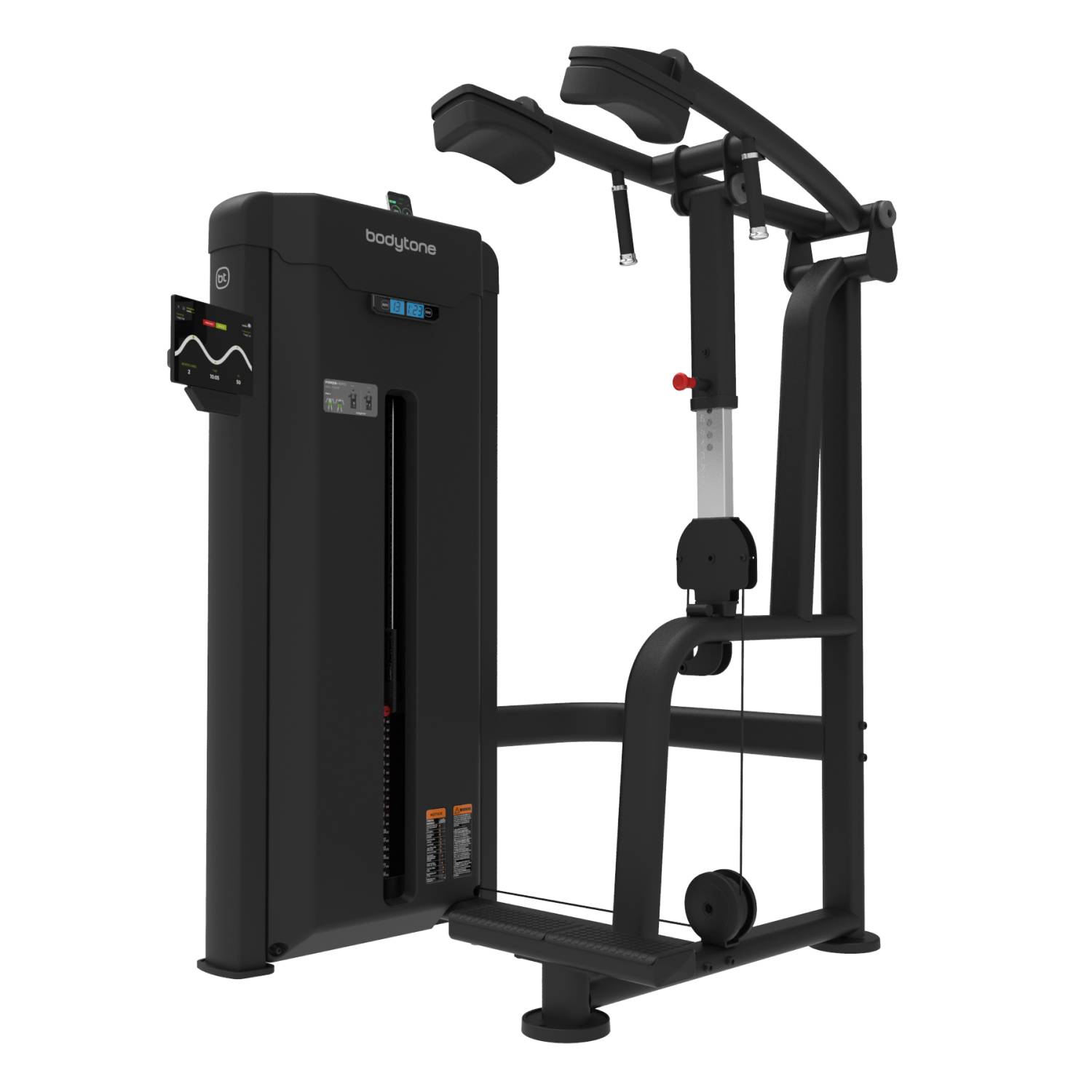
The squat and calf machine with guided load is one of the few stations that covers two distinct lower-body patterns on a single footprint. This guide explains what the machine does, which muscles it loads, how to use it correctly and what a gym operator, a sports club, a hotel or a rehabilitation centre should check before specifying one.
What a guided-load squat and calf machine is
It is a lower-body station built around a guided load path, designed to target the quadriceps, the hamstrings, the calves and the glutes. Two main movements are performed on it: the squat and the calf raise, with the heels lifted against resistance. Because the path is guided, the user follows a fixed line instead of balancing a free bar, which is what makes the station usable by a wide range of members with limited supervision.
Indoor equipment of this type intended for a commercial site is built and certified to EN ISO 20957-1 class S, the professional class for supervised commercial facilities. On a busy floor, that class is the baseline, not an option, and it is the first line to check on a quotation.
Why it belongs on a professional floor
Targeted strength work. The station loads the quadriceps, hamstrings, calves and glutes directly, so a member can build lower-body strength without needing a spotter or a full free-weight platform.
Stability and balance. Working against a guided resistance also recruits the stabilising muscles of the legs, which improves overall balance, an argument that carries weight in care homes and rehabilitation settings as much as in a club.
Functional strength. The patterns trained here are the ones used every day: climbing stairs, standing up from a chair, carrying a load. That is the benefit most easily explained to an older member or a returning one.
Injury prevention. Stronger legs protect the knees and the ankles, which is why this station is often placed early in a strength circuit rather than at the end.
Sports performance. Any discipline that demands leg power benefits from loaded squat and calf work, and the guided path lets an athlete push volume without the technical cost of a barbell session.
How to use the machine correctly
The sequence below is what should be printed on the instruction plate and covered during a member induction.
1. Set the seat or shoulder pads. Adjust the station to the user’s height and build first. Nothing else works if the starting position is wrong.
2. Position the feet. Place the feet on the platform, firmly anchored, with the toes turned slightly outwards.
3. Select the load. Start light and increase progressively as strength improves. On a shared floor, the first load a member selects should always be lighter than they think they need.
4. Perform the squat. Bend the knees and descend slowly until the thighs are parallel to the floor, then drive back up through the heels to the starting position.
5. Perform the calf raise. Place the front part of the feet on the platform, lift the heels as high as possible while contracting the calves, then lower slowly back to the start.
6. Repeat with control. Keep the form and the breathing steady through every repetition rather than chasing the number of reps.
7. Keep safety first. A member unsure of the movement should ask a fitness professional. In a supervised facility that is a one-minute conversation, and it is what prevents most of the incidents on a strength floor.
Stations of this kind sit naturally next to a leg press and a hack squat. The Bodytone SRX50 standing calf and squat station is a typical example of the format, and it fits within a wider plate-loaded machines layout without adding a second footprint for the calf work.
Frequently asked questions
Which muscles does the machine target?
Mainly the quadriceps, the hamstrings, the calves and the glutes, with the stabilising muscles of the leg recruited throughout the movement.
How often should a member use it?
That depends on their goals and their condition. Two to three sessions a week with at least one rest day between sessions is the usual starting frame recommended by coaches.
Can the intensity be varied?
Yes. Change the load, the number of repetitions and the number of sets. Advanced members also use supersets and drop sets on this station, which is one reason it needs enough clearance around it to avoid queueing.
Is it suitable for beginners?
Yes. Start with a light load and learn the movement before increasing the intensity. The guided path is precisely what makes the station a reasonable first strength machine for a new member.
Are there contraindications?
Members with joint problems or with knee or ankle injuries may have contraindications. The station should carry a clear notice recommending medical advice before starting, and staff should be able to point to it.
Can it be combined with other leg exercises?
Yes. Lunges, leg extensions and deadlifts complement it well, and a complete lower-body circuit usually pairs this station with a leg press and a hamstring machine from the same professional strength range.
Conclusion
The guided-load squat and calf machine is an efficient way to build and reinforce lower-body strength on a commercial floor, and it does it on a single footprint. Specify it to EN ISO 20957-1 class S, plan the clearance around the platform, and make sure the instruction plate is legible from the standing position. Send us your floor plan and your user profile and we will come back with a layout and a costed proposal: request a quote.