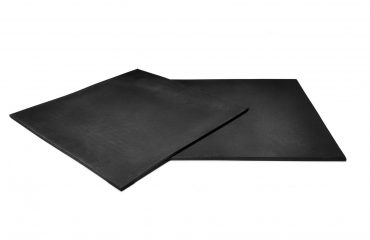
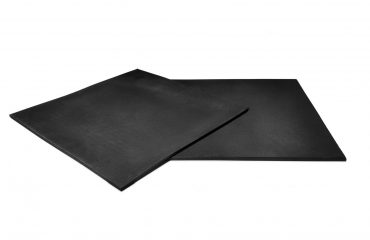
Bfl and Cfl Fire-Rated Rubber Floor Tiles for Public Buildings

In any building open to the public, fire safety is not negotiable, and the floor is part of the fire load. Rubber floor tiles classified Bfl and Cfl are manufactured to slow the spread of fire across the floor surface and to satisfy the reaction-to-fire requirements that apply to public premises. This article covers what those classes mean, where the tiles are used, the technical characteristics that matter, and what to check before you order.
What Bfl and Cfl actually mean
Reaction to fire in Europe is classified under EN 13501-1. The suffix fl identifies the classification applied to floorings specifically, which is why a floor tile is described as Bfl or Cfl rather than simply B or C. Bfl denotes a very limited contribution to fire and Cfl a limited contribution to fire.
Two points cause most of the confusion on site. First, a flooring class is not interchangeable with a wall or ceiling class, so a B rating quoted without the fl suffix does not answer a flooring question. Second, the reaction-to-fire class is normally stated together with a smoke index. Always order against the exact designation written on the product declaration of performance, complete with its smoke index, and never against an abbreviated version of it.
Why the class matters in a public building
Tiles in these classes are made from flame-retardant compounds that slow the spread of fire, which is what buys evacuation time. That is the whole purpose of specifying a class rather than buying a rubber tile and hoping. In a fire, the difference between a floor that propagates and a floor that resists is measured in the minutes an occupant needs to reach an exit.
The reaction-to-fire class required for a given room is set by the national building and fire regulations that apply to the premises, and those differ from country to country. Confirm the required class with the authority or the fire engineer for your project before ordering, and specify the tile against that class. Our fire-rated rubber tiles are supplied with the classification documentation for exactly this reason.
Where these tiles are used
| Setting | Why the classified floor is specified |
|---|---|
| Schools and universities | High occupancy of young users and defined evacuation routes make the floor class part of the safety case |
| Shopping centres | Very large daily footfall and long escape distances; the floor must not contribute to spread |
| Hospitals, public administration and libraries | Occupants who may evacuate slowly, and premises where the fire strategy is scrutinised |
| Gyms and sports halls inside public buildings | Impact protection and reaction to fire are required from the same product |
Durability and maintenance
These tiles are built to last. Made from high-quality compounds, they hold up under intensive use, and their resistance to impact, wear and chemicals suits demanding environments. The modular format allows quick, flexible installation, and the dense surface makes cleaning straightforward.
Maintenance is undemanding but not optional. Plan daily cleaning to remove dust and grit, which is what abrades a rubber surface over time, and periodic inspection for signs of wear. Replace damaged tiles promptly: the modular format means a damaged area can be swapped out rather than the whole floor lifted, but a gap in the floor is a gap in the fire performance.
Comfort and slip resistance
Beyond the fire class, a rubber floor gives users a surface with good grip, which reduces the risk of slips and falls, and a degree of shock absorption that protects joints and muscles. In a public building where people are on their feet for long periods, that is a genuine day-to-day benefit rather than a specification detail.
What to check before ordering
- The declared class, in full. Ask for the declaration of performance and read the complete designation, smoke index included. Anything less is not a specification.
- The area and the subfloor. Measure the surface to be covered and establish the condition and level of the substrate, since that governs tile thickness and the laying method.
- The use of the room. A corridor, a gym and a plant room do not need the same thickness or the same surface.
- Installation. Follow the manufacturer instructions to the letter. Incorrect installation compromises the fire protection you paid for and shortens the life of the floor.
- Total cost. The purchase price of a classified tile is higher than that of an unclassified covering. Its durability and low maintenance requirement are what make it economic over the life of the building.
Regulatory compliance
Non-compliance is not a paperwork problem. Using an unclassified or wrongly classified covering in premises where a class is required can expose the operator to enforcement action and, more seriously, compromises the safety of the people in the building. Keep the declaration of performance for the installed product with the fire safety file for the premises.
Environmental requirements sit alongside the fire class rather than replacing it. Where recycled content or low-emission manufacturing is part of your specification, state it separately and ask for it to be evidenced separately, so that neither requirement is used to imply the other.
Frequently asked questions
Is Bfl better than Cfl?
Bfl denotes a lower contribution to fire than Cfl. Better is whichever class the fire strategy for your building requires: specifying above the requirement costs money without adding compliance, and specifying below it is not compliant at all.
Can I use the same tile throughout the building?
Only if the required class is the same throughout, which it often is not. Escape routes are typically the most demanding areas. Establish the class room by room before you consolidate the order.
Do fire-rated tiles work for a gym floor?
Yes. A classified tile can carry both the reaction-to-fire performance and the impact protection a training area needs, which is why they are specified in sports halls inside public premises. Compare them against the standard rubber gym flooring tiles and rubber flooring rolls ranges when the class is not required.
How long does a rubber floor last?
That depends on traffic, cleaning regime and the loads dropped on it, so no single figure applies. What shortens it predictably is grit left on the surface and damaged tiles left in place.
Conclusion
A Bfl or Cfl rubber floor is more than a safety accessory. It is a documented part of the fire strategy of the building, and it also delivers durability, grip and shock absorption for the people who use the space every day. Get the required class confirmed, order against the full declared designation, and have the floor laid to the manufacturer instructions.
Light In Fitness supplies and installs classified rubber flooring for public premises, sports halls and gyms. Send us the surface area, the room use and the class required by your fire strategy, and we will return a specification and an itemised quotation: request a quote.
Réalisations documentées
- Dalles et sols sportifs : livraisons documentées – plusieurs chantiers
- Sol sportif extérieur, square Georges-Vallerey – Taverny (95)
- Functional Rig inox – installations sur trois continents
- iGreenMill, tapis de course extérieur – installations sur trois continents
Sources et références
- Arrêté du 19 avril 2011 – étiquetage des produits de construction ou de revêtement de mur ou de sol sur leurs émissions de polluants volatils (Légifrance)
- Ministère de la Transition écologique – étiquetage des produits de construction : classes d’émission A+ à C