How to Choose a Professional Treadmill for Your Gym
The treadmill is the easiest machine to sell and the easiest one to regret. On a spec sheet everything looks perfect. In a real gym a treadmill does not live a theoretical life: it runs for hours, it absorbs heavy footstrikes, it collects dust, and it very quickly becomes the yardstick by which your members judge your maintenance. Here is what actually separates a treadmill that survives commercial use from one that does not.
The motor: what the numbers do not tell you
Stated power output is not enough on its own. What counts in professional use is the ability to hold output over long duty cycles, how the machine manages heat, and how stable it remains when very different user profiles get on it all day long. A motor sized for occasional use will deliver its headline figure on a test bench and then fade in the third hour of a busy evening. Ask suppliers about continuous duty rating rather than peak output, and about the thermal design around the motor.
If you are comparing several machines side by side, our professional treadmill comparison sets the ranges against each other on the criteria that matter commercially.
Running surface and cushioning: the comfort that retains members
A belt that is too narrow or cushioning that is merely adequate produces shortened sessions, quiet complaints and a drop-off rate you never see coming. Members rarely tell you that a treadmill is uncomfortable; they simply use it less and then renew less. Running surface width and length need to suit the tallest and fastest members you serve, not the average one, and the cushioning has to stay consistent across the whole deck rather than only in the landing zone.
The professional treadmill range covers club, hotel and studio use cases with different deck and cushioning specifications.
Noise and maintenance
A treadmill also means noise and wear parts: belt, deck, lubrication, tensioning, bearings. A professional model has to be designed to be maintained easily, not only to be used. Ask how the deck is accessed, whether the belt can be re-tensioned without dismantling the shroud, and how lubrication is scheduled. In a room where treadmills sit above or beside quiet spaces, acoustic behaviour under a heavy runner matters as much as the published sound figure.
After-sales support: the real luxury
In a club, a treadmill standing idle is lost revenue and a visible irritant. Parts availability and the responsiveness of the service team count for as much as the machine itself. Before signing, establish how long wear parts remain available for the model, whether spares are held in stock or ordered from the factory each time, and what the escalation path looks like when a machine is down. A slightly more expensive machine backed by stocked parts will cost you less over five years than a cheaper one that waits weeks for a deck.
A short checklist before you sign
- continuous duty rating and thermal design, not peak motor output;
- belt width and length matched to your tallest and fastest members;
- cushioning consistent across the whole deck;
- wear parts accessible without full disassembly;
- documented parts availability for the model;
- a named service contact and a stated response time.
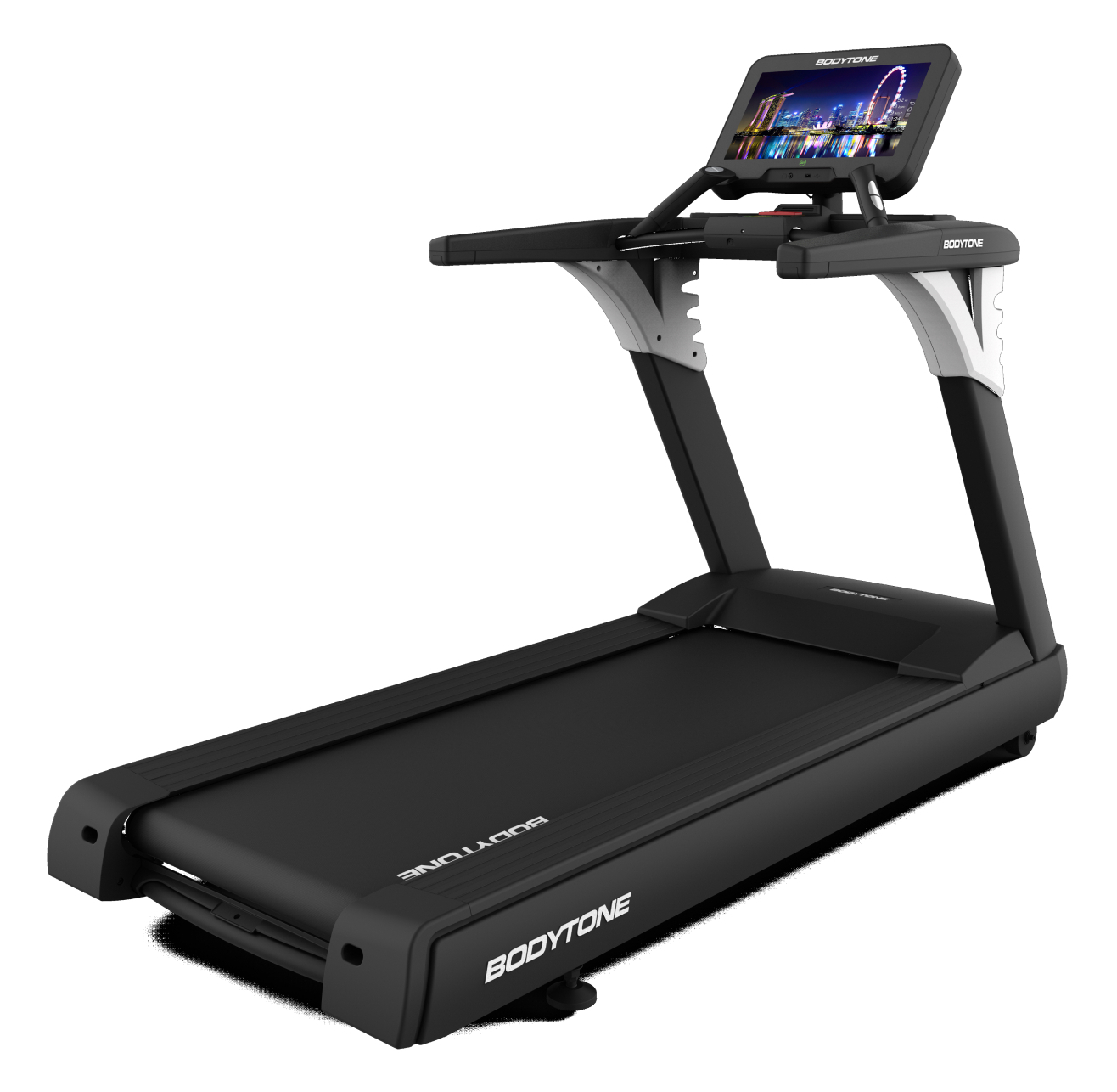
Machines such as the Bodytone EVOT2 professional treadmill are built around exactly these commercial constraints.
Frequently asked questions
Is a higher stated motor power always better?
No. Peak output is a marketing figure. What matters is the power the motor can sustain continuously and how the machine sheds heat over a long day.
How many treadmills should a gym plan for?
It depends on your membership size, your peak-hour profile and the floor area available. Send us those three and we will size the cardio zone with you.
What is the most common cause of downtime?
Wear parts that were never serviced on schedule, and spares that are not held in stock. Both are avoidable at the specification stage.
Specifying your cardio zone
Tell us the size of your facility, your peak-hour attendance and the member profile you serve, and we will put together a treadmill specification with the service terms written into it: request a quote.