Commercial cardio equipment specifications explained
Le choix d'un parc cardio se fait sur la fréquentation attendue, le coût de maintenance et la disponibilité des pièces, pas sur les fonctions des consoles. Tapis, vélos, elliptiques et rameurs n'ont ni la même durée de vie ni le même coût d'exploitation. Le dimensionnement se fait sur les pics de fréquentation, pas sur la moyenne.

The specification sheet of a commercial cardio machine contains five figures that decide the purchase: rated user weight, continuous motor power or resistance range, footprint, electrical requirement and the warranty split. Everything else on the page is marketing. This guide explains how to read those figures, what they cost you over the life of the machine, and which questions to put in writing before an order is placed.
What separates a commercial machine from a domestic one
A machine intended for a club is not a stronger version of a home machine. It is designed for a different duty cycle: many hours of daily operation, users of widely different body mass and skill, frequent cleaning with disinfectant, and constant adjustment. That translates into a heavier frame, oversized bearings and belts, a console with mechanical buttons that survive wet hands, and above all a spare parts chain you can actually use.
The European reference is the EN ISO 20957 series for stationary training equipment, in which class S covers professional and supervised use. Class H equipment is for domestic use and its warranty is normally void in a commercial installation, whatever the retailer says. Ask for the declaration of conformity as a document, and check that the class stated matches your site.
The technical criteria that matter, family by family
Each machine family has its own short list of decisive specifications. The table below is the checklist we use when comparing offers.
| Machine family | Decisive specifications | Common specification trap |
|---|---|---|
| Treadmill | Continuous motor power and cooling, running surface dimensions, incline range and motor, deck cushioning system, frame rigidity at speed | Peak power quoted instead of continuous power. Only the continuous rating describes sustained club use. |
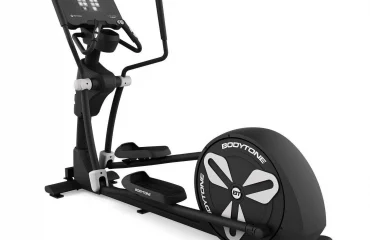
| Cross trainer | Stride length, step up height, flywheel inertia, bearing quality, pedal spacing | A fixed stride length that suits neither short nor tall members. Check the range, not a single figure. |
| Indoor cycling bike | Resistance system, saddle and handlebar adjustment range and markings, crank and bearing assembly, watt display accuracy | Position markings absent, which makes repeatable set up impossible in a class format. |
| Recumbent bike | Seat entry height, backrest support, minimum deliverable power | A starting load too high for deconditioned or older users. |
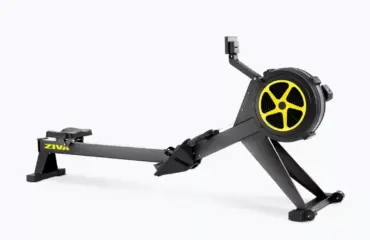
| Rower | Resistance type (air, magnetic or hydraulic), chain or strap durability, rail glide and cleaning access, console legibility under effort | Noise level in a shared or hotel space, rarely stated on the data sheet. |
| Stair climber | Step height and regularity, handrail geometry, machine mass and stability, noise level | Ceiling height above the top step, which disqualifies the machine on many mezzanine floors. |
| Air bike and ski ergometer | Fan and drive robustness, frame stability under sprint effort, clearance around the arms | Placement too close to circulation routes, causing collisions during interval sessions. |
Two figures apply across the whole range. Rated user weight is typically 150 to 200 kg on commercial treadmills and 130 to 180 kg on cross trainers and bikes; remember that the rating covers the user, so a heavier membership profile narrows the eligible models. Resistance levels run from a handful to more than twenty on higher specification consoles, and what matters is the smoothness of progression between levels rather than the headline count.
Footprint, electrical supply and installation constraints
Space planning is done from the machine envelope plus the safety and access clearances, never from the machine alone. Allow 2 to 3 m of length and 1 to 1.5 m of width for a treadmill, and roughly 1.5 to 2 m by 1 m for a cross trainer or an upright bike. Add clear space behind treadmills, circulation between rows, and rear or side access for the technician, otherwise every service call becomes a machine handling operation.
Motorised machines need a supply sized for the load. A commercial treadmill draws in the order of 600 to 1 000 W in operation, so a bank of treadmills on a shared circuit will trip it. Plan dedicated circuits at the design stage rather than distributing extension leads afterwards. Machines with connected consoles also need stable network coverage if any part of the member experience depends on an application.
Underneath, the floor build up decides how much noise reaches the rest of the building. Rubber gym flooring tiles with an acoustic underlay reduce structure borne transmission, which matters in hotels, offices and any first floor installation.
Purchase price and total cost of ownership
Indicative market prices give a starting point for a budget, but they are not a project cost. Delivery, installation, floor preparation and commissioning are separate lines.
| Machine | Indicative purchase price | Power draw in use | Expected commercial service life |
|---|---|---|---|
| Treadmill | 2 000 to 10 000 EUR | 600 to 1 000 W | 7 to 15 years with planned maintenance |
| Cross trainer or bike | 1 500 to 5 000 EUR | Self powered or low draw for the console | 7 to 15 years with planned maintenance |
| Rower | 1 000 to 3 000 EUR | Self powered or low draw for the console | 7 to 15 years with planned maintenance |
Total cost of ownership adds four items to the purchase price: electricity, consumable and wear parts, scheduled servicing, and the cost of downtime when a popular machine is out of service. The last one is the least visible and often the largest. A treadmill that is unavailable for three weeks while a part is sourced costs more in member dissatisfaction than the part itself.
Leasing is a common route for new sites, because it preserves working capital at the point where it is tightest and allows the fleet to be refreshed at the end of the term. Outright purchase is normally better where the equipment will be kept for its full service life.
Warranty, spare parts and after sales terms
Warranty duration on professional cardio equipment usually runs from 2 to 5 years depending on the range, and it is rarely a single figure. Read the split between frame, motor, electronics and wear parts, and read the exclusions: normal wear, misuse and failure to follow the servicing schedule are excluded almost everywhere. Documented preventive maintenance is therefore not only good practice, it is what keeps the warranty enforceable.
Before ordering, get written answers on three points: which parts are held in stock, the lead time for a non stock part, and whether the supplier provides installation and commissioning. On a multi machine order these terms have more effect on your operating costs than a small difference in unit price.
Frequently asked questions
Which motor power is enough for a commercial treadmill?
There is no single figure, because ratings are quoted differently. Compare continuous power rather than peak power, and check it against the rated user weight and the expected daily running hours. A machine quoting only peak power should be treated with caution.
Do commercial cardio machines need a dedicated electrical circuit?
Motorised machines such as treadmills generally do, particularly when several are installed in a row. Self powered bikes, rowers and air bikes normally need no supply beyond the console. Confirm the requirement with the data sheet before the electrical works are finalised.
Are connected consoles worth the extra cost?
They are worth it when the member experience or your retention programme depends on the data. Most professional consoles use Bluetooth or ANT plus sensors so that sessions can be exported to third party applications. If nobody on your team will use the data, the simpler console will be more reliable and cheaper to repair.
How accurate are the heart rate and calorie readings?
Calorie figures are estimates derived from generic formulas and should be presented to members as such. Heart rate from hand sensors is less reliable than a chest strap. Time, cadence and power in watts are the metrics worth tracking for progression.
How much space should be left between cardio machines?
Enough for safe mounting and dismounting, for the full range of arm and leg movement, for circulation without crossing behind a running user, and for technician access. Treadmills need the largest rear clearance of the range.
Get your cardio specification checked before you buy
Light In Fitness has supplied professional fitness equipment from Tours, France since 2013, with more than 2 000 references, stock shipping in 5 to 10 working days and warranties of 2 to 5 years depending on the range. We compare offers on the figures that matter and size the fleet on your peak hour traffic.
See our professional cardio machines and cardio equipment ranges, or request a quote and receive a costed proposal within 24 working hours.
À lire aussi sur le même thème
- Comment s’entraîner efficacement sur un vélo elliptique ?
- J’adore le vélo en salle – 5 raisons de commencer à m’entraîner sur un vélo stationnaire
- Bodytone MT6 Professional Indoor Cycling Bike: Performance and Durability for Intensive Studio Use
- Strength machine installation and maintenance
- Which Is the Best Professional Strength Machine Brand?