Which Boxing Discipline for Your Club, and What Equipment It Needs
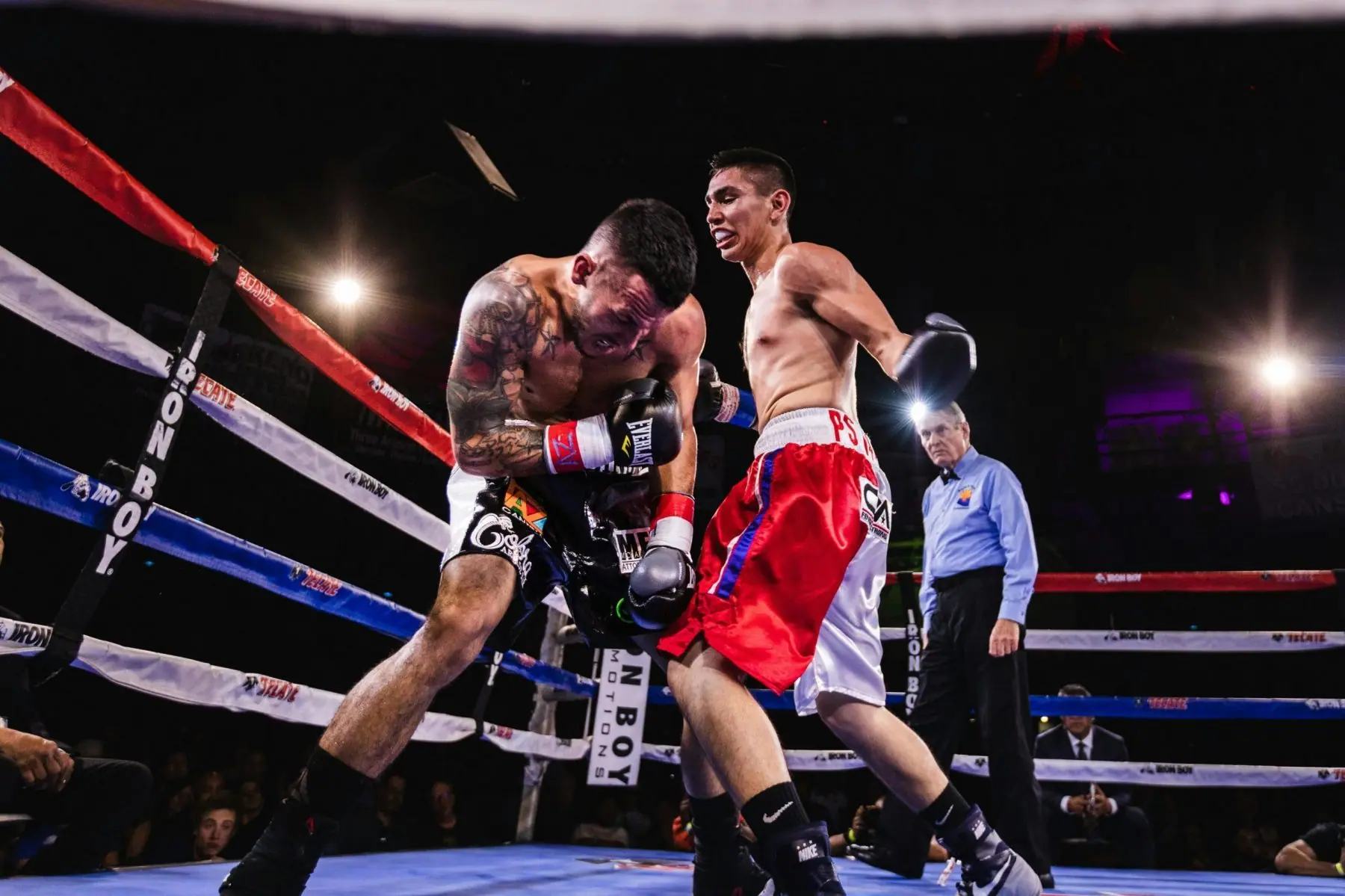
Choosing a boxing discipline for your club and equipping the room that goes with it are the same decision taken twice. English boxing, Muay Thai, kickboxing and savate each make different demands on your floor, your walls, your suspension points and your storage, and the discipline you build the timetable around drives most of the equipment budget that follows. This guide sets out what separates the four disciplines, then what each one asks of a professional training space.
The four main disciplines
English boxing
English boxing works with punches and defensive footwork only. It is the most accessible discipline to launch, because a beginner class can run on bag work, skipping and pad rounds long before anyone steps into a ring. For an operator that matters: the entry-level session needs bags, a clean floor and room to move, not a full competition set-up. Conditioning, cardio and self-control are what most beginners are actually buying.
Muay Thai
Muay Thai uses fists, elbows, knees and shins. It is the most complete and the most intense of the four, and also the most demanding on the room: bag work with kicks puts far higher loads on suspension points than punching alone, and clinch work needs a matted floor rather than a bare surface. Plan a dedicated area rather than a corner of a general studio.
Kickboxing
Kickboxing combines punching with kicks, which makes it the most versatile format for a mixed timetable: the same room can serve a fitness-oriented class in the evening and a competition squad at the weekend. Bag work and ring combinations fill most of the session, so bag capacity per participant is usually what limits class size.
Savate, or French boxing
Savate blends boxing technique with kicks delivered with the shoe. It is the most technical and the most controlled of the four, which makes it a good fit for clubs, schools and municipal facilities that want a combat discipline with a lower contact profile. Footwork and combination drills dominate, so usable floor area per participant matters more than bag count.
Equipping the space
Once the discipline is set, the equipment list follows from it. Four items account for most of the spend.
Bags and suspension
Bag stations are the backbone of any boxing programme. The question for an operator is not which bag, but how it is hung. Fixing individual bags to the structure limits you to the positions that structure allows, whereas a rail system lets you slide the stations along the room and reconfigure between classes. Our punch bag rails are built for that kind of shared, high-frequency use. Kick-heavy disciplines should be specified at the top of the load range, not in the middle of it.
Floor and matting
The floor does two jobs: it protects participants during clinch, ground and falling work, and it protects the building from the impact and noise of footwork. Roll-out matting is the usual answer where the space is shared and has to be cleared between sessions; permanent tatami suits a room dedicated to combat sports. Look at the roll-out gym mats range if your room changes use through the day.
Ring or cage
A ring or a cage is what turns a class into a club. It is also the item that fixes your layout for years, so decide it early rather than adding it later. Floor-level structures keep sightlines low and are easier to fit into an existing room, while a podium version suits venues that host events and need spectators to see the floor. Start with the floor-level cage range when the room is shared with other activities.
Personal kit the club stocks
Gloves, hand wraps, mouthguards, groin guards, shin guards and headguards are personal items, but clubs almost always hold a stock for trial sessions and for members who arrive without theirs. Two practical points: bag gloves and sparring gloves are not interchangeable, and a loan stock needs a cleaning and replacement routine written into your operating procedures from day one. Budget for the replacement cycle, not only the first purchase. The same applies to footwear and training kit, which have to allow full freedom of movement.
Building the programme around the room
Coaching is what makes the equipment pay. Trial sessions let prospective members find the discipline that suits them before committing, and they let you see which format your local market actually wants before you invest further. Beginner courses that stay on technique and conditioning retain better than courses pushing contact early; combinations and sparring come later, once the technical base is there. Track which classes fill, and let that rather than the head coach’s own background drive the next purchase.
Frequently asked questions
Which discipline is easiest to launch in a small space?
English boxing and savate. Both build most of the beginner session around footwork, pad work and bags, and neither needs a permanently matted floor to run a credible class.
Can one room serve several disciplines?
Yes, provided the floor and the bag suspension are specified for the most demanding discipline on the timetable. A room set up for Muay Thai will take a boxing class; the reverse is rarely true.
Do we need a ring or a cage from the start?
No. Most clubs run beginner and fitness formats for a long time on bags and floor alone. Reserve the location in your layout, then install the structure when membership justifies it.
What really limits class size?
Bag stations and usable floor area per participant, far more often than changing room capacity. Count both before you set a class limit.
Discuss your project with us
Every combat sports room is a compromise between the discipline, the building and the timetable. Send us the room dimensions, the structure available for suspension and the classes you intend to run, and we will put together a specification and a costed proposal. Request a quote and our team will come back to you.
Réalisations documentées
- Cage street workout ultime, Hub Armées – DICOM-GSB EFG / Division Métiers
- Cage street workout ultime, CFIM 6 de Fréjus – armée française