Where to Buy Rubber Floor Tiles for a Gym: The Complete Buyer Guide
Une dalle caoutchouc de salle de sport doit être choisie sur l'épaisseur, la densité et le classement de réaction au feu exigé par le type d'ERP. Le rôle du sol dépasse l'esthétique : il protège la dalle béton, réduit le bruit transmis et sécurise la pratique. Ce guide traite l'achat, la conformité et la pose en France.
A gym without the right floor is like a car without tyres: it moves, but it ends badly. Rubber tiles are not there to make the room look tidy. They protect the substrate, cut noise, make training safer, and shape the experience your members have every day.
The difficulty is that the market carries everything: tiles that are too thin, vague densities, missing fire classifications, loose promises and freight costs nobody mentions until the invoice. You think you bought well, and you pay twice.
This guide gives you a professional method, the technical and regulatory reference points that matter, and a clear route to a coherent solution for a gym floor.
Understanding the product
Rubber tiles: a simple, useful definition
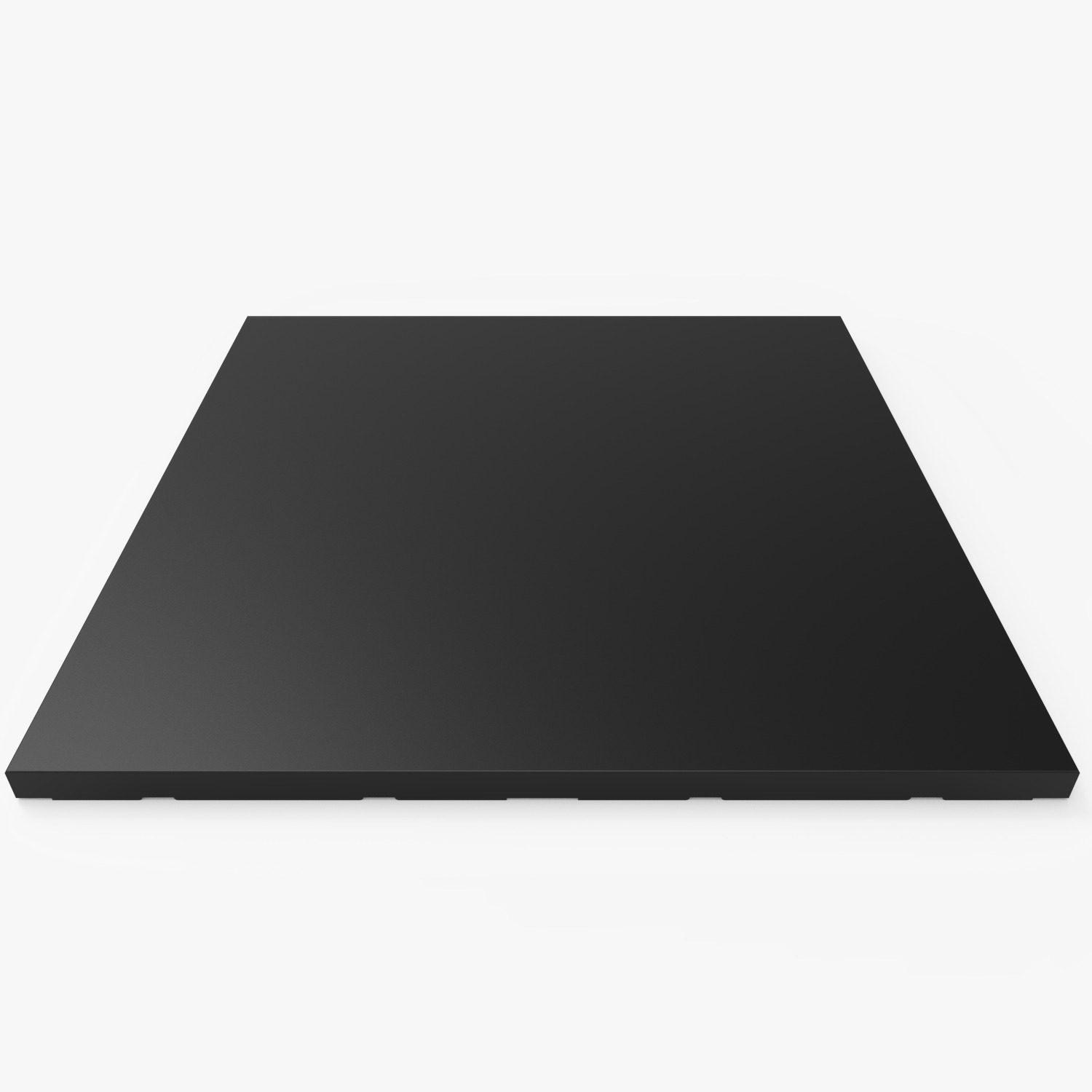
A rubber tile is a modular floor covering, usually 1 sq m or 50 by 50 cm, designed to:
- absorb impact from dumbbells, kettlebells and barbells;
- protect the substrate, whether concrete, tiling or timber;
- improve grip and stability;
- limit noise nuisance;
- make cleaning easier than on a bare floor.
In a gym, the tiles used are mainly SBR, often from recycled material, or more specific formulations depending on use. The binder, usually polyurethane, and the density are what really drive durability.
A gym is not one floor, it is several zones
A single room carries several different demands:
- cardio zone: heavy traffic, perspiration, frequent cleaning;
- selectorised strength floor: heavy loads but moderate impact;
- free weights and weightlifting: impact, vibration, noise;
- functional and cross-training area: jumps, occasional drops, movement;
- circulation and entrances: safety, hygiene, wear resistance.
Buying well usually means choosing two thicknesses: a general base, plus a reinforced zone where the load actually lands.
What actually determines quality, beyond the price per square metre
To compare intelligently, look at:
- thickness, typically 20, 25, 40, 50 or 60 mm;
- density and weight: at equivalent product, the denser tile takes intensive use better;
- finish: fine grain is easier to clean, coarse grain can grip more but holds more dust;
- installation method: loose lay, lock or clip systems, partial bonding by zone;
- reaction-to-fire classification, which is decisive in premises open to the public;
- indoor air emissions, above all in poorly ventilated rooms or with sensitive users.
A concrete example: a 40 mm Light In Fitness tile is stated at a weight of 32 kg and a density of 900 kg per cubic metre, which gives you a usable indicator of how it will hold up over the years.
Common mistakes and received wisdom
- 20 mm is enough for everything. Not always. In a heavy drop zone it is frequently insufficient.
- Thicker is always better. Not necessarily. Too thick in the wrong place feels spongy and complicates machine levelling and stability.
- Forgetting freight. Rubber is heavy. The real price is the delivered price, pallets included.
- Ignoring the fire classification. In a room open to the public this is where projects stall, with the insurer, the inspection body or the operating conditions.
- Underestimating odour and VOC. With recycled rubber, ventilation and product quality decide the outcome, particularly in summer.
What is really at stake
1) Safety: fewer slips, fewer injuries, more stability
The right tile improves grip on dry and slightly damp floors, the stability of the stance, joint protection on certain movements without becoming soft, and safety around loaded bars. In a facility, safety is not a marketing line. It is a management criterion: fewer incidents, fewer interruptions, better satisfaction.
2) Operating performance: noise, neighbours, brand image
Rubber cuts vibration and impact noise. That matters most in a building with other occupants, in a commercial area with neighbours, in a hotel or spa, and in any room where you want to hold a premium atmosphere. In practice a good floor changes perception: a quiet, stable room reads as higher end immediately.
3) Durability: the real return is measured over three to seven years
A poor floor marks quickly, deforms, opens at the joints, holds dust, becomes unpleasant to clean and gets replaced too early. A good floor protects the substrate and saves you building work, resists traffic, keeps a clean appearance and avoids lost trading days.
4) Compliance: fire, indoor air, intended use
Reaction to fire (EN 13501-1). The Euroclass classification for floor coverings, Efl, Dfl-s1, Cfl-s1, Bfl-s1 and so on, comes from EN 13501-1. Some Light In Fitness tiles are supplied explicitly with a fire classification, for example Cfl-s1 in 20 mm for premises open to the public, and Bfl-s1 on certain 20 mm references.
Indoor air emissions. Volatile emissions from floor coverings are regulated differently from one country to another, and some markets require a specific label. Ask the supplier for the emissions test data for the reference you are buying, and check with your design team which labelling requirement applies to your building. Do not accept a general reassurance in place of a document.
Indoor sports surfaces (EN 14904). For indoor multi-sports surfaces, EN 14904 frames the performance requirements: slip resistance, shock absorption, wear resistance and others. Even if your room is strength-led rather than a multi-sports hall, it is a useful reference for thinking in terms of floor performance rather than floor covering.
The professional method
Step 1: split the room into zones, or you will overpay
The method used in professional fit-outs is simple:
- general zone: circulation, machines, moderate training;
- free weights and weightlifting zone, where the load lands;
- functional zone: jumps, stations, sled work.
Then choose a base tile for the majority of the surface and a reinforced tile for the impact areas.
Step 2: choose thickness by use
| Zone | Use | Usual thickness | Objective |
|---|---|---|---|
| Cardio and circulation | traffic, cleaning | 15 to 20 mm | comfort and wear resistance |
| Machines | heavy static loads | 20 to 25 mm | substrate protection and stability |
| Free weights | dumbbells, kettlebells | 25 to 40 mm | impact absorption and noise reduction |
| Weightlifting and drop | bars dropped from height | 40 to 60 mm, or platforms | maximum protection |
| Premium quiet zone | noise-sensitive neighbours | 25 to 50 mm by context | vibration attenuation |
Reference points from the range: 20 mm in 100 by 100 cm for a club or a box; 25 mm in 100 by 100 cm, certified Efl, for standard strength and cross-training; 40 mm with a stated density of 900 kg per cubic metre for intensive use; 50 mm and 60 mm in SBR, certified Efl, where heavy absorption is the priority.
Step 3: build in the fire requirement if your room is open to the public
Many facilities, clubs, studios, hotels and municipal centres carry regulatory or insurance obligations on reaction to fire. EN 13501-1 sets the classes; which class you need comes from the building and its use. The right reflex is straightforward: if your room is open to the public, ask for proof of classification, meaning a test document or a technical data sheet, not a sentence in a sales email. The fire-rated rubber tiles range exists precisely for these projects.
Step 4: think about indoor air and ventilation, especially in summer
In practice, for a training room: make sure ventilation works, do not store tiles in the training area before installation, and plan an airing period after laying, above all with recycled rubber.
Step 5: compare like for like, on six criteria
When you are working out where to buy, compare these points in this order:
- actual use: strength, drop, public access, circulation;
- thickness plus density or weight, where the figure is published;
- fire classification, if required;
- warranty, and its conditions;
- logistics: pallets, lead times, freight;
- after-sales: responsiveness, replacement, batch management.
As an example, the Premium Lock 20 mm tile is supplied with fixing clips and a five-year warranty, which gives you something concrete to compare against.
What we recommend
On most projects the best balance is 20 to 25 mm across the majority of the surface, covering machines, circulation and moderate training, and 40 to 60 mm on the areas where load lands. Where weightlifting is a real part of the offer, combine tiles with a platform on the most violent zone. You keep control of the budget without sacrificing safety or durability, and you can start in 20 or 25 mm and reinforce later in 40 or 60 mm without changing supplier. For that reinforced area, weightlifting rubber tiles are the specific answer.
Installation practice that prevents most problems
- Clean, dry, level substrate.
- Stagger the joints where possible, for better visual and mechanical stability.
- Let the tiles acclimatise to the room temperature before laying.
- On heavily used zones, consider edge ramps, perimeter bonding, or lock and clip systems depending on the model.
Standards worth remembering, without drowning in them
- EN 13501-1: Euroclasses for reaction to fire of floor coverings.
- Indoor air emissions: a national requirement in several markets; check what applies to your building.
- EN 14904: performance requirements for indoor multi-sports surfaces, a useful benchmark.
If you are also equipping the room with machines, the ISO 20957 series covers safety requirements for stationary training equipment, which belongs in the same specification document as the floor.
Where to buy rubber tiles for a gym
There are four main channels, and the right one depends on your priority.
1) A sports equipment specialist, recommended for a gym
This is the most reliable option when you want thicknesses suited to strength and cross-training, real technical information such as weight, density, fire classification and warranty, professional formats, consistency of range so that 200 sq m can be laid without batch surprises, and a project logic rather than a shopping cart. Light In Fitness covers those points with a structured flooring category, products positioned by use, and fire-classified references for public premises.
2) A general floor covering supplier
Worth considering when the need is simple, such as light protection and moderate traffic. The usual limitation is technical data that is not oriented to intensive sports use, and less choice in the thicknesses needed for drop zones.
3) Direct from the factory, for large volumes
Useful if you have a large order, the ability to receive pallets, a clear documentary requirement covering fire and traceability, and a plan for after-sales. In practice, many facilities come back to a specialist as soon as compliance and support become the priority.
4) Second hand, for very tight budgets
Possible but risky: invisible wear, persistent odour, incomplete batches, no fire or emissions documentation and no warranty. For a room open to the public it would not be our first choice.
How to go further
A ten-minute self-audit
Write down the total surface in square metres, the free weights surface in square metres, the dominant activities, whether the room is open to the public and carries a fire requirement, whether there are noise-sensitive neighbours, and the type of substrate. With that you already know whether you are heading for 20 to 25 mm over 80 to 90 per cent of the floor with 40 to 60 mm on the remainder.
Four typical configurations
- Case A, strength studio with machines and no heavy drop: 20 or 25 mm throughout, fine grain if cleaning is the priority.
- Case B, gym with a genuine free weights platform: 20 to 25 mm as the base plus 40 mm on the free weights zone.
- Case C, weightlifting and drop focus: a 25 to 40 mm base plus 50 to 60 mm reinforcement on the platform or dedicated zone.
- Case D, premises open to the public with a fire requirement: select classified references, Cfl-s1, Bfl-s1 or Dfl-s1 according to the specification.
Conclusion
To answer the question plainly, the most rational way to buy rubber tiles for a gym is to buy from a specialist oriented to sports use, able to supply a range organised by thickness in 20, 25, 40, 50 and 60 mm, real technical reference points such as weight and density where published, fire-classified references under EN 13501-1 where the building requires them, and the practical guidance that goes with installation, odour management and zone-by-zone selection. That is exactly how the rubber gym flooring tiles range is built.
FAQ
What thickness of rubber tile should I choose for a strength room?
In general 20 to 25 mm suits machines and conventional strength training. For free weights and heavier impact, 40 mm is usually more appropriate.
Which tile for a weightlifting zone with bar drops?
Aim for a reinforced zone: 50 to 60 mm on the most exposed part, or a dedicated platform, to limit the energy transmitted to the substrate.
Can rubber tiles be laid without adhesive?
Yes. Many facilities lay loose when the substrate is flat and stable. On heavily used zones a lock or clip system, or perimeter bonding, improves how the floor holds together.
What do the Cfl-s1 and Bfl-s1 fire classifications mean?
They are Euroclasses for reaction to fire defined by EN 13501-1 for floor coverings. They are frequently required in premises open to the public, depending on the project.
Do rubber tiles give off odours or VOCs?
That depends on the formulation and on ventilation. Ask for the emissions data for the reference concerned and check which national labelling requirement applies to your building.
Which format is better for a gym, 100 by 100 or 50 by 50?
The 100 by 100 format is generally preferred in professional installations: fewer joints, faster laying, a more premium result. The 50 by 50 is easier to handle but multiplies the joints.
How do you stop tiles moving over time?
A clean, level substrate, staggered laying, precise cutting, and depending on the zone, edge ramps, perimeter bonding or tiles with a clip or lock system.
Where do I buy tiles suited to a gym, with a complete range?
A sports-oriented specialist is the most coherent route for comparing thicknesses, intensive use and fire requirements in one place.
Get a costed floor specification
Send us your surface area, your zones, the type of substrate and whether the room is open to the public, and we will come back with a tile specification by zone, a quantity calculation and a costed schedule. Request a quote and we will work through it with you.
Réalisations documentées
- Dalles et sols sportifs : livraisons documentées – plusieurs chantiers
- Sol sportif extérieur, square Georges-Vallerey – Taverny (95)
Sources et références
- Arrêté du 19 avril 2011 – étiquetage des produits de construction ou de revêtement de mur ou de sol sur leurs émissions de polluants volatils (Légifrance)
- Ministère de la Transition écologique – étiquetage des produits de construction : classes d’émission A+ à C