The Best Obstacle Courses for Children: A Buyer's Guide
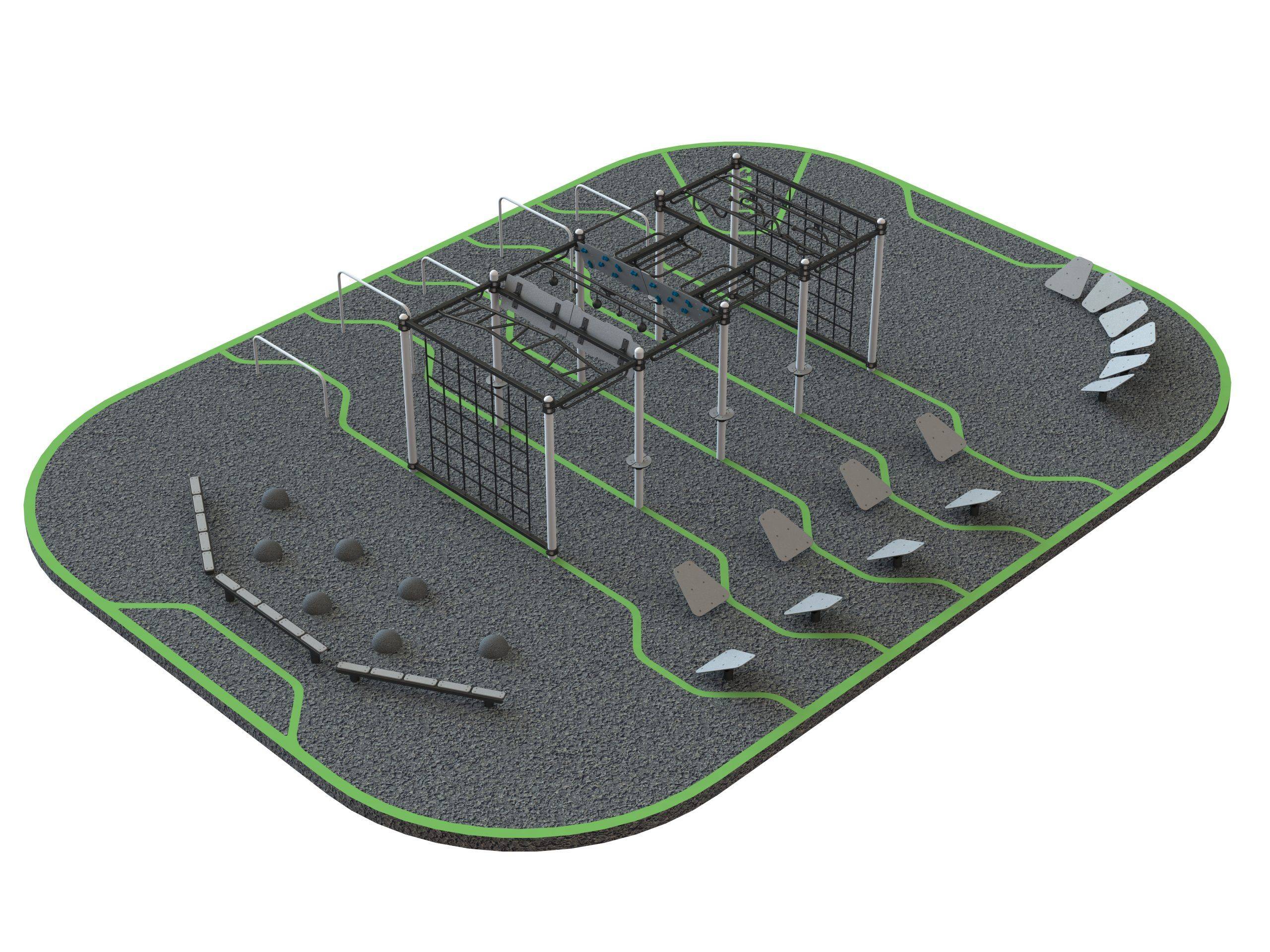
Agility and physical condition are qualities worth developing in children from the earliest age. A well built children’s obstacle course does exactly that, and for a school, a municipality, a campsite or a holiday village it is one of the few outdoor investments that children use without being asked twice. This guide sets out the two families of course we supply, the materials they are built from, and the questions to settle before ordering.
Two families of children’s obstacle course
Whatever the site, children’s courses fall into two groups, and the difference matters when you write the specification.
- The agility obstacle course, built around climbing, balance and coordination.
- The fitness obstacle course, built around movement patterns that work the whole body.
The agility obstacle course for children
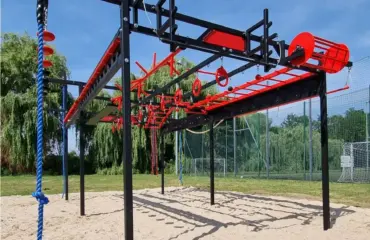
The agility course is one of the most popular configurations in our range. If the aim is to support a child in developing agility and gross motor skills, the elements to look at are climbing rocks, trampolines and street workout components, all of which can be combined into a single circuit. Correct motor development in younger and slightly older children is the strongest argument for this type of equipment.
An obstacle course is also an attractive stimulus in its own right: it encourages children to be active and to spend time outdoors. In doing so it strengthens and improves the whole body by recruiting a large number of muscle groups. Courses of this kind meet the expectations of a wide range of users, which is why they appear so often on playgrounds and in public parks. The same modules are frequently specified alongside a street workout rig so that older children and teenagers stay on the same site instead of drifting elsewhere.
The fitness obstacle course for children
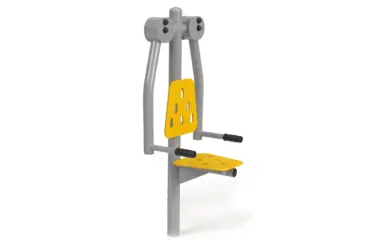
The fitness obstacle course is one of the many configurations that make up the Light In Fitness range, and it is designed so that every site finds something that fits. These products are characterised above all by high quality and by a design adapted to the needs of children of all ages. That quality comes from very good raw materials and from a properly developed design, which is why a finished children’s obstacle course lasts and why satisfaction with it lasts too.
An inseparable part of any children’s course is the safety aspect, which must never be out of mind. Our range is deliberately varied, and it is worth distinguishing three build types: timber, metal and rope. Additional equipment is also available and works well in many of the spaces prepared for younger users. For sites that want a full circuit rather than isolated modules, the ninja warrior rigs extend the same idea into a timed, competitive format.
Timber, metal or rope: choosing the build
The three build types are not interchangeable and each answers a different brief.
- Timber. The natural choice where the course has to sit inside a landscaped park, a campsite or a school ground without dominating it.
- Metal. The choice for heavy public use and for sites where the structure will be exposed and unsupervised for long periods.
- Rope. Climbing nets and rope structures bring the three dimensional challenge that flat modules cannot, and they absorb a large number of children at once.
Safety and standards
Children’s play and obstacle equipment is covered by EN 1176-1, and impact attenuating surfacing under and around the equipment is covered by EN 1177. The two are separate requirements: compliant equipment installed over the wrong surface does not produce a compliant playground. EN 16630, which applies to outdoor fitness equipment for adults, does not apply to children’s equipment and must not be used to justify a children’s installation. When you compare quotations, check that the equipment reference and the surfacing are both specified, and that the free space around each obstacle has been drawn on the layout rather than assumed.
Who these courses are specified for
The buyers are consistent across markets: municipalities fitting out a public park, schools extending a playground, campsites and holiday villages that need an activity children return to every day of the stay, and residential developers looking for shared outdoor amenity. In each case the decision comes down to the same three questions: how many children use the site at peak, how much supervision there will be, and how much free space the layout can give each obstacle.
Frequently asked questions
What is the difference between an agility course and a fitness course?
An agility course is built around climbing, balance and coordination, with elements such as climbing rocks, trampolines and street workout components. A fitness course is built around whole body movement and recruits a large number of muscle groups. Many sites combine the two in a single circuit.
Which standard applies to a children’s obstacle course?
EN 1176-1 for the equipment and EN 1177 for the impact attenuating surface. They are always specified together and never substituted for one another.
Can the same course serve small children and older ones?
The range is designed for children of all ages, but the mix of modules should reflect the age groups actually present on the site. Tell us the age range and the expected number of users and the layout will be built around it.
Timber or metal for a campsite?
Both are supplied. Timber blends into a landscaped or wooded site, metal is the more robust answer to intensive unsupervised use. The choice is usually made on the site itself rather than on the catalogue page.
Getting your children’s course specified
Light In Fitness designs and installs children’s play and obstacle structures together with the matching surfacing for municipalities, schools, campsites and holiday operators. Send us the plan of the area, the age groups you serve and the number of children at peak, and we will come back with a layout, an equipment list and a budget. Request a quote to start the project.
Réalisations documentées
- Parcours ninja sur mesure, Rennes – îlot des Hautes-Ourmes
- Double mur ninja extérieur, Sallanches – Haute-Savoie