Outdoor Gym Training: Benefits and How to Use the Equipment
Outdoor gyms are still filed by many buyers under street furniture for gentle senior exercise. That view no longer matches what is actually being installed. For a municipality, a campsite, a hotel, a housing association or a school, an open-air fitness area is a training facility in its own right: robust stations, adjustable resistance and a layout that lets a mixed public train seriously, whatever their level, age or gender. Sessions run outdoors can produce the same progress as an indoor room, provided the equipment is specified for public use and the area is programmed properly. Here is what outdoor training really delivers, and how to make it work on your site.
Why an outdoor fitness area works for your users
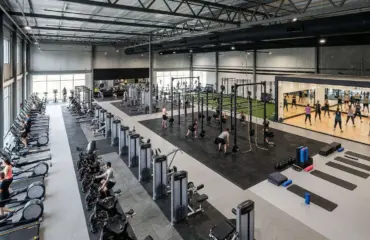
An open-air area removes most of the friction that keeps people away from an indoor club. There are no queues for a station, no crowding and no opening hours: the area is available at dawn, on a Sunday and on public holidays. There is no air conditioning and none of the closed-room atmosphere users complain about, so people breathe properly while they train. Preparation is minimal too. Clothing suited to the weather, a decent pair of trainers, a water bottle, and the session can start. Where the area has been installed by a local authority, access is free, which is exactly why an outdoor gym reaches audiences a paid club never touches.
For the operator the arithmetic is just as favourable. Once installed, a set of outdoor gym equipment needs no reception desk, no heating and no changing rooms, and it stays in service year after year with routine inspection and cleaning. That is why campsites, hotels and residential developments now treat it as a facility rather than a decorative extra.
What regular outdoor training actually achieves
Results depend on the user and the objective, not on the absence of a roof. What counts is motivation, a well-built training plan, consistent execution and, just as importantly, nutrition: sensible eating remains the foundation of any work on the body. An outdoor area can be someone’s only physical activity or a complement to indoor training. Regular use generally improves overall condition and stamina, helps reduce excess body fat and body weight, and reshapes the silhouette. Where the site is fitted with professional-range stations offering variable resistance, users can also build genuine muscle mass. The ceiling is set by the equipment, not by the fact that it stands outside.
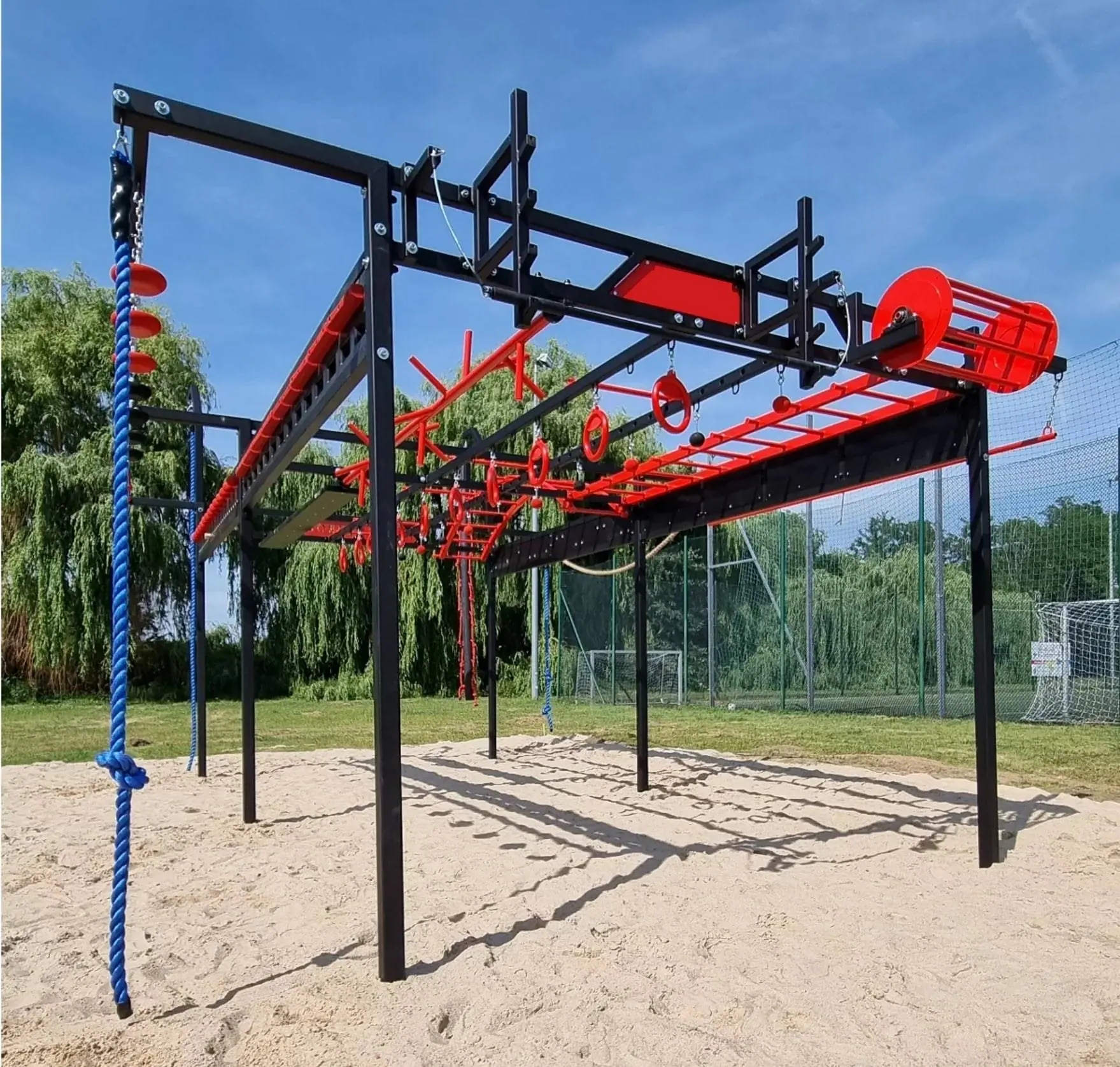
This is where specification decides everything. Body-weight structures such as calisthenics and street workout cages suit a young and already athletic public, while load-adjustable stations open the same area to beginners, older users and people returning from injury. Sites that need to serve both usually combine the two along an outdoor fitness trail, so that a single walk-through offers warm-up, cardio and strength stations in sequence.
How to train in an outdoor gym
Safely, and with your head switched on. Every session should start from a clear objective and an honest view of the user’s health, meaning no contraindication for the exercises planned. Then a proper warm-up, attention to hydration and food, respect for the rules posted on the area, and the ordinary common sense that keeps training injury-free.
Set the objective before choosing the stations
Training outdoors can support very different goals: simply feeling better, and fresh-air exercise is genuinely effective there, improving general condition and appearance, losing surplus weight, reshaping the body, or building and extending muscle mass. That last goal is only realistic on professional-range machines with variable load, which is a specification decision taken long before the first user arrives.
Build the plan around the whole body
The best results come from a holistic approach: working every muscle group, in a way matched to the user’s real capacity and needs, without overloading the joints of older users or those carrying excess weight. Professional-range equipment makes this far easier, because every station carries illustrated instructions showing how the machine is used and which muscle group the exercise targets. Some professional outdoor ranges go further and pair each station with a mobile application, so users can follow a structured programme without a coach on site.
Always start with a warm-up
The warm-up is the key. A short series of simple exercises of rising intensity warms and tones the muscles, prepares the body for effort and cuts the risk of injury. If the area is within a ten-minute walk of home, that walk is worth doing on foot as part of the warm-up, at a brisk pace or as light jogging. Users can also warm up on the area itself: mobility and stretching work first, then a few minutes on an outdoor cross trainer.
Get the technique right
Execution technique matters, not only for the results the user is after but above all for the risk of overloading or damaging muscles and joints when an exercise is performed badly. Before starting, users should read the instruction panel and take the time to understand how the station is used: how to position the body on the equipment, where to place the hands on the grips, how far to travel. On a public site this is not a detail, it is the difference between a facility that is used well and one that generates complaints.
Stations worth specifying for outdoor training
Three families cover most needs on a general-purpose area. An abdominal training station, for core work that every user profile can attempt. A double bike on a single pylon, which handles warm-up and cardio for two people at once and keeps the footprint small. And a squat station, which brings genuine lower-body strength work to an open-air site. Around that core, outdoor strength machines extend the area towards upper-body and back work as the user base grows.
Frequently asked questions
Is an outdoor gym only suitable for beginners?
No. Entry-level areas built purely for gentle activity exist, but professional ranges with variable resistance allow full strength training. The limit comes from the equipment specified, not from the setting.
Can the same area serve very different user profiles?
Yes, and that is usually the point. Mixing load-adjustable stations, body-weight structures and accessible stations lets a single area serve teenagers, active adults, older users and people with reduced mobility. Accessible stations are grouped in our accessible outdoor gym range.
Does an outdoor area replace an indoor gym?
It is an excellent alternative to a traditional gym or sports club for a large part of the public, and a complement for the rest. Many operators run both: the indoor room for members, the outdoor area for residents, guests or pupils.
What maintenance should be planned?
Routine visual inspection, cleaning and periodic checks of fixings and moving parts. The exact frequency depends on the range installed and the intensity of use, and it is set out in the documentation supplied with your equipment.
Planning your outdoor fitness area
Outdoor gyms are an excellent alternative to traditional gyms and sports clubs. Depending on the equipment chosen and the objectives of the people who will use it, an open-air area supports complete and regular training that improves wellbeing and condition, strengthens muscles, and makes real weight reduction and body shaping possible. The whole question is which stations, in what quantity and in what layout for your site.
Tell us the surface available, the public you serve and the level of training you want to offer, and we will put together a layout and a full equipment proposal. Request a quote and our team will come back to you with a costed plan.