Artificial Turf: Where It Works and Where It Does Not
Artificial turf has moved well beyond the decorative lawn. In gyms it carries sled tracks and functional zones, in hotels and campsites it covers areas that natural grass cannot survive, and in schools and municipal facilities it keeps play and training areas usable through seasons that would leave real grass as mud. The appeal is always the same: a green surface that stays usable without watering, mowing or a growing season.
Artificial turf is specified by use, not by appearance. The pile height, the fibre and the backing that make a decorative lawn convincing are the wrong specification for a sled track, and a turf chosen on looks alone will flatten within a season under professional traffic.
What artificial turf does well
The maintenance case is the strongest one. There is no mowing, no watering and no weeding, and the surface stays presentable through drought, frost and heavy use. For a facility manager, that converts an unpredictable seasonal cost into a fixed one, and it removes the risk of an area being unusable at exactly the moment it is needed.
Durability follows from the same properties. A quality turf resists weather, ultraviolet exposure and repeated traffic, which is what makes the higher purchase and installation cost defensible over the life of the surface.
Water use is the environmental argument that holds up. A turf area consumes no irrigation water, which matters in regions with restrictions on summer watering. The wider environmental picture is more mixed, and it is worth being straightforward about that with a client rather than presenting synthetic turf as an unqualified green choice.
There is also genuine choice. Pile heights, fibre colours and densities differ considerably, and turf supplied as tiles or as marked tracks solves different problems from turf supplied by the roll.
The limits worth stating before installation
Artificial turf heats up in direct summer sun, more than natural grass does, and that matters on a south-facing terrace or an unshaded outdoor training area. It does not feel like grass underfoot, which is a real objection in a spa or a hotel garden and no objection at all in a functional training zone.
The purchase and installation cost is higher than sowing grass, and the sub-base is where projects go wrong. A turf laid over an uneven or poorly drained base will show every defect underneath it within months. Cleaning is light but not optional: regular brushing and clearing keeps the pile upright and the drainage working.
Choosing the right format for the job
Three formats cover most professional projects, and they are not interchangeable.
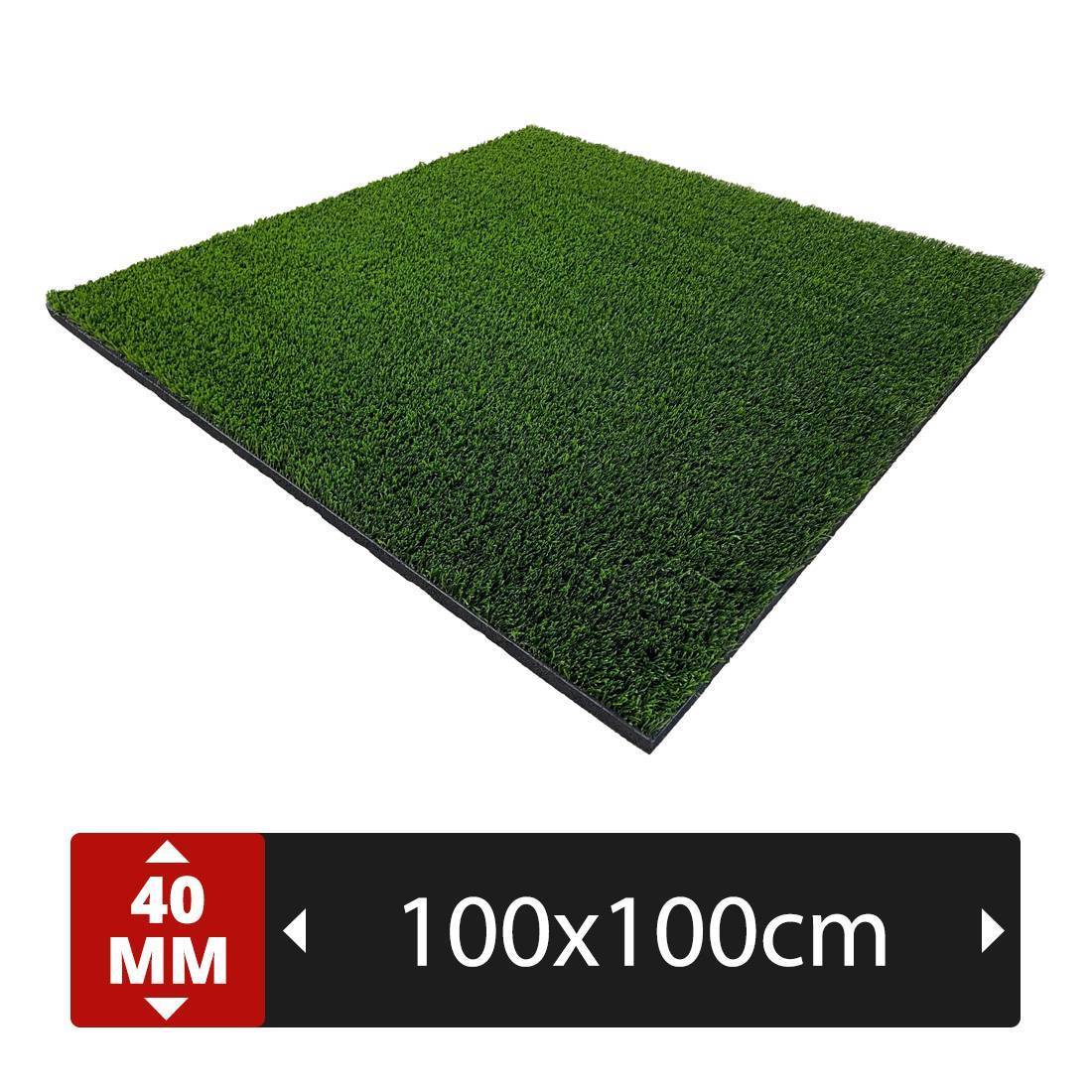
- Turf tiles. Interlocking modules that can be laid quickly, lifted for access and replaced individually where wear concentrates. Suited to gym zones, terraces and areas where the surface may need to change later.
- Marked turf tracks. Rolls with distance markings for sled pushes, sprints and conditioning work. The markings are what make them a training tool rather than a floor covering.
- Outdoor sports surfacing. Where the area serves play or sport rather than presentation, the surface is specified for the activity and, for children, with the impact attenuation the equipment above it requires.
One distinction matters for anyone specifying a play area: equipment for children is covered by EN 1176-1, while the impact-attenuating surfacing beneath it falls under EN 1177. They are separate standards and a turf specified without reference to the second one does not make a play area compliant.
Our artificial turf tiles cover modular indoor and outdoor zones, numbered artificial turf tracks are made for sled and sprint work, and the wider outdoor sports flooring range covers areas where turf is one option among several.
Frequently asked questions
Does artificial turf need any maintenance?
Less, not none. Regular brushing keeps the fibres upright, and clearing debris keeps the drainage working. Neither takes the time that mowing and watering do.
Does it get too hot to use?
It warms noticeably in direct summer sun. Shade, orientation and the choice of area matter, and for a training zone used at midday in a hot climate it is a genuine consideration.
Can turf be laid over an existing surface?
Only if that surface is level and drains. The sub-base determines the result far more than the turf does, which is why a site survey comes before a product choice.
Which turf suits a sled track?
A dense, short pile with a stable backing, supplied with distance markings. Decorative turf with a long pile will flatten under a loaded sled and lose its grip quickly.
Specifying your surface
Tell us the area, the use it has to take and what sits underneath it, and we will propose a surface and a quotation. Request a quote and our team will come back with a specification matched to the site.