Which Muscles Does the Adductor Machine Work?
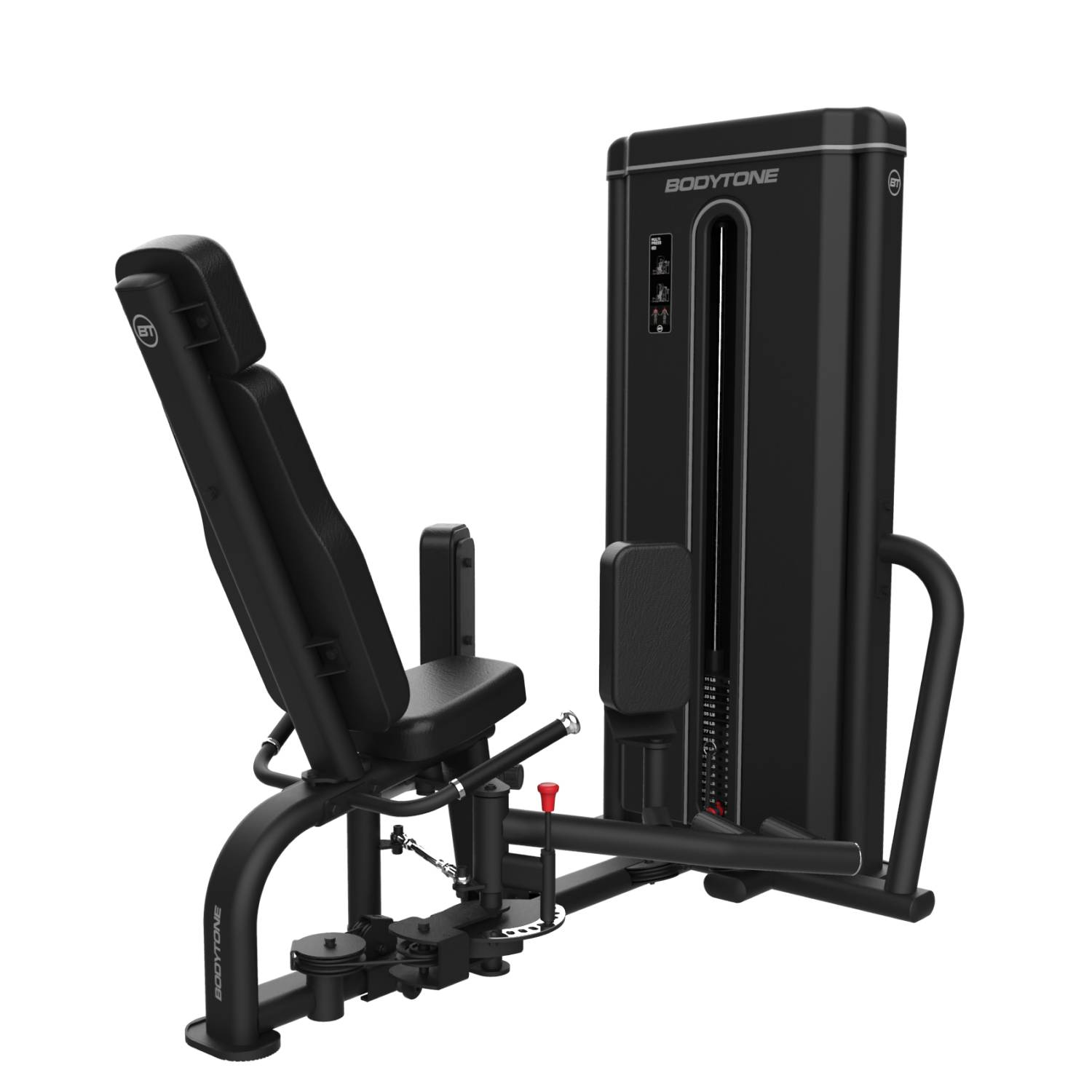
The adductor machine is one of the stations members ask about most and operators specify least confidently. This page sets out exactly which muscles it works, what it should be combined with, and why it earns its place on a commercial floor even though it looks like a single purpose machine.
Which muscles does the adductor machine work?
The adductor machine is a piece of equipment used in strength training to target the adductor muscles, located on the inner thigh. The adductors are a muscle group made up of several muscles, among them the adductor magnus, the adductor longus and the adductor brevis. Using the machine, the member performs a contraction of the adductors by bringing the legs towards each other. This strengthens and tones the muscles of the thigh, and the adductors in particular.
It is important to note, however, that the adductor machine does not work the adductors alone. The muscles of the hip and the glutes are involved as well, because these muscles work in coordination to produce the movement that brings the legs together. That is the reason the machine is used in rehabilitation and in return to sport programmes as much as it is used for aesthetics.
What to combine it with
For better results and balanced development, the adductor machine should be combined with other lower body strength exercises. Squats, lunges, deadlifts, dumbbell exercises and bodyweight work are all effective ways to strengthen the muscles of the legs, the adductors included. A club that offers only the isolation station is giving its members half of the programme.
In terms of layout, the adductor machine belongs with the rest of the lower body line. Placing it beside the leg press and the leg curl and extension stations keeps a whole lower body session inside one zone, which is what makes the circuit work at peak hours. A complete line of selectorised machines lets the same member move from compound work to isolation without crossing the room.
Warm-up and technique
An adequate warm-up before using the adductor machine is essential, exactly as it is for any other strength exercise. The warm-up prepares the muscles and the joints for the effort and reduces the risk of injury.
Strength exercises should also be performed with good posture, meaning a straight back and slightly bent knees. This helps to keep the spine correctly aligned and to minimise the stress placed on the joints. On a commercial floor, a clear instruction plate on the machine and a coach passing through the zone do more for technique than any amount of signage elsewhere in the building.
Frequently asked questions
Does the adductor machine only work the inner thigh?
No. It works the adductors of the inner thigh primarily, but the hip and glute muscles are involved as well because they coordinate to bring the legs together.
Which adductor muscles are involved?
The adductor group includes several muscles, among them the adductor magnus, the adductor longus and the adductor brevis.
Is the adductor machine enough on its own?
No. It should be combined with squats, lunges, deadlifts, dumbbell exercises or bodyweight work for balanced lower body development.
Is it worth a station in a small facility?
It depends on the membership. Where the club serves rehabilitation, older members or team sport athletes, the adductor station is used constantly. Where floor space is very tight, the same muscle group can be reached through free weight work, and the machine becomes a second phase purchase.
In summary
The adductor machine works mainly the adductor muscles of the inner thigh, together with the muscles of the hip and the glutes. For optimal results and balanced strengthening, it should be combined with other lower body exercises, preceded by an adequate warm-up and performed with good posture. If you are building or renewing a lower body line, send us your floor plan and the profile of your members and we will position the stations so the whole session stays in one zone. Request a quote for a layout and a budget.