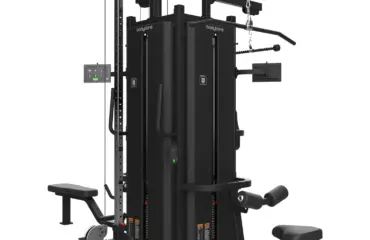
Where to Find a Complete Multi-Station Gym for Professional Use
Un appareil de musculation complet, ou multiposte, regroupe plusieurs stations à charge guidée sur un châssis unique. Il couvre l'ensemble des groupes musculaires sur une emprise réduite, au prix d'un seul utilisateur à la fois. Light In Fitness propose ces configurations pour résidences, entreprises et petites salles.
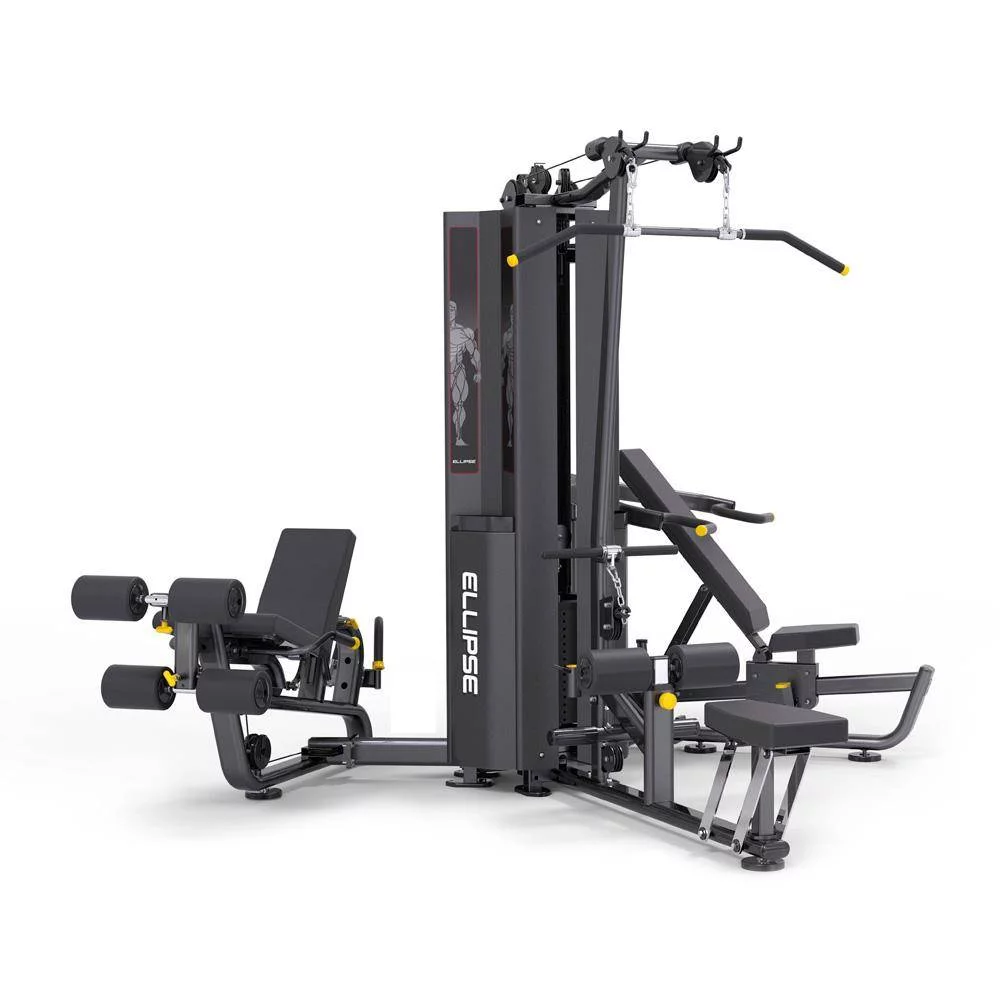
Kitting out a gym floor, a hotel wellness room or a corporate fitness area usually begins with the same question: is there one machine that covers the whole body? A complete multi-station gym is exactly that, several guided-load workstations built onto a single frame so that a facility can train every major muscle group without lining up eight separate machines. This guide sets out what the format really covers, where professional buyers should source it, and which criteria separate a machine built for daily commercial use from one that is not.
What a complete multi-station gym actually is
A multi-station gym groups two, four or more guided-load stations around a shared column structure: lat pulldown, low row, chest press, leg extension, pec deck, cable pulleys. Each station either has its own weight stack or shares one through a pulley routing. The trade-off is simple and worth stating plainly to any operator: full-body coverage on a compact footprint, but one user at a time per station.
That is why the format suits sites where floor area is the binding constraint rather than throughput. A residence, a hotel, a company fitness room or a small club gets a credible strength offer in the space that two or three single stations would otherwise occupy. A busy commercial gym running peak-hour circuits will still need dedicated strength training machines alongside it.
Where professional buyers source complete strength equipment
There are three realistic channels. Specialist B2B suppliers carry full ranges, publish technical datasheets and support installation and after-sales, which is what matters once the equipment is in service. Manufacturer direct sales work when a single brand covers the whole brief. General marketplaces are the weakest option for commercial buyers: specification is thin, and the equipment sold there is frequently not rated for institutional use.
Light In Fitness has specialised in professional fitness equipment since 2013 and has equipped more than 2,500 customers. The catalogue brings together its own ranges and brands such as Ellipse, Bodytone, Xebex, Ziva and Lexco, with the full multi-station gym selection documented station by station.
Commercial specification: what to check before ordering
The single most useful filter is the standard. Indoor strength equipment intended for supervised or unsupervised collective use must be certified to EN ISO 20957-1 class S. Anything sold outside that classification does not belong in a facility open to third parties, whatever the marketing says. Class I is a separate professional class covering inclusive access, not a higher intensity tier above class S.
- Frame section and welding quality, since the frame is what carries repeated daily load.
- Upholstery density and cover material, the first component to fail in high-traffic sites.
- Guarding around weight stacks and moving parts, non-negotiable in unsupervised rooms.
- Cable, pulley and bearing ratings, with a documented replacement cycle.
- Spare-parts availability and warranty terms over the equipment lifetime.
- Adjustment range, so the same station fits users of very different statures.
Matching the configuration to the site
Hotels and serviced residences generally want a two or four-station unit with fully enclosed stacks, chosen for safety in an unsupervised room rather than for load capacity. Corporate fitness rooms benefit from a wider station count and a clear exercise chart, because users train without an instructor. Small clubs and studios usually pair one multi-station unit with free weights and a couple of cardio machines such as rowing machines. Rehabilitation centres and municipal facilities put the emphasis on adjustment range, low starting loads and accessibility.
In every case the sequence is the same: measure the room, agree the circulation and safety clearances, then choose the configuration. Choosing the machine first and fitting the room around it is how projects end up with equipment that cannot be used at full range of motion.
Frequently asked questions
How much floor space does a multi-station gym need?
It depends entirely on the number of stations and the way they are arranged. Work from the footprint and the user clearance stated on the datasheet of the exact reference you are considering, and add circulation space around it. Do not size a room from a generic figure.
Is a multi-station gym enough on its own?
For a residence, a hotel or a small company room, generally yes, because it covers the main muscle groups in one unit. For a club selling memberships, it is a complement rather than a complete offer: throughput and free-weight training still call for dedicated stations.
Can several people train at the same time?
Yes, provided the unit has independent stations and enough clearance between them. A multi-station gym with a single shared stack allows only one user at a time, which is the point most often missed at specification stage.
Which standard applies to this equipment?
EN ISO 20957-1 class S for indoor equipment in professional use. Ask for the certificate, not just a mention in a brochure.
Specifying your configuration
The right multi-station gym is the one that matches your room, your user profile and your supervision model, not the one with the longest exercise list. Send us your floor plan and the profile of your users and our team will return a documented configuration, station by station, with the certification and technical data attached. Request a quote to get started.