Summer Outdoor Cardio: Ten Activities and the Equipment Behind Them
Le cardio en extérieur présente une variabilité de terrain et d'intensité absente des machines, mais ne permet pas la même progressivité contrôlée. Les deux approches sont complémentaires sur une saison. Pour une collectivité, les agrès cardio extérieurs prolongent l'usage des équipements intérieurs pendant la belle saison.
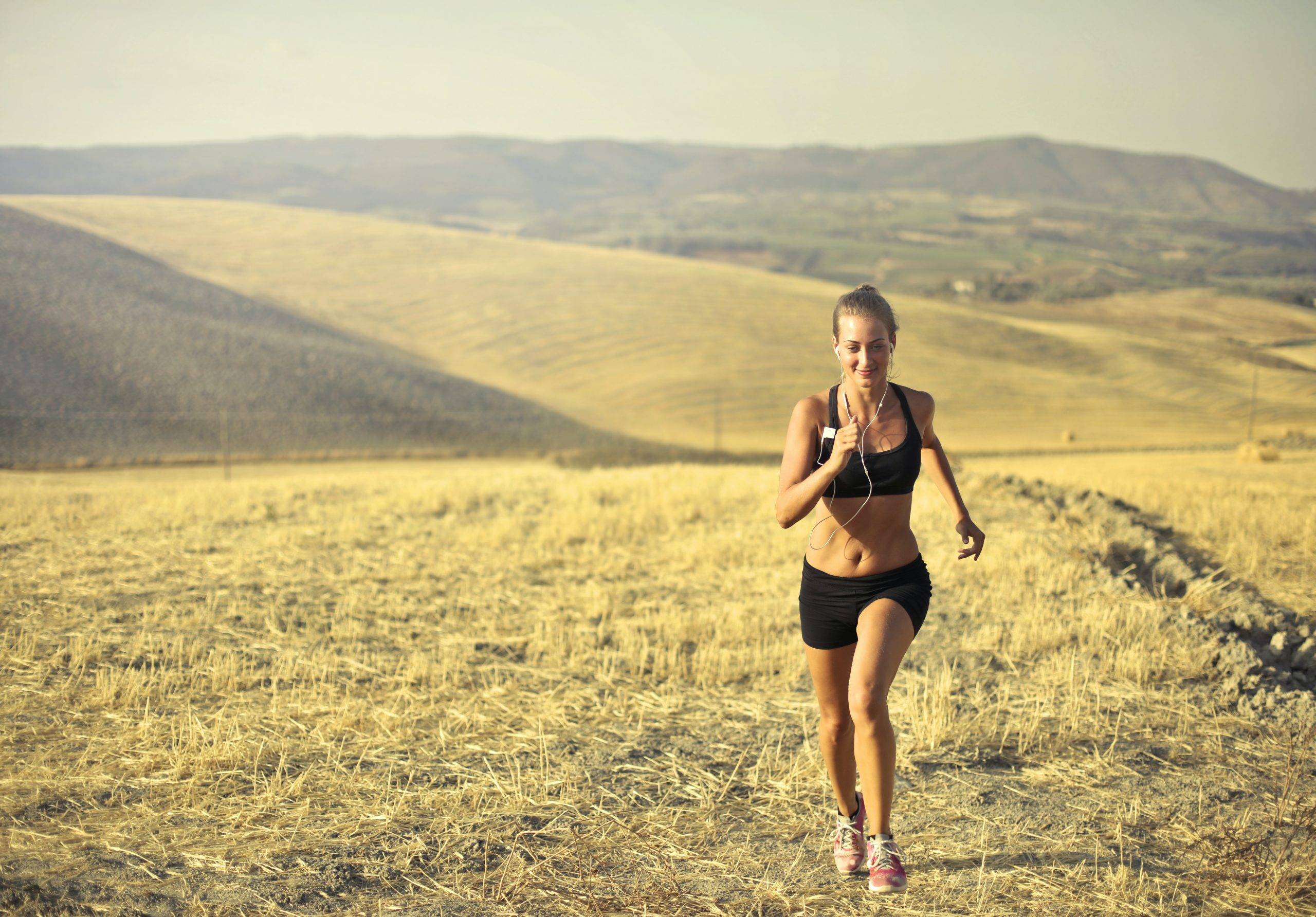
When the season turns and daylight stretches into the evening, a large share of your members will train outside whether you plan for it or not. For gym operators, hotels, campsites, local authorities and sports clubs, summer is not a slow period to be endured: it is the moment to move part of the offer outdoors and to keep attendance stable while indoor cardio traffic dips.
Below are ten outdoor cardio activities that work as programming for a professional facility, together with what each one demands in terms of surface, supervision and equipment. Rotating them keeps sessions varied and spreads the load across different muscle groups instead of repeating the same movement pattern week after week.
1. Stair running
Stair running comes first because it loads the glutes and the quadriceps efficiently and burns a large amount of energy in a short session. Intensity is controlled simply by pace and by the number of repetitions, which makes it easy to programme for mixed-ability groups. Any set of outdoor steps in a stadium, a park or a seafront promenade becomes a training tool at no equipment cost.
2. Inline skating
Skating is an effective cardio activity that also recruits the quadriceps strongly. Skating with the knees bent in a squat-like position and pushing laterally adds work for the quadriceps and glutes. Because balance has to be maintained continuously, the postural muscles stay engaged throughout the session, which is rarely the case on a fixed machine.
3. Cross-country running
Off-road running is the closest outdoor equivalent to interval work on a treadmill, with the difference that uneven ground recruits more stabilising muscles. Before programming it, assess the distance your group can cover and choose a gradient that matches their level. Repeating a single climb and descent several times reproduces a full interval session without any timing equipment.
4. Swimming
Swimming benefits the whole body, both in terms of body composition and respiratory capacity, provided it is done regularly. For hotels and campsites with an outdoor pool, this is the easiest asset to build a summer schedule around. Early morning and late evening slots are the most comfortable and the least crowded.
5. Beach running
Running on sand removes the firm ground underfoot, so more muscles are recruited and they are loaded in slightly different planes than on tarmac. It is demanding, and it is also where most summer injuries appear. Insist on footwear that supports the ankle, and start every session with a walk before building up speed so the body adapts to the unstable surface. Careless running on soft ground leads to ankle sprains and other musculoskeletal injuries.
6. Hiking
Hiking looks less intense than running, but it remains an effective full-body session, especially with poles. Intensity is raised by choosing hilly terrain or by leaving marked paths for rougher ground. It is the activity that travels best across age groups, which makes it useful for hotels, holiday villages and corporate wellness programmes.
7. Canoeing and kayaking
Most members have used an indoor rower. On water, the same pattern becomes a full cardio session that stretches the muscles responsible for upright posture and strengthens the ones supporting the spine. It also has the advantage that participants concentrate on the route rather than on the effort, which keeps perceived exertion low.
8. Beach volleyball
Volleyball is a stop-and-go activity, which suits members who dislike the continuous rhythm of most cardio work. Played regularly it burns a significant amount of energy and has a measurable effect on posture and general efficiency. A sand court is also one of the cheapest outdoor amenities a campsite or a holiday resort can add.
9. Tennis
Racket sports keep participants moving for the whole session, and an hour of tennis burns between 400 and 600 calories depending on intensity. Tennis also supports upper body and trunk development, which makes it a more complete cardio format than its reputation suggests.
10. Cycling
Cycling remains one of the most widely practised outdoor activities across Europe, and one of the few that doubles as transport to work or to the club. Depending on the model of bike, the same activity covers long-distance road work or technical off-road riding, which gives a single piece of member-owned equipment a very wide programming range.
What this means for a professional facility
None of these activities replaces a properly specified indoor cardio floor. Outdoor training gives variability of terrain and intensity that machines cannot reproduce; machines give the controlled, repeatable progression that outdoor sessions cannot. Over a full year the two are complementary, and the operators who keep attendance stable in July and August are the ones who offer both.
The practical route for a club, a campsite or a local authority is to add outdoor stations that carry the summer programme and stay usable in the shoulder seasons. Non-motorised outdoor treadmills and complete outdoor gym equipment ranges are designed for unsupervised public use and for permanent installation, while the indoor floor is renewed from the professional cardio equipment range for the rest of the year. Adult outdoor fitness equipment installed in a public space falls under EN 16630, and indoor machines used in a commercial facility must be certified to EN ISO 20957-1 class S.
Frequently asked questions
Does outdoor cardio really replace machine work?
No. It adds variability of terrain and intensity, but it does not allow the same controlled, measurable progression. Treat it as a seasonal complement, not a substitute, and keep the indoor floor available.
What equipment do we need to run an outdoor programme?
For coached sessions, very little beyond safe ground and supervision. For permanent unsupervised access, you need outdoor-rated stations designed for public installation, with the corrosion protection and anchoring that go with year-round exposure.
Which surfaces cause the most injuries?
Sand and loose ground. They are excellent training surfaces but require a progressive warm-up and footwear that supports the ankle. Build up speed gradually rather than starting at pace.
Can outdoor stations be used all year?
Yes, if they are specified for it. Equipment intended for permanent outdoor installation is built for continuous exposure, unlike indoor machines moved outside for the season, which will not survive it.
Planning your outdoor season
Summer programming is a specification exercise as much as a coaching one: the activities above tell you what your members want to do outside, and the equipment you install decides whether that demand still exists in September. If you are sizing an outdoor area or renewing an indoor cardio floor, send us the site dimensions, the expected number of users and the type of access, and we will put together a costed proposal. Request a quote and we will come back with a layout and a full specification.