Strength Equipment Trends for Commercial Gyms

Strength equipment moves faster than it used to. What members ask for, what fills a floor at peak hour and what a buyer should actually invest in are no longer the same list of dumbbells and benches. Connected machines, modular rigs and a whole category of ergonomic accessories have changed how a strength area is planned. This guide sets out the equipment categories currently in demand, what each one genuinely brings to a facility, and how to decide what belongs on your floor.
Why the equipment mix matters commercially
It drives results, and results drive retention
Modern equipment is designed to support better positioning, to load an exercise more precisely and to make progression visible. Members who can see progress renew; members who cannot, do not. Equipment choice is a retention decision before it is a training decision.
It keeps the programme varied
A floor with only one way to load each pattern stalls. A varied equipment mix lets coaches build progression without inventing exercises the equipment cannot support.
It brings data into the session
Connected equipment lets performance be tracked and programmes adjusted, which is also what makes coaching packages and remote follow-up saleable.
The categories currently in demand
1. Multifunction selectorised machines
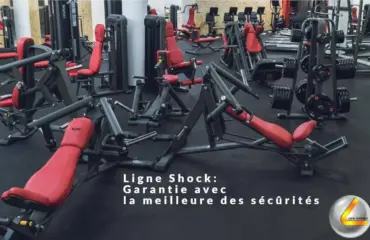
Guided-load machines remain the backbone of a commercial floor, for their safety and their versatility. Recent generations add genuinely useful refinements rather than gadgets.
What defines them:
- Adjustable resistance suited to every level, changed in seconds with a pin.
- Controlled movement paths that reduce the risk of injury on an unsupervised floor.
- Integrated monitors on some ranges, to record sets and follow progress.
Typical examples: connected leg presses and dual-column cable stations with multiple adjustment points. Our selectorised strength machines cover the full pattern set for a general membership.
2. Connected free weights
Dumbbells and kettlebells with built-in sensors combine classic loading with digital tracking.
What they bring:
- Adjustable systems that reduce the amount of hardware a facility has to store and rack.
- Sensors that count repetitions and record progress across sessions.
- Companion applications for planning and reviewing sessions.
The commercial argument is space and data rather than novelty: an adjustable set replaces a run of racking, and the tracking gives coaches something concrete to work from. Conventional professional kettlebells remain the reference for heavy and ballistic work.
3. Next-generation resistance bands
Light, versatile and inexpensive per unit, bands are an effective complement to free weights for stabiliser work and mobility.
- Usable across every level, from a first induction to an experienced athlete.
- Well suited to warm-ups and to rehabilitation protocols.
- Durable materials that survive being handled by hundreds of members.
Recent developments worth asking about: anti-roll constructions that stay flat on the limb, and graduated bands that let tension be set precisely rather than guessed.
4. Modular rigs and cages
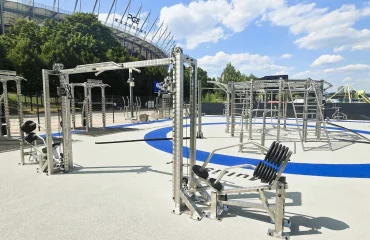
Rigs and cross-training cages have become a fixture, because a modular structure lets a facility build exactly the training area it needs rather than buying a fixed configuration.
- Pull-up, dip and squat stations on one structure.
- Configurable to the room, including height and wall constraints.
- Accessories that extend the exercise range without extra floor area.
Our cross-training and Hyrox cages are configured project by project, which is the point of a modular system.
5. Ergonomic core accessories
As core work has moved from an afterthought to a programmed block, the accessories around it have improved: assisted-return ab wheels, adjustable plank supports and reinforced stability balls. Individually inexpensive, collectively they make a functional zone usable. See the full fitness accessories range.
Comparison: what each category is for
| Category | Main advantages | Best suited to |
|---|---|---|
| Selectorised machines | Safety, precision, adjustable resistance | General membership, beginners and experienced members alike |
| Connected free weights | Versatility, digital tracking, less storage | Coached facilities and performance settings |
| Resistance bands | Mobility, stabiliser work, low cost per unit | All levels, warm-up and rehabilitation |
| Modular rigs and cages | Functional training, configurable, high throughput | Cross-training boxes and advanced strength areas |
| Core accessories | Trunk strength, better positioning | Every member and every class format |
The underlying trends
Connected equipment
Sensors and mobile applications let performance be followed and programmes personalised. For an operator, the question to ask a supplier is what happens to the data: whether it stays in a closed application, whether it can be exported, and what happens if the platform is discontinued.
Durability and environmental impact
Buyers increasingly ask for recycled or lower-impact materials, and for equipment that can be repaired rather than replaced. Parts availability is the practical test of both.
Modularity
Modular equipment, from rigs to adjustable dumbbells, answers a real constraint: floor area. A configuration that can be extended later is worth more than one that has to be replaced.
Why buy from Light In Fitness
Professional selection. We select ranges that combine innovation, build quality and real durability, for facilities open to the public rather than for occasional use.
Project support. We help match the equipment to the objective, whether the priority is general conditioning, hypertrophy or performance, and to the floor area actually available.
Compliance. Indoor equipment is specified to EN ISO 20957-1 class S, the class written for supervised professional installations; class I is the professional class covering inclusive access, a different scope rather than a level above class S. Outdoor adult equipment falls under EN 16630, and children playground equipment under EN 1176-1 with surfacing to EN 1177.
Frequently asked questions
How should a budget be built for a strength area?
Start from the configuration, not from a price per machine. Accessories, flooring, storage and installation regularly account for a significant share of a project and are the items most often forgotten at the estimate stage. Ask for a costed quotation against your actual floor plan.
Is connected equipment worth it for a general membership?
It is worth it where someone will use the data: a coaching team, a class format, a retention programme. Without that, the sensors are a cost with no return, and a robust unconnected machine is the better buy.
How quickly do members see results?
With regular use and a sensible diet, progress is generally noticeable within four to six weeks. That is also roughly the window in which a new member decides whether to stay, which is an argument for putting the easiest-to-use equipment where new members will find it.
How often should the equipment mix be reviewed?
Review usage rather than age. A station that is never occupied at peak hour is telling you something, and the fix is often a different pattern rather than a newer version of the same machine.
In short
The equipment worth investing in is the equipment that covers the patterns your members actually train, that survives your duty cycle and that can be repaired. Selectorised machines, modular rigs, quality free weights, bands and core accessories cover the ground between them. Request a quote and our team will propose a configuration for your floor.