Professional Strength and Cardio Equipment for Gyms
A strength and cardio floor is judged twice: once by the people who use it every day, and once by the operator who pays for it over its whole service life. Light In Fitness has supplied professional fitness equipment to gyms, clubs, hotels, residences, local authorities, schools, rehabilitation centres and armed forces since 2013, and the same questions come back on every project. What separates equipment built for shared, commercial use from everything else? How much does the look of a room really matter? And how does a machine ordered from abroad actually reach the site?
Why commercial-grade equipment is a different product
A machine installed in a shared facility works under conditions that have nothing in common with occasional private use. It runs for long, uninterrupted hours, it is used by people of very different weights, heights and abilities, and most of the time nobody is watching. That combination is what dictates the specification: frame section, weld quality, bearing and bushing choice, belt and deck construction on a treadmill, cable and pulley sizing on a strength station, upholstery density and covering.
The visible consequence is durability, but the real consequence is safety. Guided movement paths, clearly indexed adjustments, protected moving parts and predictable resistance curves are what allow an unsupervised user to train without hurting themselves. Equipment meant for private use offers none of that under commercial load, which is why it has no place in a room open to members, guests, residents, pupils or the public.
Cardio: the section that decides how the room feels
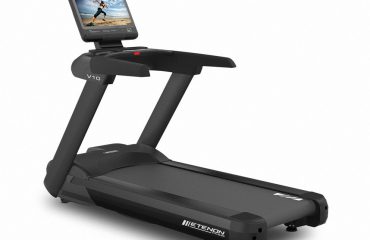
Cardio equipment is what most users touch first and what defines the perceived quality of a facility. A coherent cardio area normally combines treadmills, upright and recumbent bikes, indoor cycling bikes, cross trainers and rowers, so that users with very different profiles all find something they can use on day one. Recumbent bikes suit older users and rehabilitation work, cross trainers suit low-impact endurance, treadmills remain the reference for running, and indoor cycling bikes carry group sessions.
Consoles matter, but they should follow the audience rather than lead the budget. Connectivity, session tracking and entertainment screens genuinely improve retention in a club with long sessions; in a hotel gym used for twenty minutes before breakfast, a simple, readable console that never needs support is worth more. Our professional cardio equipment range is organised so that mechanical specification and console level can be arbitrated separately.
Strength: coherence beats accumulation
On the strength side, the mistake is rarely buying too little. It is buying a collection of machines that never becomes a circuit. A strength area works when the movement patterns are covered in a logical order, when the load range suits the actual users, and when circulation lets people move between stations without waiting or crossing.
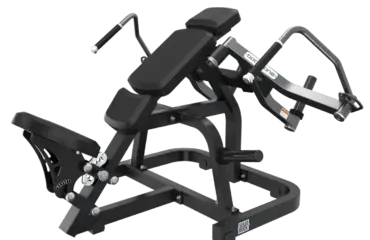
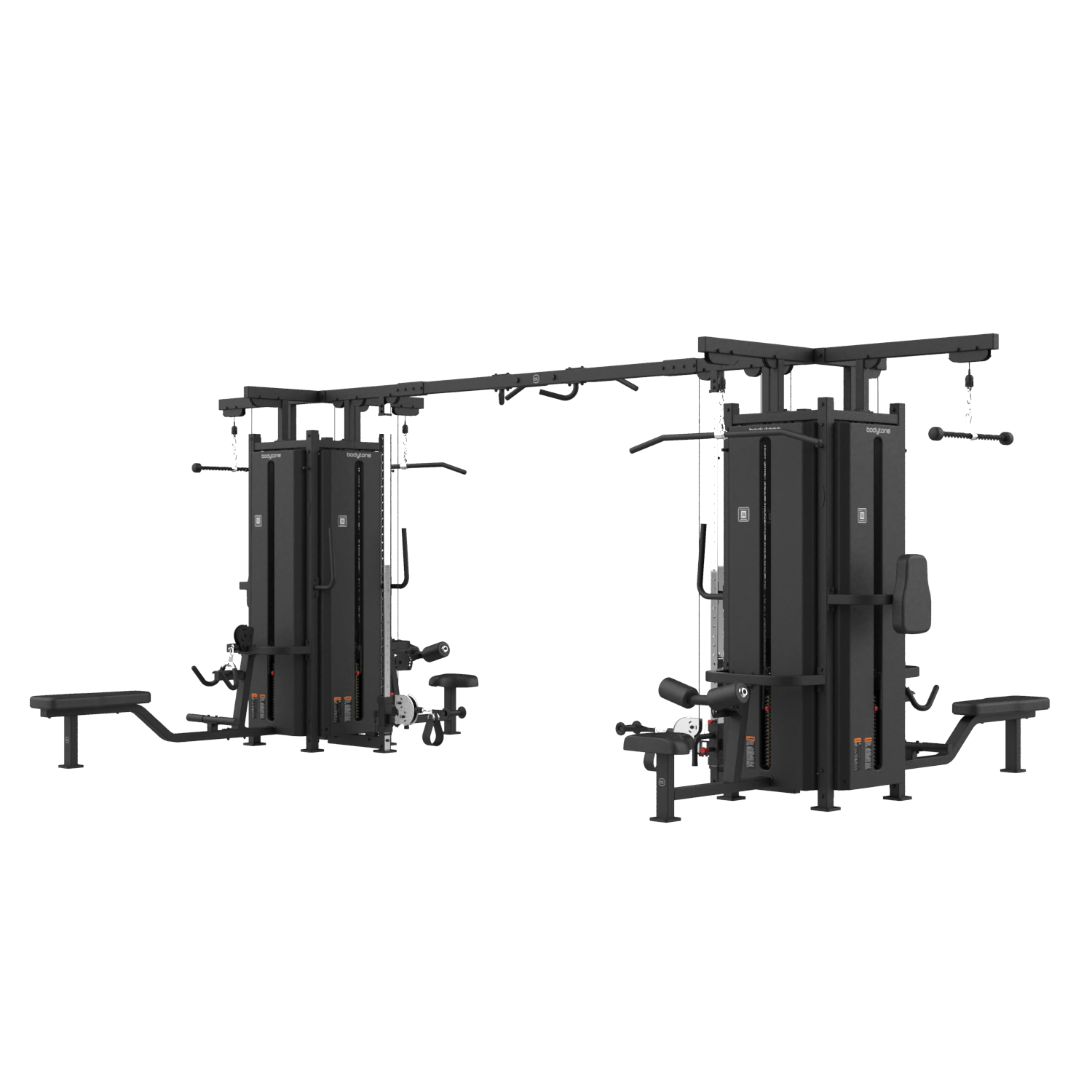
Selectorised machines carry the main circuit, because load changes are instant and the movement is guided. Plate-loaded machines and racks serve trained users and performance zones. Benches, free weights and functional space complete the offer. Our professional strength training machines are built around that logic, so a line can be specified as a whole rather than assembled machine by machine.
Design is not decoration
The appearance of a gym has become a commercial argument, and there is nothing frivolous about it. Colour, finish and consistency across a line affect how welcoming a room feels, how easy it is to read for a new user, and how a photograph of the space performs when a prospective member sees it. A coherent visual identity across cardio and strength equipment also makes a room look intentional rather than accumulated over ten years of separate purchases.
Design also has an operational side. Sightlines, spacing, colour coding of zones and the position of the flooring transitions determine whether staff can supervise the room from one point and whether users understand where they are supposed to go. Which is why professional gym flooring is specified at the same time as the machines, and not once everything is already in place.
Choosing well is how injuries are avoided
Most incidents in a shared gym come from three causes: equipment that does not fit the user, a machine kept in service after it should have been repaired, and a layout that puts people in each other’s way. All three are procurement questions before they are supervision questions.
Adjustment range covers the first. A seat and back pad that adapt across a genuinely wide range, with clear markings, let a small user and a tall user use the same station safely. Maintenance covers the second: a supplier that can provide parts and technical support quickly is worth more than a discount, because a machine left broken becomes a hazard as well as a loss. Layout covers the third, and it is decided on a plan long before delivery.
International delivery and installation
Professional equipment is heavy, bulky and fragile in specific places, so getting it to the site is part of the project rather than an afterthought. Light In Fitness works with logistics partners to deliver its ranges internationally, to large operators and to single independent sites alike.
What makes a delivery go well is preparation. Access route, lift dimensions, door widths, floor loading and the availability of handling means on the day are checked before the order is confirmed. Where installation is included, assembly, levelling and commissioning are carried out on site so the room is handed over ready to open. Delivery times and terms depend on the destination country and are confirmed with the quotation for each project.
Frequently asked questions
What makes equipment suitable for a commercial gym?
Construction for continuous use by varied, often unsupervised users: heavier frames, better bearings, guided and predictable movement, adjustments that stay in place, and parts availability over the life of the machine. Equipment designed for private use does not meet those conditions.
Should cardio or strength be specified first?
It depends on the audience. Hotels, campsites and residences see cardio used first. Clubs and training centres build the strength area first. In both cases the two sections should be planned together, because circulation and flooring depend on the whole layout.
Do you deliver outside your home market?
Yes. The ranges are delivered internationally, with terms and lead times confirmed per destination in the quotation. Site access and handling requirements are reviewed before the order so that delivery day holds no surprises.
Can an existing gym be upgraded progressively?
Yes, and it is often the better approach. Replacing the most used stations first, then extending the line in a second phase, keeps the room open and spreads the investment without downgrading the specification.
Talk to us about your project
Every facility has its own audience, opening hours, surface and access constraints, and those are what turn a list of machines into a room that works. Tell us about your site and our team will propose a complete configuration, from layout and flooring to delivery and installation. Request a quote and we will come back with a costed plan.