Professional Cross Trainer: The Complete Buying Guide
Un elliptique professionnel se distingue par la masse de son volant d'inertie, la robustesse de ses roulements et la longueur de foulée fixe adaptée à la morphologie moyenne. C'est la machine cardio la plus complexe mécaniquement, où l'écart entre gamme professionnelle et semi-professionnelle apparaît le plus vite. La disponibilité des pièces d'usure conditionne sa durée de vie réelle.
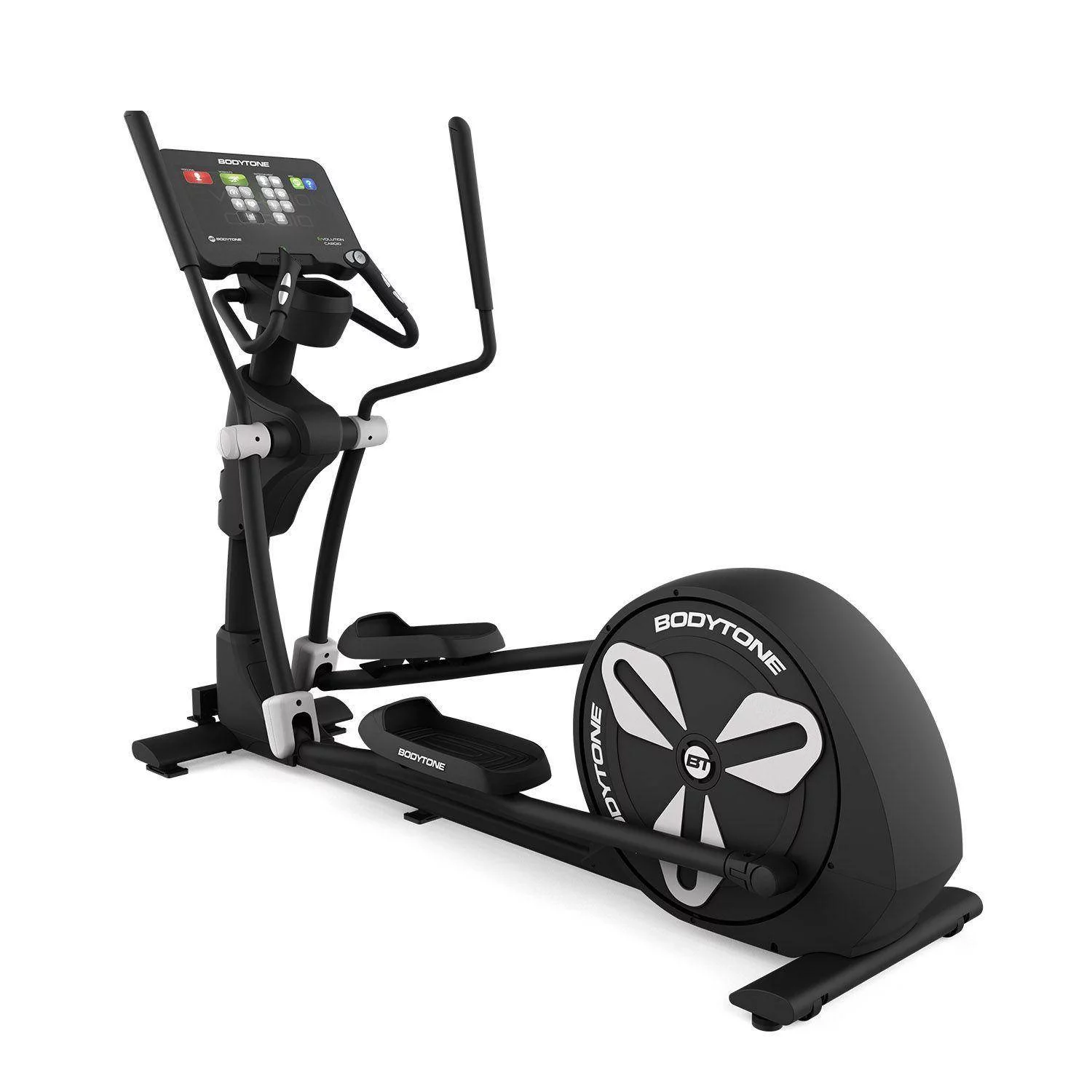
The cross trainer is the most mechanically demanding cardio machine on a commercial floor. It carries the user’s whole body weight on a suspended stride, it runs for hours a day without a pause, and every arm, joint and bearing on it is a wear point. The gap between a genuine commercial machine and a lighter one shows up faster here than on a bike or a rower, which is why this purchase deserves more than a glance at the console.
This guide sets out what actually separates a professional cross trainer from the rest, which specifications matter once several hundred people share the same machine, and how to match a model to your site, whether you run a fitness club, a hotel wellness room, a municipal sports hall, a corporate gym or a rehabilitation centre.
What makes a cross trainer professional
Three things carry most of that judgement: the mass of the flywheel, the quality of the drive system, and the geometry of the stride.
A heavier flywheel stores more energy between pedal strokes, so the movement stays even instead of pulsing. Over a short session the difference is subtle. Over a long steady-state effort, or on a machine used back to back all evening, it is the first thing users notice. A light flywheel forces the legs to drive the machine rather than the machine carrying the legs, and the stride turns choppy exactly when the user is most tired.
The drive system matters just as much and is far harder to see. Belt tension, bearing quality and the way the pedal arms are anchored to the frame decide whether the machine is still silent and square after years of daily use, or whether it develops the lateral play that makes members walk past it. Ask what the wear parts are, and ask whether they can be replaced individually. On a machine that will stay on your floor for a decade, spare-part availability is a specification in its own right.
Stride length is the third pillar and the one most often overlooked. A stride that suits an average adult constrains a tall user, who then shortens the movement and loses the joint-friendly quality that made the cross trainer attractive in the first place. In shared access, a generous stride simply widens the number of people who can use the machine comfortably, which is the whole point of putting it in a commercial room.
Console or mechanics: where to put the budget
Put it in the mechanics. Console features age quickly, they are tied to software cycles you do not control, and they are awkward to replace. A frame, a flywheel and a transmission built for commercial duty stay usable for many years and can be serviced. A brilliant screen bolted to a mediocre chassis is a machine you will replace early; a plain console on a solid chassis is a machine you will still be running long after the screen has stopped impressing anyone.
That does not make connectivity worthless. In a club where members follow their own training data, app compatibility and a readable performance display help retention. It simply means the console is the last criterion to weigh, not the first.
Standards and compliance
Indoor equipment installed in a supervised commercial or public facility falls under EN ISO 20957-1 class S, the class written for professional use with unrestricted access. Class I is a professional class designed for inclusive access, not a step above class S in intensity: the two answer different questions and should not be treated as a ladder. Anything presented below class S has no place in a room where you do not control who trains and for how long.
Ask for the declaration of conformity in writing before you order, not after delivery. It is the document your insurer and your inspecting authority will ask about, and it is also the fastest way to sort serious suppliers from the rest.
Matching the machine to the site
The right specification depends far less on the brand than on who walks through your door.
In a fitness club or a cross-training box, the machines run continuously at peak hours. Flywheel mass, frame rigidity and serviceability dominate. Plan for a bank of identical units so that spare parts and service procedures stay simple.
In a hotel or a residential wellness room, footprint and noise come first. Guests train early and late, often above or below occupied rooms, so a quiet belt drive and a machine that does not transmit vibration into the slab matter more than a long feature list.
In a municipal facility, a school or a club, the priority is a machine that survives unsupervised use and mixed ability levels, with a generous stride and simple controls that need no instruction.
In rehabilitation and physiotherapy, the low-impact stride is the reason the machine is there at all. Stable handrails, easy step-on height and fine resistance increments matter more than top-end resistance.
Siting, power and floor
A cross trainer places the user higher than a bike or a rower, so ceiling height is a real constraint: measure the machine height, add the step-up, add the tallest user you expect. Leave circulation space behind the unit rather than beside it, since users step off backwards.
Self-generating models need no mains supply, which frees the layout considerably; models with a powered console do, and a row of them should be planned with the electrician rather than improvised with extension leads. Underneath, a dense rubber floor protects the slab, cuts structure-borne noise and keeps the frame from walking under load.
Cost over the life of the machine
The purchase price is the smallest part of the equation. What decides the real cost is how many hours the machine runs before the first intervention, whether that intervention is a part swap or a replacement, and how long you wait for the part. A machine that is cheaper to buy and impossible to service is the most expensive option on the list.
Weigh the warranty on the frame separately from the warranty on wear parts and electronics, and ask the supplier for the service history of the range rather than the brochure. A supplier who equips professional sites can answer that question; one who does not, cannot.
Frequently asked questions
What sets a professional cross trainer apart?
Flywheel mass, drive smoothness and stride length. A heavier flywheel produces a steadier movement, and the difference grows the longer the session lasts.
Which stride length should I choose?
A stride that is too short constrains taller users. In shared access, a generous stride widens the number of people who can use the machine comfortably.
Console or mechanics: which should come first?
The mechanics. Console features age quickly and are hard to replace, whereas a quality frame and transmission stay usable for many years.
How many units should a club plan for?
That depends on your peak-hour attendance and the mix of cardio you offer, so it is best sized against your own attendance figures rather than a rule of thumb. Our team can model it with you.
Specifying your cross trainers
If you are building or refitting a cardio area, the shortest route to a sound specification is to start from the room and the users rather than from a model name. Browse the full professional cross trainer range, or step back to the complete commercial cardio equipment selection to plan the whole zone. The Bodytone Evoe2 professional cross trainer is a useful reference point for a commercial floor.
Light In Fitness has equipped professional sites since 2013. Tell us the room, the traffic and the users, and we will put a specification and a costed proposal in front of you: request a quote.