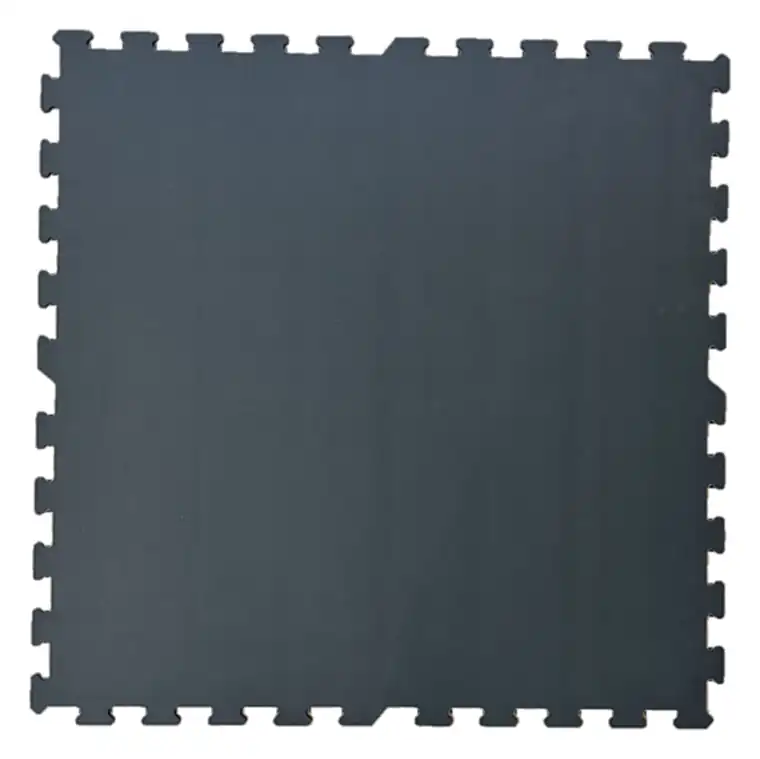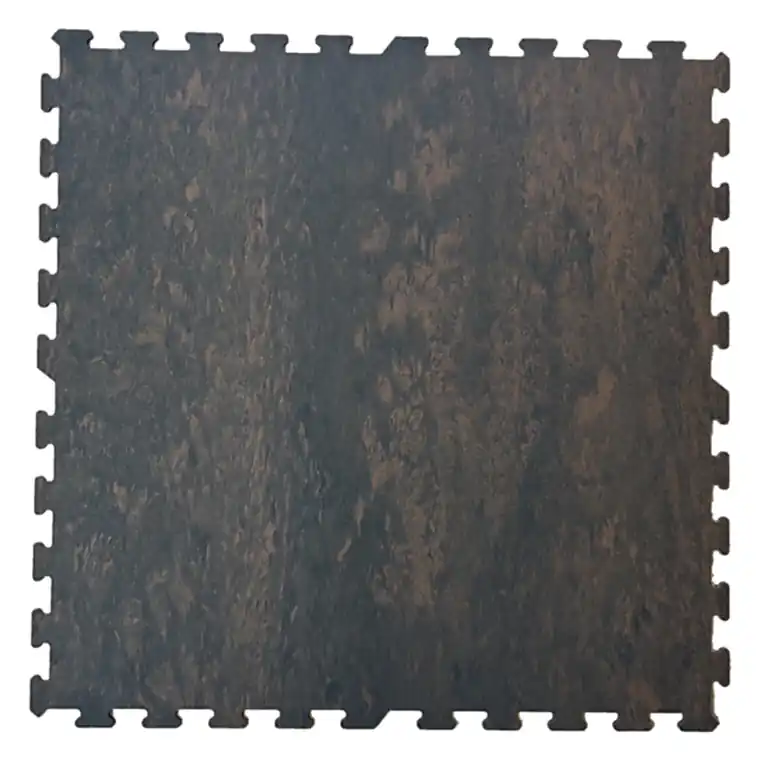
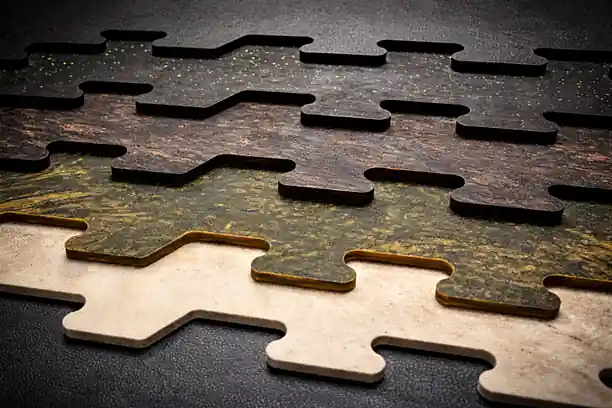
7 mm Puzzle Tile Dark Stone Effect - 4-Sided Interlocking Sports Floor
7 mm Puzzle Tile Dark Stone Effect - 4-Sided Interlocking Sports Floor : 7 mm interlocking tiles, wood and marble finish, marque Light In Fitness, 80,50 EUR excl. VAT. Dalle puzzle 7 mm effet bois foncé, pose libre sans colle L'effet bois foncé est la finition qui éloigne le plus nettement le sol de l'esthétique salle de sport. Delivery and installation priced on quotation across Europe.
80.50 € excl. VAT
i.e. 96.60 € incl. VAT · VAT 20%
Shipping quoted separately The shipping cost is confirmed before you approve the order.
7 mm interlocking puzzle floor tile with a dark stone effect finish and contrasted veining, laid loose without adhesive on all four sides. An alternative to black rubber flooring for yoga, Pilates, wellness and hotel fitness areas. Sold per square metre. Price excluding VAT.
Quotation = itemised pricing with delivery, installation and trade discounts, within 24 business hours. No commitment. Our commitments
Conformity: the acoustic values and fire classification shown on this page are declared by Light In Fitness on the basis of its suppliers’ tests; the corresponding certificate is supplied on request with the quotation.
Warranty: specified in the quotation for each reference — details of our warranties.
Description
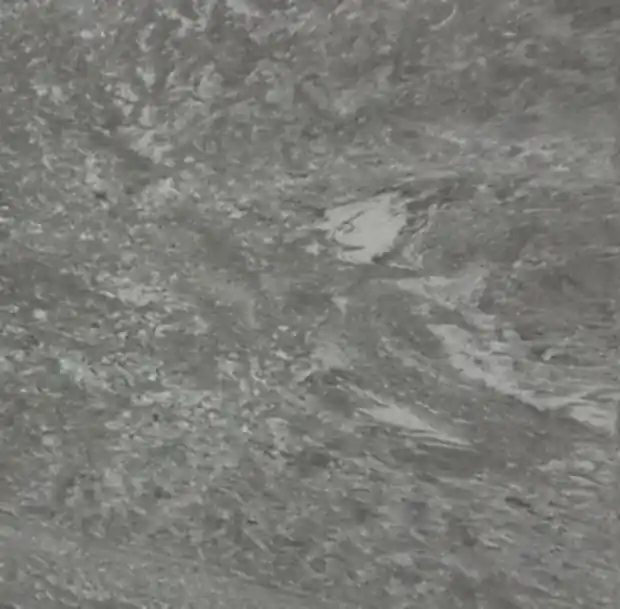
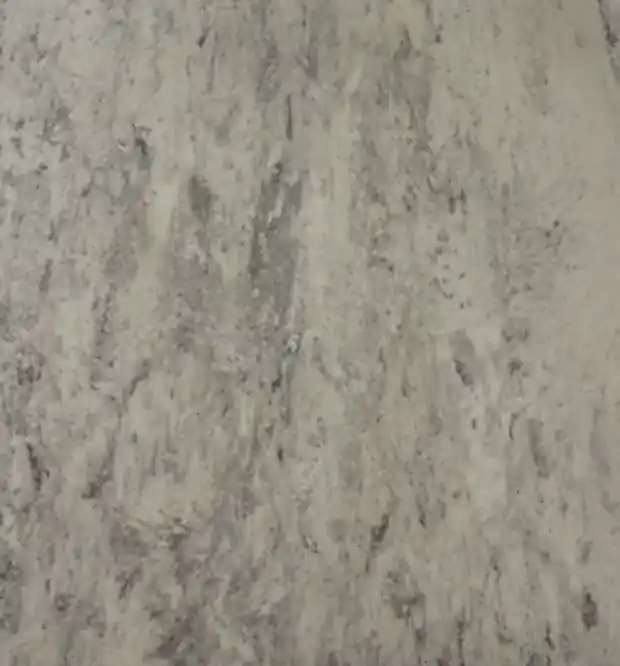
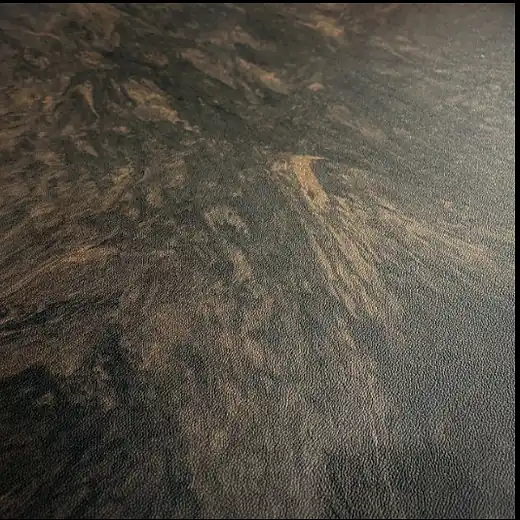
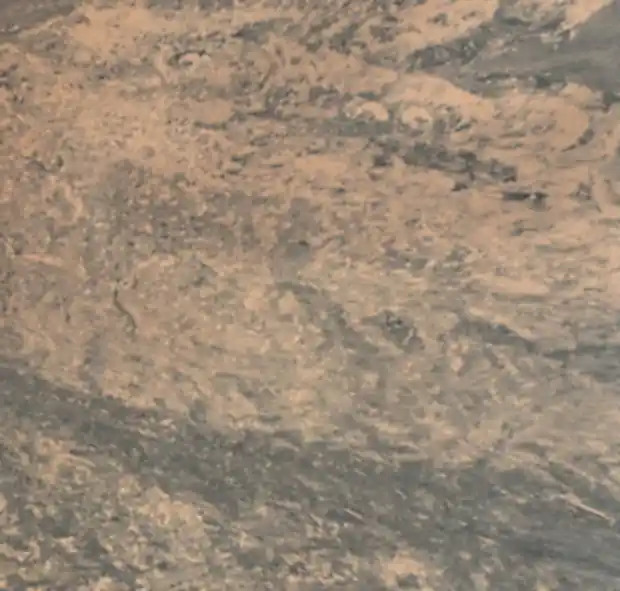
The dark stone effect is the finish that takes a gym floor furthest from looking like a gym floor. Contrasted veining, 7 mm, interlocking on all four sides, laid loose without glue.
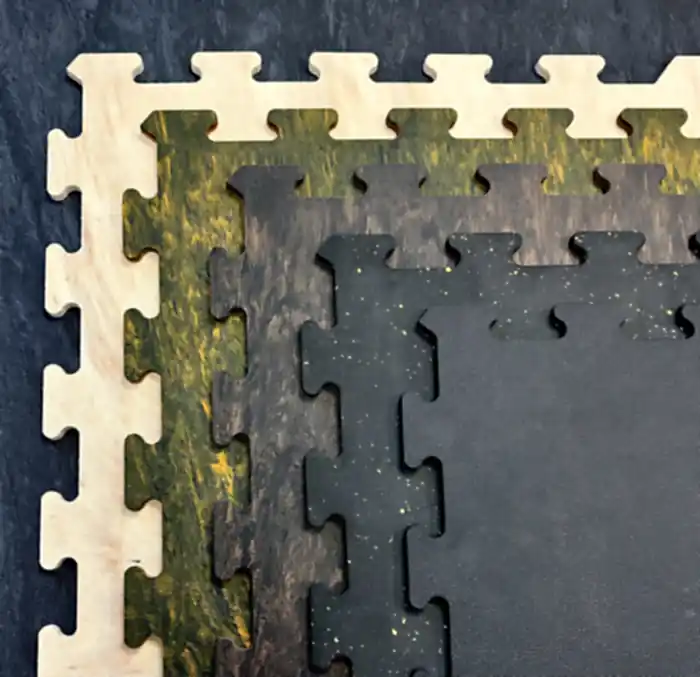
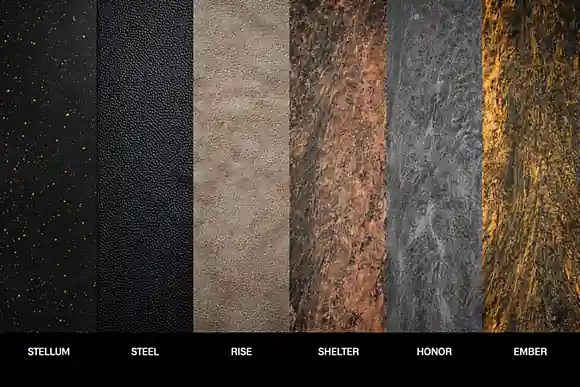
This is the finish to specify when the floor has to sit alongside an existing interior rather than announce a training room: a yoga studio, a hotel wellness area, the fitness room of a high-end residence. It belongs to a range of six colours, of which dark stone effect is this reference. The full colour chart and the edge view are in the photo gallery, and each colour has its own product page.
A finishing floor, not a shock-absorbing one
Be clear about what 7 mm is for. This tile is a finishing surface, not a protective floor against dropped loads. For weightlifting, barbell drops or rack zones you need a rubber tile of 20 to 40 mm, such as the weightlifting rubber tiles. The two combine very well in the same room, zone by zone: stone effect on the class and circulation areas, thick rubber where the weight lands.
Where it earns its place
Class studios and wellness areas, where the finish is on show. At 7 mm the tile gives a clean, even floor in rooms where appearance counts: yoga and Pilates studios, group class rooms, stretching and mobility spaces. The four-sided puzzle interlock produces a continuous surface with no pronounced visible joint.
Hotel and residential gyms, as an alternative to black rubber. Stone and marble finishes let you equip a fitness space without the black rubber floor that signposts a gym. That is the typical case for a hotel or residence fitness room, where the flooring has to match the decoration of the common areas.
Reception areas, circulation and light cardio zones. The low thickness limits the step at doorways and makes the junction with neighbouring floor coverings easier. It suits circulation areas, reception spaces and light cardio zones, but it is not intended for heavy load areas.
Private studios and leased spaces, fitted without building work. Loose interlocking installation needs no adhesive and can be taken up again, which is the answer for a leased space or a temporary fit-out where the floor has to go back to its original state.
Installation and upkeep
The substrate must be hard, clean, dry and flat. At 7 mm an irregularity in the floor stays perceptible underfoot and can create play in the interlocks; a levelling compound may be needed on an older substrate. Tiles can be cut with a blade at the edges and around obstacles, so allow a material margin because cutting consumes part of the ordered surface. Plan the edge treatment too, where the interlocking teeth remain visible against the walls.
Decorative finishes can vary slightly from batch to batch. On stone and marble effects, a difference in shade between two production runs is possible, so order the whole surface at once, cutting margin included, rather than topping up later.
Upkeep is sweeping or vacuuming, then a damp mop with a neutral detergent. Avoid solvent-based products and abrasive machines, which damage the decorative finish layer.
Specifications
| Product | Interlocking puzzle sports floor tile |
|---|---|
| Thickness | 7 mm |
| Installation system | Puzzle interlock on all 4 sides, loose laid without glue |
| Finish | Dark stone effect, contrasted veining |
| Colours | Range of 6 colours, dark stone effect for this reference; each colour has its own page |
| Sales unit | Per square metre |
| Material | On request |
| Density | On request |
| Tile format | On request |
| Indentation resistance | On request |
| Fire classification | On request |
| Required substrate | Hard, clean, dry and flat floor |
| Maintenance | Vacuuming then washing with water, neutral detergent, no solvent |
| Price excluding VAT | 80.50 EUR excluding VAT per m2 |
Frequently asked questions
Does installation need adhesive?
No. The tiles interlock with each other on their four sides and rest freely on the substrate. Perimeter fixing can be useful on large surfaces or in heavy traffic areas, but it is not systematic.
Can the tiles be cut?
Yes, with a blade at the edges and around obstacles. Allow a material margin, because cutting uses up part of the ordered surface.
Can cardio machines stand on it?
At 7 mm, concentrated point loads mark the surface. For a treadmill or a rower, use load spreading plates under the feet, or set aside a zone in thick rubber tiles. Ask us for the indentation resistance figure before deciding.
Which data are not published here?
Material, density, tile format, indentation resistance and fire classification are supplied on request. They are asked for in public-access buildings and they govern compatibility with heavy cardio equipment, so request the full technical data sheet before signing off your project.
Can I match it with another finish?
Yes. The same 7 mm system exists in other decors, including wood effect rubber tiles, and the whole family is grouped in the 7 mm interlocking puzzle tiles section.
Price: 80.50 EUR excluding VAT per m2. Send us your surface area and the layout of your room and we will price the tiles including the cutting margin: request a quote.
Informations de livraison
Livraison en France métropolitaine
- Délai de préparation : 24–48 h ouvrées
- Délai de livraison : 3–7 jours ouvrés
Livraison sur rendez-vous
Pour les équipements lourds et volumineux, la livraison se fait sur rendez-vous avec des transporteurs spécialisés.
Installation
Nous proposons un service d'installation sur devis. Contactez-nous pour plus d'informations.
Related products
-
7 mm Puzzle Tile Absolute Black - Interlocking Sports Floor, 4 Sides to Pinterest (opens in a new window)Save on Pinterest : 7 mm Puzzle Tile Absolute Black - Interlocking Sports Floor, 4 Sides
 Add to cartMORE INFO
7 mm Puzzle Tile Absolute Black - Interlocking Sports Floor, 4 Sides
73.50 € excl. VAT -
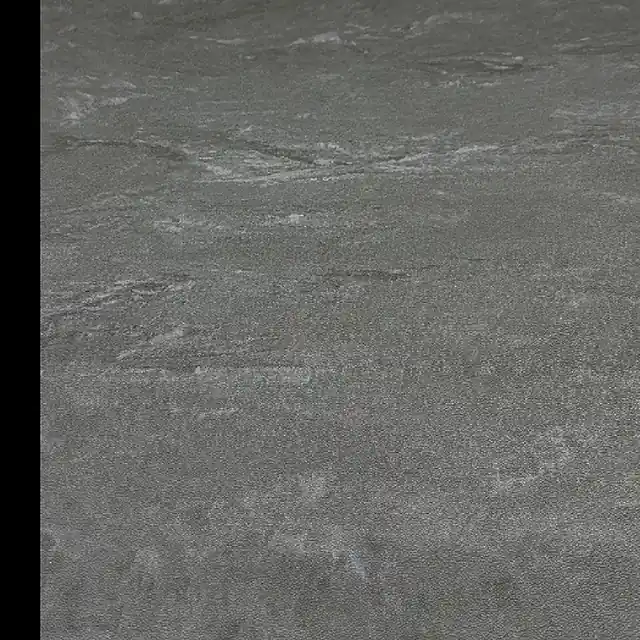
7 mm Puzzle Tile Grey Marble Effect - Interlocking Sports Floor, 4 Sides to Pinterest (opens in a new window)Save on Pinterest : 7 mm Puzzle Tile Grey Marble Effect - Interlocking Sports Floor, 4 Sides
 Add to cartMORE INFO
7 mm Puzzle Tile Grey Marble Effect - Interlocking Sports Floor, 4 Sides
80.50 € excl. VAT -
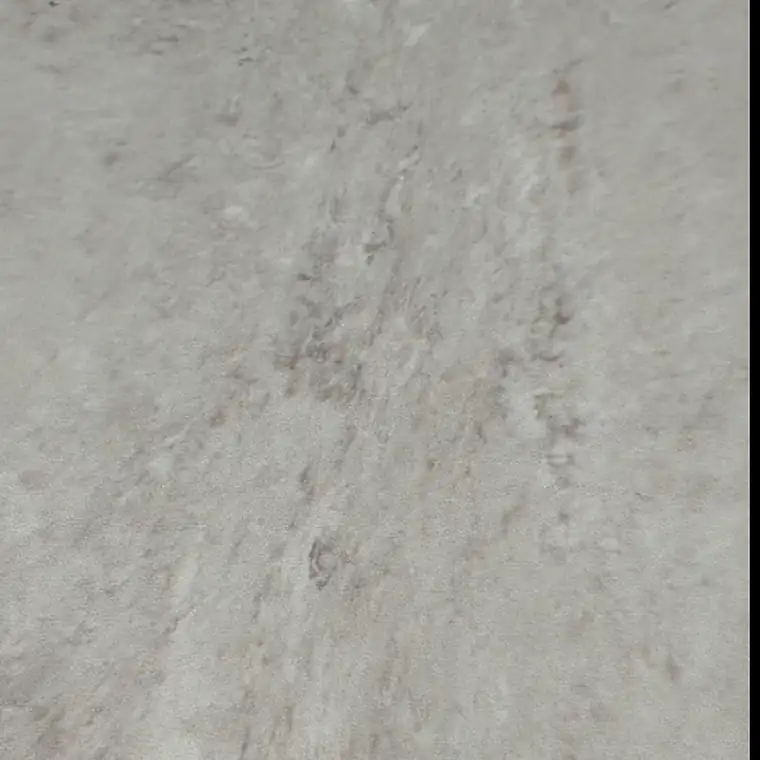
7 mm Puzzle Tile Light Stone Effect - 4-Sided Interlocking Floor to Pinterest (opens in a new window)Save on Pinterest : 7 mm Puzzle Tile Light Stone Effect - 4-Sided Interlocking Floor
 Add to cartMORE INFO
7 mm Puzzle Tile Light Stone Effect - 4-Sided Interlocking Floor
80.50 € excl. VAT