Playground Equipment: Where Design Meets Function
Une aire de jeux se juge sur la conformité des structures à la série EN 1176 et sur l'adéquation du sol amortissant à la hauteur de chute libre. Le design et la fonctionnalité viennent ensuite, une fois ces contraintes satisfaites. Light In Fitness fabrique ces équipements et fournit le dossier de conformité.
A playground is judged on two things before anything else: whether the structures comply with the EN 1176 series, and whether the impact-attenuating surface matches the free height of fall of every item above it. Design and play value come next, once those constraints are satisfied. This article is written for the people who actually sign off on playgrounds, local authorities, schools, holiday parks, campsites, housing associations and property developers, and sets out how Light In Fitness approaches durability, function and design in that order.
Why specifiers choose Light In Fitness for playground equipment
The first argument is durability. Public play areas are used continuously, in all weather, by children who test every component to its limit. Structures that fail after two seasons are not a cost saving, they are a second procurement. Light In Fitness builds around galvanised steel frames, HDPE and HPL panels and rope systems selected for outdoor service life, and manufactures its own play structures rather than reselling generic assemblies.
The second is documentation. A playground that cannot produce a compliance file is a liability the operator carries alone. Every configuration is supplied with the conformity documentation for the structures and, where the surfacing is part of the contract, for the surface as well.
The third is installation and maintenance. Play equipment is not a self-assembly product. Foundations, anchoring depths and free space around each item are part of the standard, not optional refinements, which is why installation should be carried out or supervised by trained fitters and why the annual inspection regime has to be planned from day one. The full playground equipment range is documented structure by structure with that in mind.
Function: what the equipment has to let children do
Children need to climb, swing, slide, balance, hang, spin and hide. A play area that offers only one of those actions empties within weeks. A good configuration spreads play actions across age groups and abilities, so that a three-year-old and a ten-year-old both find something at their level without competing for the same component.
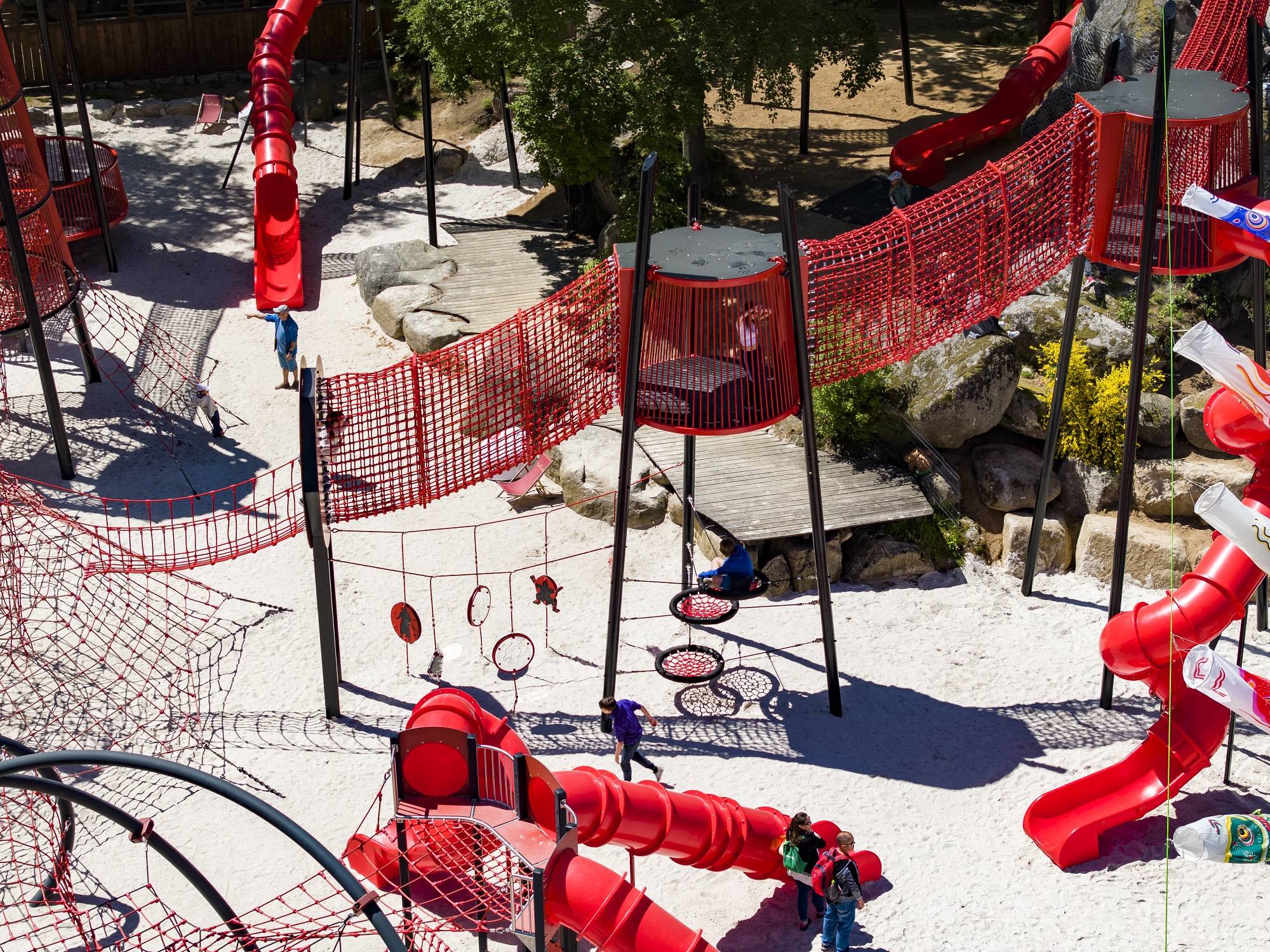
- Climbing: rope pyramids, climbing nets, towers and combined rope structures.
- Sliding: slides integrated into towers, and a sliding pole for a fast descent from a raised deck.
- Swinging: swing sets sized for the age range and for the number of simultaneous users.
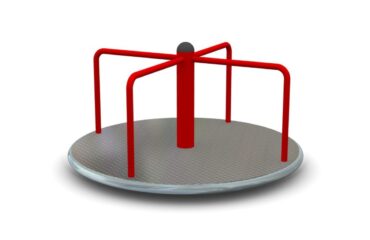
- Rotation and balance: roundabouts, spring riders and balance modules.
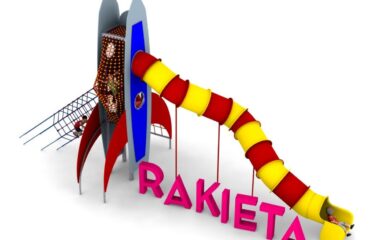
- Imaginative play: elevated playhouses and themed tubular structures.
- Rest and supervision: benches and site furniture positioned with sightlines in mind.
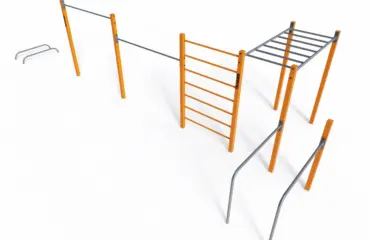
For older children and teenagers, a play area is often better completed by dedicated outdoor fitness equipment for children than by adding more toddler modules that nobody in that age group will use.
Design: fitting the equipment to the site
Visual appeal matters, but on a public site it is inseparable from integration. Equipment that ignores the surrounding landscape, the existing planting and the circulation routes reads as an obstacle rather than an amenity, and it tends to be used less. Colour range, material choice, timber or steel, and the height profile of the structures should be decided against the site, not against a catalogue photograph.
Layout is where most of the value is created or lost. Free space around each structure, separation between swinging and running trajectories, sightlines for supervising adults and an accessible route into the area all have to be resolved on the plan before any component is ordered. Retrofitting clearance after installation is rarely possible.
Safety: the standards that actually apply
Two separate standards govern a children’s play area, and they are not interchangeable. EN 1176-1 covers the play equipment itself: geometry, entrapment, free space, structural integrity and the information the manufacturer must supply. EN 1177 covers impact-attenuating surfacing and defines how the critical fall height of a surface is determined. The surface has to be specified against the free height of fall of the equipment installed above it, which means the two decisions cannot be taken independently.
EN 16630 applies to permanently installed outdoor fitness equipment for adults. It has no place on a children’s play structure, and equipment certified to it should not be substituted into a play area. Where a site combines both, the two zones are specified, surfaced and inspected separately.
The playground surfacing range covers the usual options, and the choice between them follows from the fall heights on the plan.
What a well-designed play area delivers
Beyond compliance, a play area that works keeps children active for longer, spreads use across the whole footprint instead of queueing at one component, and reduces wear on the two or three items that would otherwise absorb all the traffic. For a municipality it is a visible investment in public space; for a campsite or a holiday park it is a booking argument; for a school it is a supervised environment for break times that also supports physical development.
Frequently asked questions
Which standard applies to children’s playground equipment?
EN 1176-1 for the equipment and EN 1177 for the impact-attenuating surfacing. They are complementary and both are required.
Can adult outdoor fitness equipment be installed in a play area?
No. Adult outdoor fitness equipment falls under EN 16630 and is designed for adult body dimensions and loads. Where both are wanted on one site, they are laid out as separate zones.
How is the surfacing thickness decided?
From the free height of fall of the equipment above it, tested according to EN 1177. Take the fall heights from the manufacturer’s data for the exact references you are installing, then specify the surface against the highest of them.
Who can install the equipment?
Installation should be carried out by trained fitters working to the manufacturer’s instructions, with the foundations and anchoring executed as specified. Post-installation inspection and a documented periodic inspection regime follow.
What maintenance does a play area need?
Routine visual checks, periodic operational checks and an annual main inspection, plus surface condition monitoring. The frequency depends on usage intensity and on the manufacturer’s instructions for each item.
Planning your play area
A playground project starts with the plan, the age groups to be served and the fall heights, not with a shortlist of structures. Send us the site dimensions, the intended age range and any accessibility requirement, and our team will return a documented configuration with the applicable conformity data for the structures and the surfacing. Request a quote to begin.
Réalisations documentées
- Parcours ninja sur mesure, Rennes – îlot des Hautes-Ourmes
- Double mur ninja extérieur, Sallanches – Haute-Savoie
Sources et références
- Décret n° 96-1136 du 18 décembre 1996 – prescriptions de sécurité relatives aux aires collectives de jeux (Légifrance)
- NF EN 1176-1 – Équipements et sols d’aires de jeux, partie 1 : exigences de sécurité et méthodes d’essai générales (AFNOR)
- NF EN 1177 – revêtements de surface amortissants : détermination de la hauteur de chute critique (AFNOR)