The Cost of an Outdoor Playground: What Actually Drives the Budget
Le coût d'une aire de jeux dépend de trois postes distincts : les structures, le sol amortissant et la pose. Le sol représente souvent une part sous-estimée du budget, son épaisseur dépendant de la hauteur de chute libre des équipements. L'étude d'implantation et le dossier de conformité complètent le chiffrage.
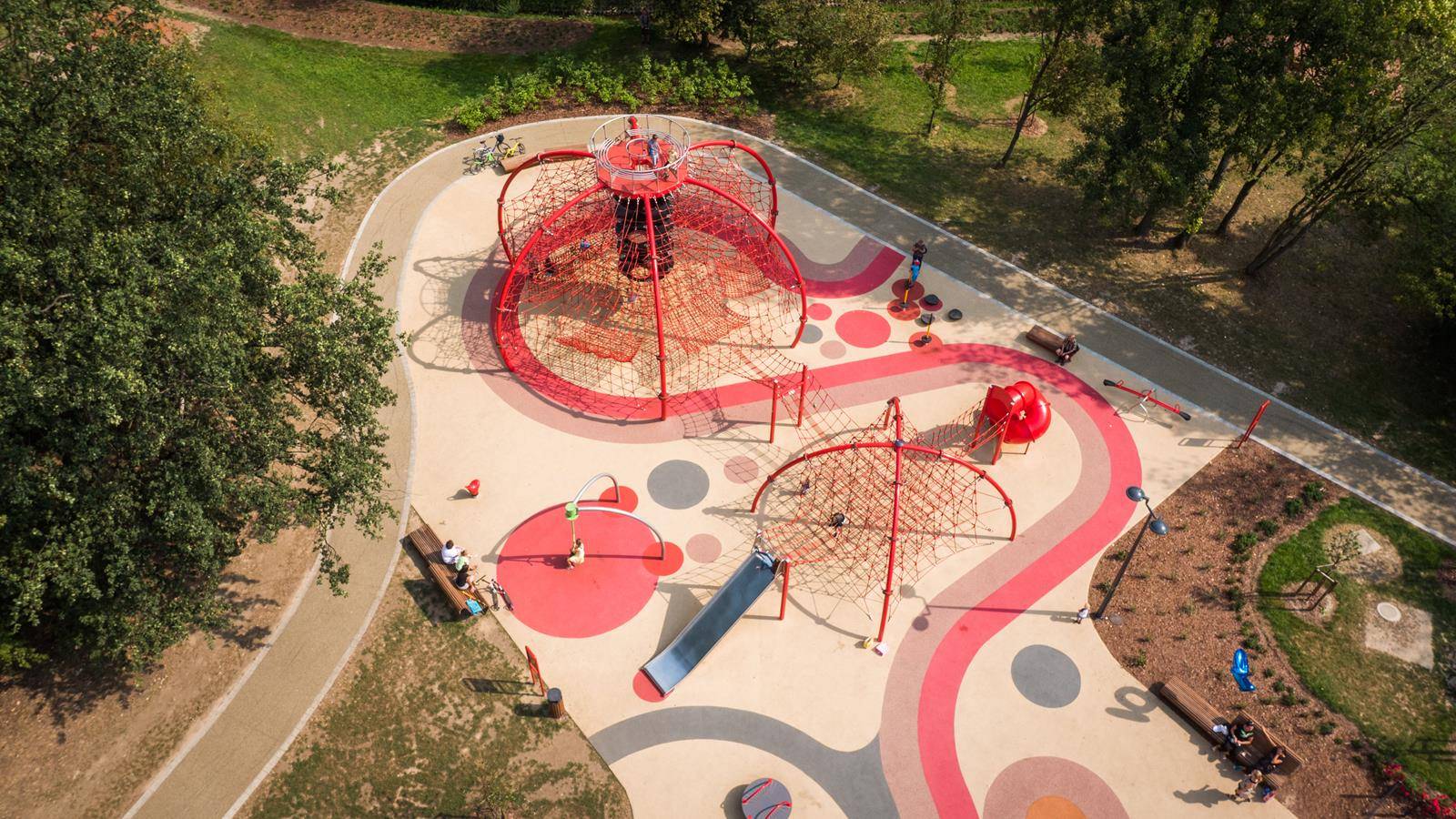
What drives the cost of an outdoor playground? Three distinct budget lines: the play structures themselves, the impact-absorbing surfacing, and the installation. The surfacing is the item most often underestimated, because its thickness is dictated by the free height of fall of the equipment above it. A siting study and the conformity file complete the costing.
Why there is no single price for a playground
Buyers routinely ask for a price per playground, and no serious supplier can give one without a brief. A playground is not a catalogue item bought off a shelf; it is a small construction project with a ground area, a soil condition, an access constraint and a user age range. Two schemes with the same equipment budget can differ substantially once surfacing and groundworks are priced.
What follows is the structure of the budget rather than a price list. Once you have the site plan and the age groups, we cost the scheme item by item and issue a firm quotation.
The factors that move the budget
Ground area
Area is the first multiplier. It sets the number of play units, but more importantly it sets the surfaced area, which is priced per square metre. A compact scheme in a courtyard and a full municipal park are different orders of magnitude for that reason alone.
Equipment and materials
A scheme built around swings, a slide and a spring rider sits at one end of the range; a multi-level tower with rope nets, climbing walls and themed HPL panels sits at the other. Material choice moves the figure again. Galvanised steel structures carry a long service life and resist weather and heavy use; timber has a different character and a different maintenance profile; rope and polyamide cable elements sit between the two. Steel generally costs more at purchase and less over the life of the installation.
Design complexity
A single standard structure is quick to specify, deliver and install. A bespoke layout with multiple linked towers, custom decoration and a themed identity involves design work, longer lead times and more complex installation. Complexity is a legitimate cost, but it should be a deliberate choice rather than an accident of the brief.
Impact-absorbing surfacing
This is the line item that surprises buyers. The surface under and around the equipment is not optional and not cosmetic: its specification derives from the free height of fall of the tallest accessible part. Wet-pour rubber, rubber tiles, artificial grass over a shock pad and loose-fill wood chips all have different unit costs, different installation requirements and very different maintenance regimes. Loose fill is cheapest to install and needs regular topping up; bonded systems cost more initially and need little attention.
Groundworks, access and installation
Foundations, levelling, drainage and the ease of getting a delivery vehicle to the site all feed into the installed price. A site with poor access or a slope will cost more to prepare than a flat, open plot.
Standards, and what they mean for cost
Playground equipment for public use is covered by EN 1176-1, and the impact-absorbing surfacing beneath it by EN 1177. These are two separate standards addressing two separate things, and they should never be substituted for one another. EN 16630, which covers outdoor fitness equipment for adults, is not the correct reference for children play equipment even when the two zones sit side by side on the same site.
Compliance is not a cost you can trade away. It determines the surfacing thickness, the safety zones around each unit, the permitted gaps and openings, and the inspection regime the operator inherits on handover. Ask for the test report for the equipment and the certified critical fall height for the surfacing, and keep both in the conformity file: that file is what protects the operator if an incident is ever investigated.
Our playground equipment range is certified accordingly, with playground surfacing and playground wood chips specified against the fall heights of the structures they sit under.
Getting the best value for the budget
Value on a playground project is rarely about finding the cheapest structure. Three habits make more difference than any discount.
- Match the equipment to the actual user age range. Over-specifying for older children on a site used mainly by under-sixes buys height and fall protection you did not need.
- Decide the surfacing early. Choosing it after the structures are selected means the fall heights are already fixed and the cheaper surfacing options may no longer be permissible.
- Cost the whole life, not the purchase. A timber unit that needs replacing early is more expensive than a galvanised steel structure that does not. Loose-fill surfacing that needs topping up every season carries an annual line in the operating budget.
The other lever is phasing. A scheme can be laid out in full and installed in stages across budget years, provided the surfacing and groundworks are planned for the final layout from the start.
Frequently asked questions
How much does an outdoor playground cost?
There is no meaningful single figure, because the total depends on ground area, equipment selection, materials, surfacing type and site preparation. We cost each scheme against its own site plan and issue a firm quotation.
Which is the biggest cost item?
Usually the structures, but the surfacing is the one most often underestimated, because the required specification is set by the fall height of the equipment rather than chosen freely.
Steel or timber?
Galvanised steel offers a long service life and high resistance to weather and heavy use, at a higher purchase price. Timber offers a natural appearance at a lower initial cost with a more demanding maintenance profile. The right answer depends on the site and on the maintenance capacity of the operator.
Which standards apply?
EN 1176-1 for the play equipment and EN 1177 for the impact-absorbing surfacing. EN 16630 applies to adult outdoor fitness equipment and is not a valid reference for children play equipment.
Can a playground be installed in phases?
Yes, provided the full layout, the safety zones and the groundworks are designed at the outset. Retrofitting surfacing around already-installed structures is more expensive than doing it once.
Costing your project
Send us the site plan, the age groups you need to serve, your access constraints and your budget envelope. You will receive a laid-out proposal with equipment references, surfaced areas, fall heights and installation requirements, so that every line in the budget is visible before you commit. Request a quotation to start.
Sources et références
- Décret n° 96-1136 du 18 décembre 1996 – prescriptions de sécurité relatives aux aires collectives de jeux (Légifrance)
- NF EN 1176-1 – Équipements et sols d’aires de jeux, partie 1 : exigences de sécurité et méthodes d’essai générales (AFNOR)
- NF EN 1177 – revêtements de surface amortissants : détermination de la hauteur de chute critique (AFNOR)