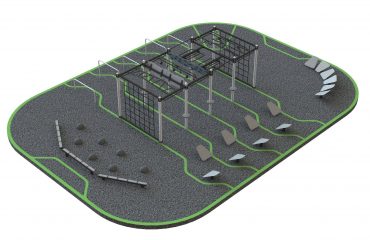
Outdoor Fitness Area: How to Plan One in Your Municipality
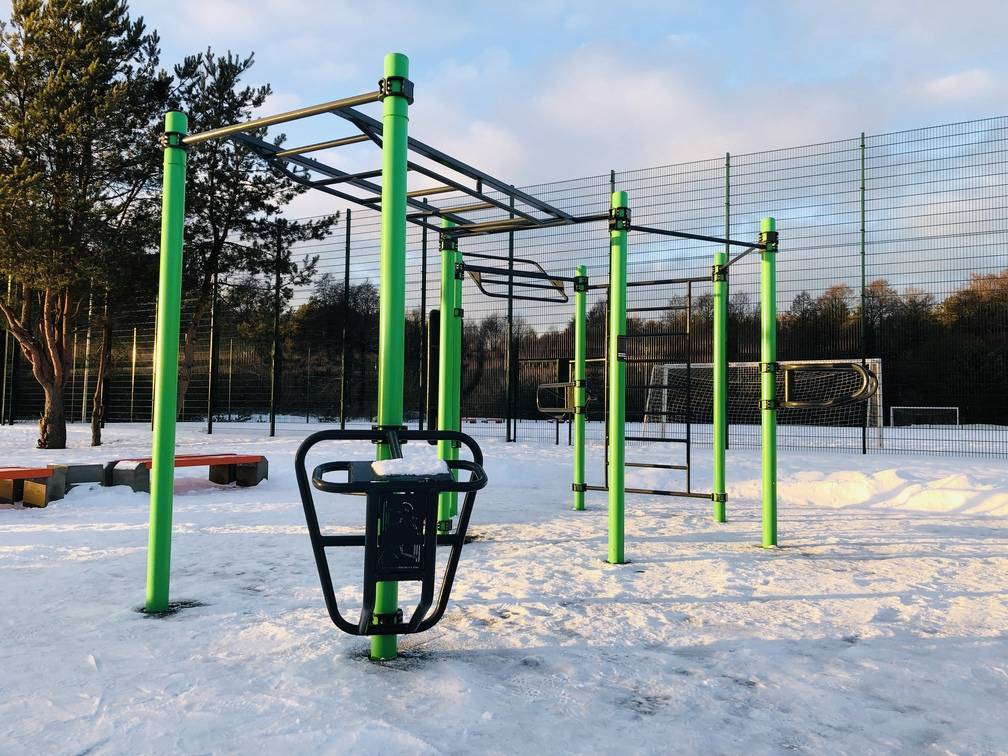
A well-planned outdoor fitness area gives residents a free, open-air training space a few minutes from home. For a local council, the project is far less about picking equipment from a catalogue than about matching a site, a real user profile and a maintenance budget. This guide follows the decisions in the order they actually come up.
Start with the site, not the catalogue
The location decides whether the facility is used or ignored. Choose somewhere genuinely accessible to everyone and avoid plots that are too far out or awkward to reach on foot. Public parks, green corridors and municipal sports grounds are usually the natural candidates: they already carry footfall, they are visible from a path, and that passive surveillance does more for safety than any signage.
Three practical checks are worth making before anything else. Is the ground level enough to install stations without heavy earthworks? Is the area served by a footpath, a cycle route or nearby parking? And is it far enough from housing that early-morning and evening use will not generate complaints? Answering those three questions first will save a redesign later.
Match the equipment to the users you actually have
An outdoor fitness area should carry equipment built for permanent open-air, unsupervised public use. In practice that means three families that work well together: outdoor strength stations with guided movement and body weight or fixed loads, calisthenics and pull-up structures for a younger and more athletic crowd, and mechanical open-air cardio units such as air walkers, steppers and cross trainers, which need no power supply and no screen.
Adult outdoor fitness equipment installed in a permanently accessible public space falls under EN 16630. Ask every supplier for the certificate covering the exact station you are ordering, not a generic company statement. If your project also includes a play zone for children, that zone is governed by EN 1176-1 for the equipment and EN 1177 for the impact-attenuating surfacing. The two frameworks are separate and must never be mixed on the same item.
Our outdoor gym equipment and outdoor fitness trail ranges are built for exactly this context. If the brief includes inclusive access, look at wheelchair-accessible outdoor stations, which allow a user to train without transferring out of the chair.
Surfacing, safety zones and maintenance
Surfacing is the line item councils most often underestimate. Each station has a manufacturer-declared safety zone that must stay clear of obstacles, and the ground inside that zone has to absorb a fall. Rubber tiles, cast in situ surfacing and reinforced artificial turf are the usual answers; the choice depends on drainage, expected traffic and how much winter maintenance the technical services team can absorb. Our outdoor sports flooring range covers the standard options.
Plan the inspection routine at the same time as the purchase. A visual check on a regular cycle, a documented functional inspection and an annual main inspection keep the facility safe and keep the council covered. Budget for it from year one rather than discovering it in year two.
Comfort is what turns a facility into a habit
The stations bring people once; the surroundings bring them back. Benches and tables let users rest and socialise after a session, shade makes the area usable in summer, and a drinking water point is consistently among the most requested features. Where the site sits next to an existing municipal building, access to changing rooms and showers adds a great deal for very little extra cost.
Programming: an empty facility is a failed facility
Opening the area is the start, not the end. Scheduled group sessions, an introduction week at launch and fixed slots agreed with local clubs and sports associations all build a regular user base. Partnering with a nearby club is usually the fastest way to create the first community, and it gives the council a visible return on the investment.
Frequently asked questions
Which standard applies to an outdoor fitness area?
EN 16630 governs permanently installed outdoor fitness equipment for adults. Children’s play equipment falls under EN 1176-1, with EN 1177 for the impact-attenuating surface. Never apply EN 16630 to a children’s item.
How much space does the area need?
There is no single figure: the footprint is the sum of the stations plus the safety zone each manufacturer declares for it. Draw the layout with those zones before fixing the fence line or the surfacing area.
Does the equipment need a power supply?
No. Outdoor cardio stations are mechanical and self-powered by the user, which is precisely why they suit unsupervised public sites.
Can free weights be installed outdoors?
Loose dumbbells, plates and barbells are not suitable for an unsupervised public area: they cannot be secured, and they are the first items to disappear. Fixed-load or body-weight outdoor stations deliver the same training effect and stay in place.
Building the project
Site, users, standards, surfacing, comfort, programming and maintenance: get those seven right and an outdoor fitness area becomes one of the best value-per-euro facilities a council can open. Send us your site plan and your user brief and we will come back with a layout, a compliant equipment list and a costed proposal. Request a quote.