"Ninja Warrior" obstacle racing joins the Los Angeles 2028 Olympic Games
L'Union internationale de pentathlon moderne a officialisé un accord avec Tokyo Broadcasting System, créateur du format « Sasuke », connu sous le nom de Ninja Warrior. Dès les Jeux de Los Angeles 2028, la course d'obstacles remplace l'équitation dans l'épreuve de pentathlon moderne. Cette évolution accroît la demande d'équipements de parcours d'obstacles en club et en collectivité.
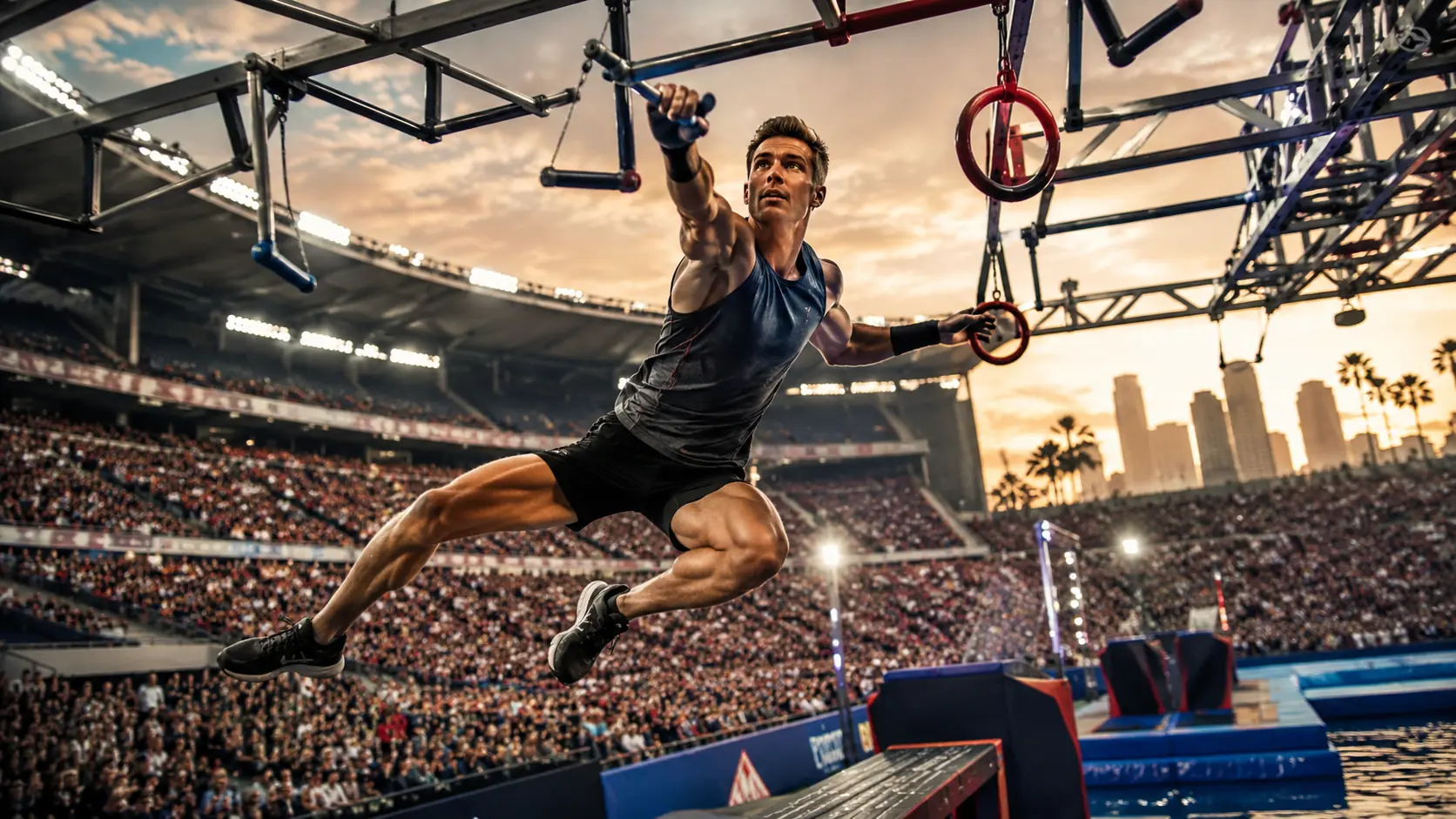
Obstacle racing inspired by “Ninja Warrior” is coming to the Olympic modern pentathlon. The UIPM has agreed to work with Tokyo Broadcasting System Television (TBS), creator of “Sasuke”, known worldwide as “Ninja Warrior”. The agreement licenses selected obstacle designs and programme elements for UIPM competitions. At Los Angeles 2028, obstacle racing replaces equestrian show jumping in modern pentathlon.
The sport has been on the Olympic programme since 1912. This is a change within pentathlon, rather than the TV contest becoming a separate Olympic sport. See the UIPM announcement of 26 May 2026.
An agreement formalised in late May 2026
On 26 May 2026, the UIPM announced it had concluded an agreement with TBS, the Japanese broadcaster behind “Sasuke”. The partnership authorises the federation to use certain intellectual-property elements of the show — first among them the obstacle designs — within UIPM-sanctioned competitions, Olympic Games included.
The signature is no isolated thunderbolt. It concludes work begun after the Tokyo Games and follows the International Olympic Committee’s 2023 decision to replace riding with obstacle racing in modern pentathlon. Since 2022, the UIPM, the international obstacle sports federation (FISO / World Obstacle) and TBS have been collaborating on test events to shape the future format.
- UIPM x TBS agreement formalised on 26 May 2026.
- Obstacle racing replaces equestrian show jumping in modern pentathlon.
- Decision of principle validated by the IOC in 2023; Olympic debut at Los Angeles 2028.
- The course is expected to comprise around eight modules inspired by “Ninja Warrior”.
- The UIPM’s first Obstacle World Championships were held in Beijing in 2025.
From “Sasuke” to global prime time to the Olympic rings
“Sasuke” began in Japan in 1997. Its demanding courses test balance, agility, strength, speed and coordination. The programme has aired in more than 160 countries and regions. Local versions have been made in more than 25 countries, including “American Ninja Warrior” in the United States. The TV format helped build interest in athletes, competition circuits and world championships.
Obstacle racing now enters Olympic pentathlon nearly thirty years after the first broadcast. In the May 2026 announcement, UIPM president Rob Stull described a shared heritage and an opportunity to bring sport and television audiences together.
What changes in modern pentathlon
| Discipline | Before Paris 2024 | From Los Angeles 2028 |
|---|---|---|
| Fencing | Retained | Retained |
| Swimming | Retained | Retained |
| Equestrian (show jumping) | Included | Removed |
| Obstacle racing (OCR / ninja) | Absent | New event |
| Laser run (shooting + running) | Retained | Retained |
What will the Los Angeles event look like?
Early UIPM test formats used short courses with about eight obstacles. They tested speed, coordination, balance and endurance. Tests began in 2022 and helped develop direct head-to-head racing. The format retains the visual appeal of “Ninja Warrior”. For a Los Angeles project or competition plan, check the latest UIPM rules. A test-event obstacle list is not confirmation of the final Olympic course.
Why the IOC likes the move
Modern pentathlon had suffered for years from limited media visibility and struggled to reach younger audiences. Obstacle racing delivers dynamic, instantly understandable images built for social media. As skateboarding and sport climbing experienced after their Olympic entry, the discipline could see a strong surge in participation after Games exposure — though some traditionalists regret replacing a heritage event with a television-born format.
What this means for facilities — and how to equip for it
Interest also extends beyond the Olympics. Clubs, CrossFit boxes, specialist gyms, municipalities and leisure operators report demand for ninja and OCR (Obstacle Course Racing) facilities. A project needs durable structures, a clear safety assessment and suitable landing surfaces. EN 16899 covers parkour equipment. It should not be presented as blanket certification for every ninja or OCR course.
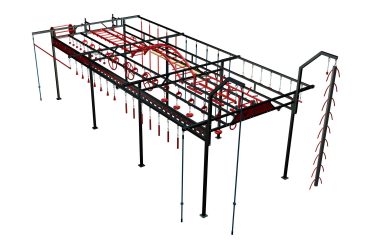
Select the framework for the actual equipment and intended users. Light In Fitness designs and installs Ninja Warrior and OCR structures: traverse modules, warped walls, suspended obstacles and custom steel structures. The service runs from design study to installation, including the Toroz ninja and OCR rig range. See our EN 16899 equipment safety guide, the BSI standard reference and our ninja park investment analysis.
Frequently asked questions
Does “Ninja Warrior” become a stand-alone Olympic discipline?
Not exactly. An obstacle race inspired by the show becomes the fifth event of modern pentathlon, replacing equestrian show jumping. The UIPM x TBS agreement covers the use of certain obstacles and elements of the programme.
Which event does obstacle racing replace?
It replaces the riding event (show jumping), removed after Paris 2024. The four other components — fencing, swimming, laser pistol shooting and running (laser run) — are retained.
When does the new event debut?
At the Los Angeles Olympic Games in 2028. The IOC validated the decision of principle in 2023, and the agreement with TBS was formalised on 26 May 2026.
What is the difference between Ninja Warrior and OCR?
“Ninja Warrior” is the televised format (from “Sasuke”), centred on technical traverse modules. OCR (Obstacle Course Racing) is the broader sporting category of obstacle races. The two worlds overlap heavily and share much of their apparatus.
Which standard applies to ninja and obstacle structures?
In Europe, EN 16899 covers the safety of ninja and obstacle-course equipment; landing zones call for impact-absorbing surfacing dimensioned to fall height. A professional supplier should document both in its tender file.
Planning a ninja or OCR facility ahead of the 2028 wave? Light In Fitness — manufacturer and distributor of professional fitness structures since 2013 — designs, supplies and installs indoor and outdoor ninja courses with EN 16899 documentation, custom steel structures and matching landing surfaces. Request a free quotation.
Réalisations documentées
- Parcours ninja sur mesure, Rennes – îlot des Hautes-Ourmes
- Double mur ninja extérieur, Sallanches – Haute-Savoie
À lire aussi sur le même thème
- Outdoor fitness trails: Light In Fitness compared with Kompan
- Inclusive and para-sport equipment: specifying and funding accessible facilities
- Outdoor fitness trail supplier: stations, EN 16630 and installation
- EN 16630 or EN 1176: which standard for outdoor fitness or a playground?
- Street workout rigs: Light In Fitness vs Kenguru Pro for public buyers