Outdoor fitness trail equipment compared: features, benefits and buying advice
Les équipements de parcours santé se comparent sur quatre critères : la conformité EN 16630, le matériau, le type de résistance et l'accessibilité des publics visés. Les agrès au poids du corps conviennent à tous les niveaux, les machines à charge réglable permettent une progression. Le sol de réception et le plan de maintenance complètent la comparaison.

Outdoor fitness trails are compared on four criteria: compliance with EN 16630, the material of the structure, the type of resistance used, and the accessibility of the audiences you need to serve. Bodyweight stations suit every level, while adjustable-load machines allow measurable progression. The impact-absorbing surface and the maintenance plan complete the comparison. This guide walks municipalities, campsites, housing providers, schools, clubs and rehabilitation centres through those criteria so that an outdoor investment keeps delivering years after the ribbon is cut.
What outdoor fitness trail equipment actually is
Fitness trail equipment is designed to encourage physical activity and wellbeing among the people a facility serves. The category runs from parallel bars and pull-up bars to outdoor cardio and strength stations laid out along a route. Its value lies in making activity available without an appointment, a subscription or a supervisor, which is why public bodies and hospitality operators use it to reach populations that never enter a gym.
The purpose of this guide is to set out the options, their characteristics and the trade-offs between them, so that the organisations investing in them can compare like with like rather than choosing on catalogue photographs.
Characteristics: what separates one range from another
Types of equipment available
- Cardio stations. Outdoor bikes, ellipticals, rowers and steppers, driven by the user’s own movement.
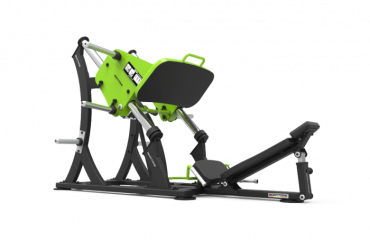
- Strength stations. Bodyweight or adjustable-load machines covering pushing, pulling and lower-body patterns.
- Rehabilitation and mobility stations. Coordination ladders, shoulder wheels and resistance devices used to restore range of movement.
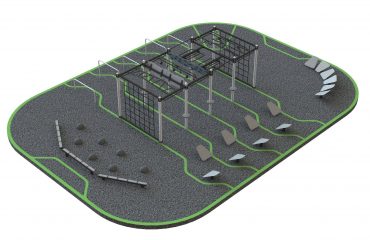
- Complete outdoor circuits. Designed for public space, so that access to physical activity is open to everyone passing by.
Materials and construction
Durability and ergonomics are the two decisive criteria. The material has to survive weather and intensive shared use while keeping the user safe. Three families dominate:
| Construction | Typical strengths | Best suited to |
|---|---|---|
| Galvanised steel | Robust, corrosion protected, familiar to maintenance teams | Municipal circuits and general public use |
| Stainless steel | Highest resistance to corrosion, minimal upkeep | Coastal sites, campsites, exposed locations |
| Timber and steel | Visual integration into parks and green settings | Landscaped parks, tourism and leisure sites |
Ergonomic design matters just as much as the frame: handle positions, seat geometry and movement paths are what prevent injury and keep an installation comfortable for people of very different heights and abilities.
Integrated technology
Many current ranges add features that make a circuit easier to manage and more engaging:
- Performance tracking, letting users follow their own progress along the route.
- Connectivity, allowing the station to link to health and fitness applications for personalised follow-up.
Benefits: what the investment delivers
Physical and mental health
Regular use of fitness trail equipment supports physical health through consistent exercise, and physical activity is also recognised for its effect on mental health, reducing stress and anxiety. For a public body, that is the outcome the budget is defending.
Engagement and motivation
Outdoor equipment is designed to be visible and easy to approach, which is what drives take-up. A well laid-out circuit encourages people to build activity into their daily routine rather than treating it as a separate commitment.
Prevention and wellbeing
National and regional health authorities consistently underline the role of physical activity in preventing chronic disease. Outdoor fitness equipment contributes to that objective by offering the opportunity to exercise to a very broad audience, including people who would never buy a gym membership.
How to choose: the selection criteria
- Cost. Assess the available budget against build quality, and read it over the expected service life rather than at purchase.
- Function. Select stations that match the needs of the people who will actually use them, not the widest possible catalogue.
- Available space. Confirm that the equipment, including its safety zones, fits the site as it is.
- Audience. Bodyweight stations suit all levels; adjustable-load machines allow structured progression; accessible stations open the circuit to wheelchair users and to people in rehabilitation.
Compliance is not optional
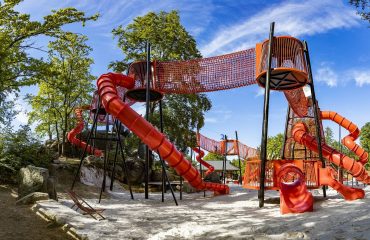
Adult outdoor fitness equipment falls under EN 16630. Children’s play equipment is a separate framework: EN 1176-1 covers the equipment and EN 1177 covers the impact-absorbing surface. The two families are never interchangeable, and specifying the wrong one is the most common reason an installation fails its acceptance inspection. Where a circuit combines an adult fitness area and a children’s play area on the same site, each zone is assessed under its own standard.
Surfacing and maintenance
The receiving surface and the maintenance plan belong in the comparison from the beginning. Surfacing is specified against the equipment it sits under, and a documented inspection routine is what keeps a circuit open and insurable. Budget for it at the design stage rather than discovering it at handover.
Expert advice for getting the most out of an installation
Train the staff who will supervise or maintain the equipment, and build simple activity programmes around the circuit rather than leaving it to chance. Secure storage for any loose accessories keeps them available and in good condition. Where signage explains each station clearly, use rises without any additional supervision cost.
Explore the outdoor fitness trail range and the individual fitness trail stations to compare configurations, or look at a multi-function unit such as the Multitrainer BLO-078 outdoor station when a single footprint has to cover several movement patterns.
Frequently asked questions
Which standard applies to an outdoor fitness circuit?
EN 16630 for adult outdoor fitness equipment. If the site also includes children’s play equipment, that part is covered by EN 1176-1 and its surfacing by EN 1177.
Bodyweight or adjustable load?
Bodyweight stations are the most inclusive and the least demanding to maintain. Adjustable-load machines let regular users progress and are worth the additional cost where the circuit is expected to build a returning community rather than serve passing visitors.
How much maintenance does an outdoor circuit need?
It depends on the material, the exposure of the site and the intensity of use, so the inspection frequency should be taken from the manufacturer’s documentation for the range you install. Stainless steel construction reduces the routine upkeep on exposed and coastal sites.
Can one circuit serve both fit adults and people in rehabilitation?
Yes, provided the mix is planned. Combining bodyweight stations, adjustable-load machines and accessible stations on the same route lets very different audiences share the installation without any of them being excluded.
Conclusion and next steps
Fitness trail equipment is a durable way to promote physical activity and improve wellbeing across a whole population, and innovation in the category keeps widening what a single circuit can do. The decision comes down to compliance, material, resistance type and accessibility, read together with surfacing and maintenance. Send us your site plan, your audience and your constraints, and request a quote: our team will propose a circuit layout and confirm the standards that apply to your project.