Which Leg Training Machines to Specify for a Gym Floor
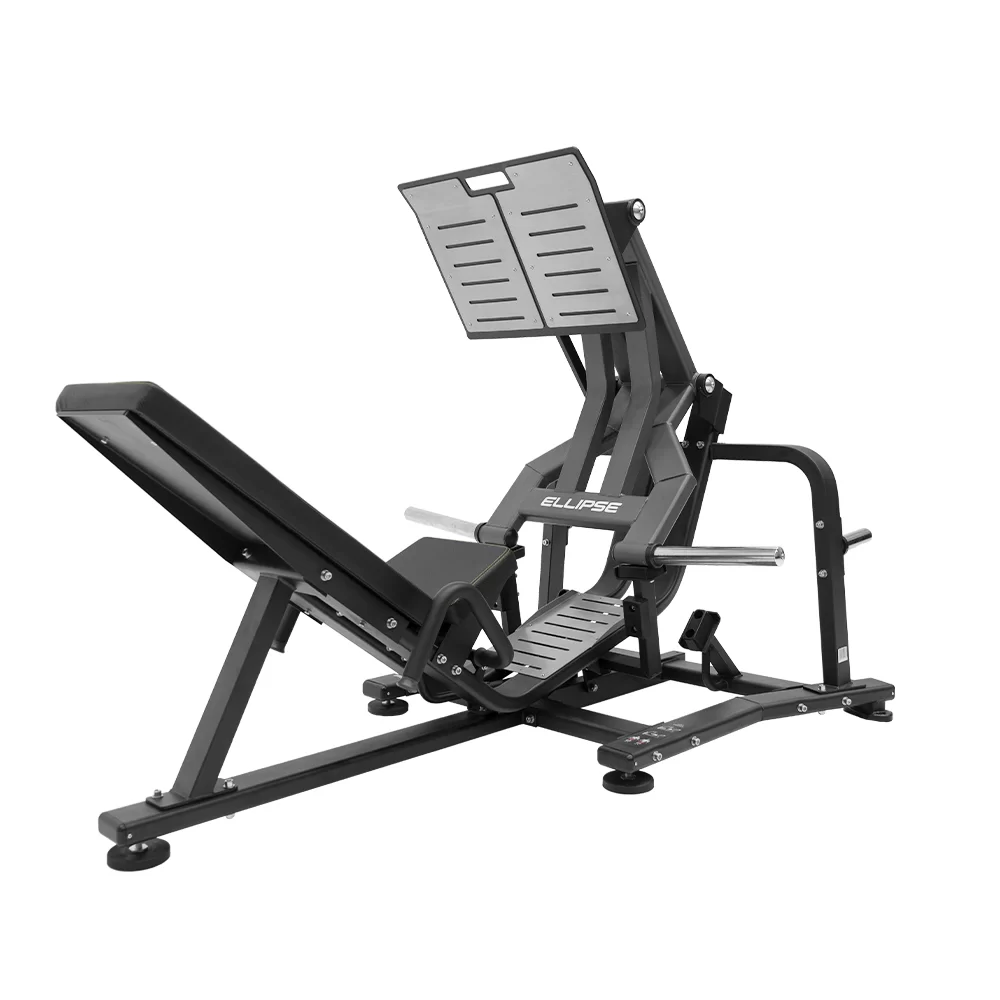
Leg training is where a gym floor is judged. Members notice immediately whether the lower-body area is credible, and operators notice just as quickly when it is the bottleneck at peak hours. The question is rarely which machine is best in the abstract. It is which combination covers the movement patterns your members actually need, within the floor area and supervision level you actually have.
All of the equipment discussed here is professional, continuous-use kit specified to EN ISO 20957-1 class S. That is the reference to insist on for any machine that will be used by unfamiliar members for twelve hours a day, and it is what separates club equipment from anything sold for lighter use.
The squat rack: the anchor of the lower-body area
The squat rack is the single most productive footprint in a lower-body zone. It allows deep squats, which load the quadriceps, hamstrings and glutes together, and it also recruits the lower back and the trunk as stabilisers. One rack covers squats, front squats, lunges, split squats, overhead work and rack pulls, which is a great deal of programming for a few square metres.
Operationally it is also the item that most needs thought. A rack needs clear space on all sides, a platform or shock-absorbing surface underneath it, and a barbell and plate storage plan that keeps the floor tidy. Racks are where a badly planned gym generates most of its incidents, and where a well-planned one generates most of its retention.
See our squat racks and power racks range.
The leg press: throughput and accessibility
The leg press targets the quadriceps directly through a pushing movement, with the user supported throughout. That makes it the natural entry point for members who are new to strength training, for those returning after injury, and for anyone who is not yet confident under a bar.
For an operator, the argument is throughput. A leg press requires no spotter, no technique coaching before first use, and no barbell handling, so it keeps moving during busy periods when the racks are queued. Vertical formats are worth considering where floor space is the binding constraint rather than budget, since they load the same movement in a much smaller footprint. Our vertical leg press models are built for exactly that situation.
Calf machines: the standing calf raise
The standing calf machine covers heel raises, which load the calf muscles specifically, the gastrocnemius and the soleus beneath it. It is a small, single-purpose station, and that is precisely its appeal: it takes very little floor area and it removes a movement that is otherwise done badly on the edge of a step.
In practice, a calf station earns its place in a club with a serious bodybuilding or team-sport membership, and is one of the first items to postpone in a small facility where the same money buys another rack.
The leg extension: useful, and worth a caveat
The leg extension isolates the quadriceps through a knee extension movement. It is a genuinely useful station for isolation work and for rehabilitation-adjacent programming.
It also deserves the caveat the movement has always carried: knee extension under load places stress on the knee joint, so it should be used with care and, for members who are unfamiliar with it or returning from injury, under professional supervision. That is a briefing point for your floor staff rather than a reason to leave it out, but it is worth putting in your induction script.
Both selectorised and plate-loaded formats exist. Selectorised units are faster between sets and easier for beginners; plate-loaded units are simpler mechanically and often preferred where the membership is used to loading its own weight. Compare our selectorised machines and plate-loaded machines.
Free weights: the cheapest square metre you own
Dumbbells and barbells remain the most flexible leg equipment on any floor. Lunges, dumbbell squats and deadlifts load the quadriceps, hamstrings and glutes effectively, and because the movement is not guided by a frame, they recruit the stabilising muscles far more than a machine does.
For an operator, free weights are also the best ratio of programming options to floor area, provided the flooring, the storage and the circulation around them are properly specified. Under-specified flooring in a free-weight zone is the single most common and most expensive mistake in a gym fit-out.
Choosing the mix for your floor
There is no universal answer, because the right selection depends on who is training and on how much is left after the room is drawn. A few principles hold across most projects.
Start with the movement patterns rather than the machine list: a floor that can squat, press, hinge and isolate is complete, whichever models deliver those four. Then decide your supervision level honestly, because a floor with permanent coaching can lean towards racks and free weights, while an unstaffed or lightly staffed facility needs a higher proportion of guided machines. Finally, match the mix to your membership: a club with a large beginner and senior population gets far more use out of a second leg press than out of a second rack, and a strength-oriented club is the exact opposite.
Members also get the best results from a combination of leg strength work, cardiovascular training and sensible nutrition, so a lower-body zone that sits next to a coherent cardio area outperforms one that stands alone. Our full strength training machines catalogue covers the complete lower-body line.
Frequently asked questions
Squat rack or leg press first?
If the floor is small and the membership is mixed, the leg press usually earns its place first because it needs no supervision and keeps moving at peak time. If the club is strength-oriented and has coaching on the floor, the rack comes first because it covers more movements per square metre.
Is the leg extension safe for all members?
It loads the knee joint directly, so it should be introduced carefully and, for members returning from injury or unfamiliar with the movement, used under professional supervision. It is a station to cover explicitly in your induction rather than one to leave off the floor.
Selectorised or plate-loaded for a club?
Selectorised is faster between sets and more approachable for beginners, which suits high-traffic and mixed memberships. Plate-loaded is mechanically simpler and preferred by experienced lifters. Most clubs above a certain size end up running both.
What standard should professional leg machines meet?
Indoor professional equipment is specified to EN ISO 20957-1 class S. Anything intended for lighter or unsupervised private use does not belong on a commercial floor, regardless of how it is marketed.
How much floor area does a lower-body zone need?
That depends on the machines selected and on the clearance each one needs around it, which is why it is answered on your floor plan rather than in a catalogue. Send us the plan and we will lay the zone out on it.
Specifying your lower-body area
A credible leg area is a squat rack, a leg press, at least one isolation station, and free weights on flooring that can take them. Everything beyond that is refinement, and everything below it is a floor your members will notice is missing something.
Light In Fitness has equipped professional facilities since 2013, with more than 2,500 customers equipped out. Send us your floor plan, your membership profile and your budget envelope, and we will come back with a specified lower-body layout.
Request a quote for your strength equipment project.