Which Fitness Equipment Builds the Upper Body?
Le travail du haut du corps repose sur quatre familles de mouvements : poussée horizontale, poussée verticale, tirage horizontal et tirage vertical. Chest press, développé épaules, rameur assis et tirage vertical couvrent ces quatre fonctions. Un plateau complet propose au moins un poste par famille.
Upper body work rests on four families of movement: horizontal push, vertical push, horizontal pull and vertical pull. Chest press, shoulder press, seated row and lat pulldown cover those four functions. A complete training floor offers at least one station per family.
That principle is what turns a shopping list into a specification. Below are the machines and free weight items that members reach for when they want to build the upper body, and the role each of them plays on a commercial floor.
Dumbbells: the most flexible upper body tool
The dumbbell is one of the most popular pieces of equipment for targeting the upper body. Members hold the weight in their hands throughout the exercise, which makes it versatile enough to work several muscle groups, including the biceps, the triceps, the shoulders and the muscles of the back. On a commercial floor, a full dumbbell rack does more work per square metre than almost anything else, and it covers all four movement families on its own once the benches are in place.
The rowing machine: upper body and cardio in one station
The rowing machine is an excellent piece of equipment for developing the upper body. It works the muscles of the back, the shoulders, the arms and the abdominals, and it delivers a strong cardiovascular session at the same time because it recruits many muscles at once while building endurance. For a facility that has to justify every station, a professional rowing machine is one of the rare machines that belongs to the cardio zone and to the pulling side of the strength programme simultaneously.
The pull-up: the bodyweight answer
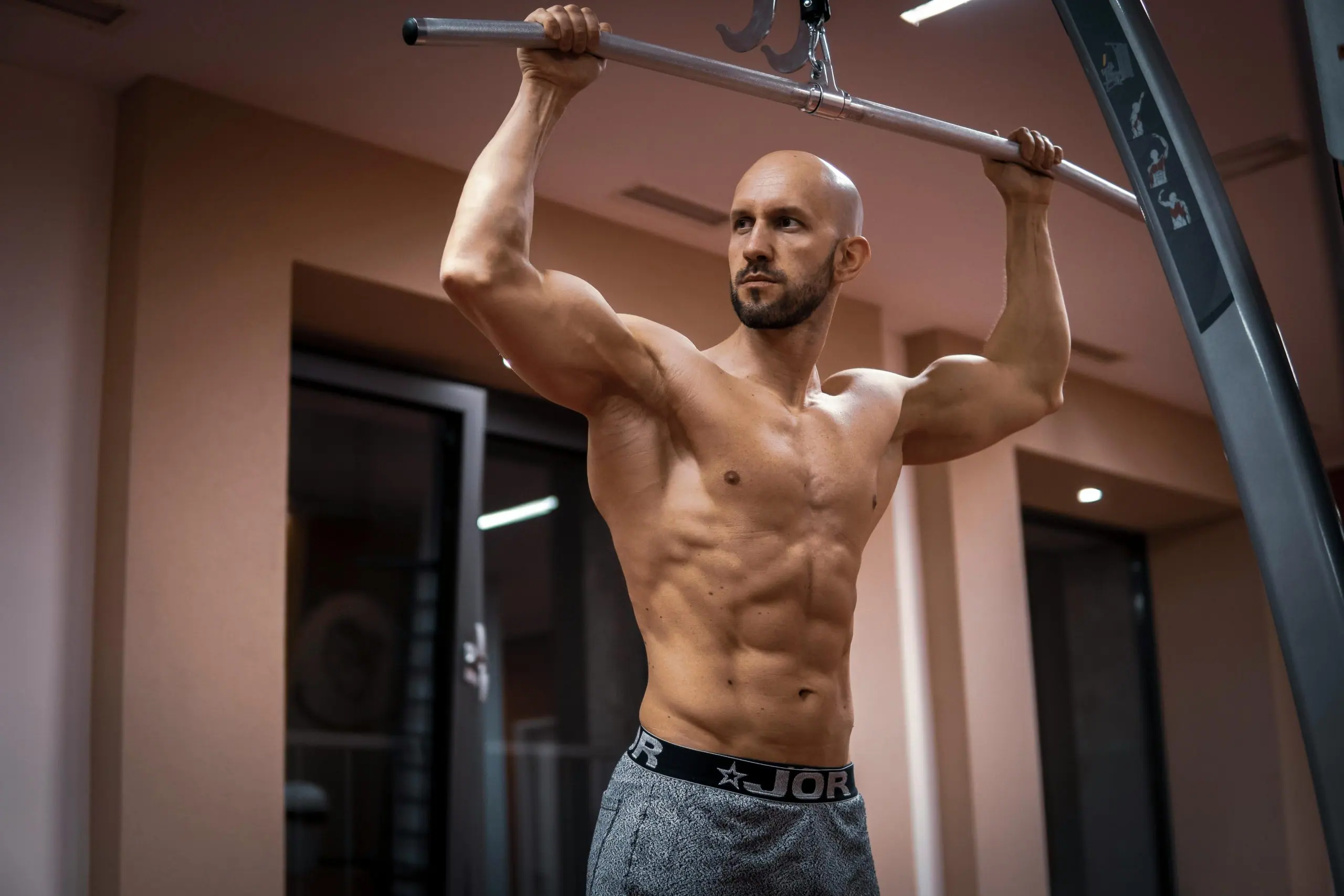
For members who prefer bodyweight training, the pull-up is an excellent choice for the upper body. It strengthens the back, the shoulders, the arms and the abdominals. It can be performed on a fixed bar or with suspension straps, which means a club can offer serious vertical pulling with almost no floor space and no maintenance cost.
The weight bench and the presses
Members who want to work the abdominals while developing the upper body can use a weight bench. This piece of equipment opens up strength exercises such as the bench press, which works the pectorals, the shoulders and the triceps. Dumbbells add intensity to the same session without adding a station. In practice, the weight bench is the multiplier of a strength floor: it converts a rack of dumbbells into a dozen exercises.
Where a facility serves beginners or a mixed membership, a guided chest press machine covers the horizontal push with far less coaching supervision than a free barbell, which is why most clubs run the two side by side rather than choosing between them.
Cross trainers and the case for combined machines
For a more complete upper body option, a cross trainer works several muscle groups simultaneously. It provides an effective cardio session and burns a large number of calories, and unlike most cardio machines it keeps the arms and the upper back involved throughout.
Covering the four movement families
Whatever the equipment budget, the test is the same. Can a member perform a horizontal push, a vertical push, a horizontal pull and a vertical pull without leaving the floor? Chest press, shoulder press, seated row and lat pulldown answer that question directly. Dumbbells and a bench can stand in for all four, a rowing machine and a pull-up bar cover the pulling side very economically, and machines fill the gaps for members who need guidance or lower impact.
Frequently asked questions
What is the minimum upper body equipment for a small facility?
A dumbbell rack, an adjustable bench and a fixed bar or suspension straps. That set covers pressing and pulling in both planes and takes very little space.
Is a rowing machine strength equipment or cardio equipment?
Both, which is precisely its value. It works the back, shoulders, arms and abdominals while delivering a cardiovascular session and building endurance.
Free weights or machines for the upper body?
Dumbbells are versatile and recruit more of the body; machines make the movement easier to perform correctly without supervision. Beginners and experienced members do not need the same station, and a floor that offers only one of the two will lose one of the two populations.
Do members need coaching before starting?
If there is any doubt about which exercises to perform, it is always advisable to consult an experienced coach who can build a strength programme around the member’s needs and objectives. For an operator, that is also the fastest way to keep the equipment being used as intended.
Specifying your upper body zone
Dumbbells, rowing machines, weight benches and cross trainers are all effective choices for strengthening the upper body, improving cardiovascular endurance and burning calories. Whether your members are beginners or experienced, the equipment has to match the level of the people using it and let them train safely. Send us the plan of your room and the profile of your members, and we will build the upper body zone around the four movement families. Request a quote to get the layout and the budget.