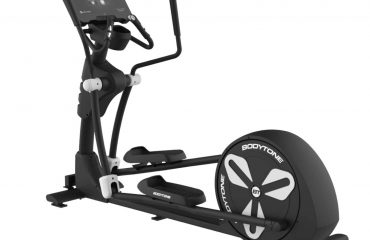
How to choose a professional cross trainer
Un elliptique se choisit sur la longueur de foulée, la masse d'inertie et la position du volant, avant toute considération de console. Une foulée trop courte ou trop longue dégrade la posture et le confort. En usage collectif, la classe d'usage et la disponibilité des pièces deviennent déterminantes.
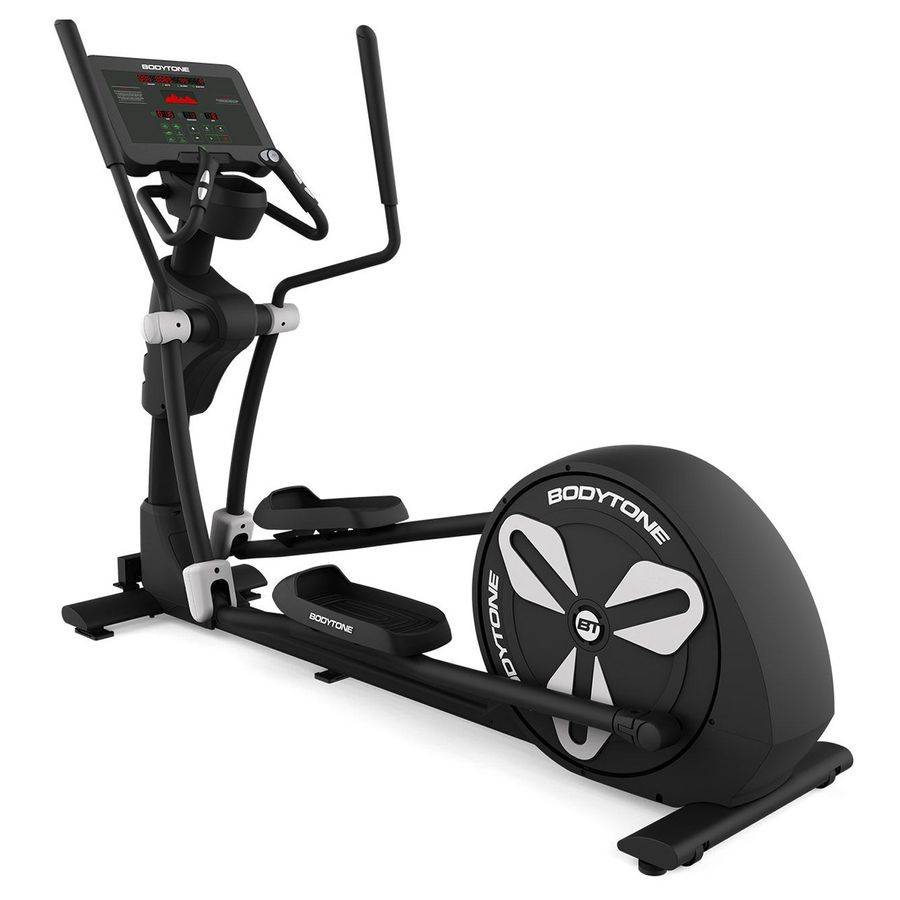
How to choose a professional cross trainer for a commercial facility
A cross trainer is chosen on stride length, flywheel mass and flywheel position, long before anyone looks at the console. A stride that is too short or too long degrades posture and comfort, and in a shared facility that shows up as machines nobody uses. Where equipment is used by unknown members all day, the usage class and the availability of spare parts matter as much as the specification sheet. This guide sets out the criteria that decide whether an elliptical earns its floor space in a gym, a hotel, a club or a rehabilitation unit.
Start with the usage class
Indoor stationary training equipment for supervised commercial use falls under EN ISO 20957-1 class S. That class is the entry ticket for any machine placed in a room where members train unsupervised and where the operator carries the liability. Class I is a professional class for inclusive access, a different scope rather than a step above class S. Ask for the class in writing: it is a far better predictor of how a machine ages under continuous use than any published maximum user weight.
The three mechanical criteria that decide the feel
- Stride length. This is the single most important dimension on an elliptical. Too short and taller users are forced into a choppy, upright gait; too long and shorter users overreach at the ends of the cycle. Facilities with a wide range of member heights should look for an adjustable or generously dimensioned stride rather than an average one.
- Flywheel mass. Inertia is what turns a series of pushes into a continuous movement. Insufficient mass gives a stride that stalls between phases, which users read as cheap even if they cannot name the cause.
- Flywheel position. Front-drive, rear-drive and centre-drive layouts produce different stride paths and different footprints. The choice affects how the machine sits in the room as much as how it feels underfoot, so it belongs in the layout study rather than in a late comparison of price lists.
Resistance, braking and programmes
Adjustable magnetic resistance is the standard for commercial cross trainers, and the number of resistance levels determines how finely a coach can grade a session. A broad range matters more in mixed-population settings, where the same machine serves a beginner in the morning and an experienced member in the evening. Preset programmes are useful in unstaffed rooms because they give members structure without supervision; they are less decisive in a coached club where the programming comes from the floor team.
| Criterion | Why it matters in commercial use | Where to look |
|---|---|---|
| Stride length and adjustability | Comfort across the full range of member heights, posture quality | Cross trainers |
| Flywheel mass and position | Smoothness of the stride, footprint and layout in the room | Lexco cross trainers |
| Resistance range and programmes | Session grading for mixed populations, unstaffed hours | Professional cardio machines |
| Heart rate monitoring | Intensity control, rehabilitation and medical settings | Cardio equipment |
Ergonomics and contact points
Pedal plates, handlebars and grips are where the machine meets a body that changes every twenty minutes. Adjustable pedals let the same machine suit different foot positions and reduce joint discomfort across a varied membership. An ergonomic moving handlebar with non-slip grips gives the upper body a real share of the work, which is the point of an elliptical rather than a stationary bike. Fixed centre handles matter too: they are what a deconditioned or unsteady user reaches for.
Heart rate and connectivity
Integrated pulse measurement, and Bluetooth connectivity to external monitors and chest straps, allow intensity to be controlled rather than guessed. In a commercial gym this is a comfort feature. In rehabilitation, in medical fitness and in senior programmes it is closer to a requirement, because the prescription is expressed in heart rate zones and someone has to be able to see them.
Why an elliptical belongs in a professional room
The elliptical movement is continuous and free of impact, which is what makes it usable by populations that cannot run: rehabilitation patients, members with joint problems, older members, and anyone returning after injury. It recruits the legs and glutes while the moving handles bring in the upper body, and it does so without the ground reaction forces of a treadmill. In a mixed facility this is exactly why it is worth the floor space: it is one of the few cardio stations that almost every member profile can use.
Total cost, not purchase price
The purchase price of a cross trainer is the smallest part of what it costs a facility over its life. What actually drives the total is the wear pattern under continuous use and how easily the wear items can be replaced: bearings, pedal arms, handlebar bushings, console parts. Before signing, ask three questions. How long are spare parts guaranteed to remain available. Which parts are considered consumables. Who carries out the intervention and how quickly. A machine that cannot be repaired locally is a machine that will sit unused with a notice taped to the console.
Frequently asked questions
What stride length suits a mixed membership?
There is no single figure that works everywhere; the right approach is to match the stride to the height range you actually serve and, where that range is wide, to prefer an adjustable stride. A hotel serving international guests and a club with a settled membership do not have the same problem.
Is a cross trainer suitable for rehabilitation?
Yes, which is one of its main uses in professional settings. The absence of impact and the guided path make it usable early in a return-to-activity programme, provided the resistance can be set low enough and the intensity monitored. Equipment for these settings should be selected with the clinical team.
How many cross trainers does a facility need?
That comes out of the layout study and the peak-hour headcount, not from a ratio. Count the members present at peak, decide how much of the cardio area is impact-free by policy, and size from there.
Does brand matter?
Less than the two things a brand should guarantee: a documented usage class, and a spare parts supply that will still exist in several years. Established commercial ranges are worth the premium when they deliver both, and not much otherwise.
Specifying your cardio area
Light In Fitness supplies professional cardio ranges to gyms, hotels, clubs, municipalities, schools and rehabilitation units, and has been equipping commercial facilities since 2013. Send the room dimensions, the peak-hour attendance and the member profile, and the cardio mix can be sized around them. Request a quote for a costed proposal.