What a commercial treadmill really costs over seven years
Sur sept ans, le coût total d'un tapis de course professionnel intègre l'achat, la maintenance préventive, les pièces d'usure, l'électricité et les immobilisations. Le prix d'achat ne représente qu'une part de ce total, et un modèle moins cher à l'achat peut coûter davantage à l'exploitation. Cet article chiffre chaque poste.
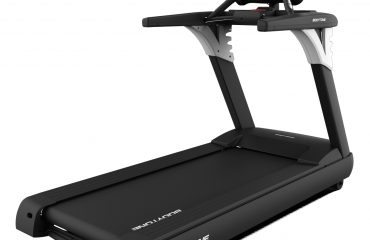
The purchase price of a commercial treadmill represents only 40 to 60% of what it costs you over seven years. The rest is preventive maintenance, wear parts (belt, lubricant, elastomers) and electricity. On a model assuming 1,500 hours of use a year, a professional AC treadmill bought at 5,500 EUR excluding VAT ends up costing 8,990 to 13,430 EUR excluding VAT all in, or 1,285 to 1,920 EUR a year. The three heaviest running lines are electricity (1,510 to 2,770 EUR), preventive maintenance (1,050 to 2,100 EUR) and the running belt (400 to 1,700 EUR).
The seven year breakdown, line by line
Model assumptions: a professional AC-motor treadmill purchased at 5,500 EUR excluding VAT, running 1,500 hours a year (4 to 6 hours a day, 300 days a year) in a club, box or hotel. The low and high bands reflect observed spreads in part prices and intervention frequency, at constant usage volume.
| Line | Frequency | Indicative unit cost | Seven year total |
|---|---|---|---|
| Purchase price | Year 0 | Professional AC range: 3,500 to 15,000 EUR | 5,500 EUR |
| Running belt | Every 3 to 4 years, lubricated commercial use | 400 to 850 EUR, belt plus labour | 400 to 1,700 EUR |
| Deck lubrication | Quarterly | 10 to 20 EUR, 15 ml of 100% pure silicone oil each side | 280 to 560 EUR |
| Elastomers and deck reversal | Every 24 to 36 months | 50 to 120 EUR for elastomers, 1 hour labour to reverse | 150 to 500 EUR |
| Preventive maintenance | Annual | 150 to 300 EUR per treadmill, on a fleet contract | 1,050 to 2,100 EUR |
| Electricity | Continuous | 0.8 to 1.2 kWh per hour x 1,500 h x 0.18 to 0.22 EUR/kWh | 1,510 to 2,770 EUR |
| Sundries: power cable, console updates, cleaning consumables | Occasional | – | 100 to 300 EUR |
| Total over seven years | of which 3,490 to 7,930 EUR of running cost | – | 8,990 to 13,430 EUR |
That works out at 1,285 to 1,920 EUR per treadmill per year, or 0.86 to 1.28 EUR per hour of use. The hourly figure is the one to compare against what an hour of treadmill actually earns in your model, a method set out in gym investment, ROI and payback.
The cheapest treadmill trap
First, a correction on vocabulary that changes the comparison. There is no semi-professional class. EN ISO 20957-1:2024 defines class H for domestic use and class S for studio and commercial use. A machine sold as semi-professional is class H equipment placed in class S duty.
| Class H treadmill at 2,500 EUR | Professional AC class S at 5,500 EUR | |
|---|---|---|
| Motor | DC: 15 to 25% higher consumption, noisier | AC: controlled consumption, quiet running under 68 dB |
| Belt replacement | Every 18 to 24 months in club use | Every 3 to 4 years |
| Warranty | 2 years parts | Bodytone published warranties: lifetime frame, 5 years motor, 2 years electronics and parts |
| Parts supply | Imported, 3 to 4 weeks of downtime | Stocked in France, dispatched within 48 hours |
| Realistic service life in commercial duty | 3 to 5 years, so two machines over seven years | 10 to 15 years, so one machine over seven years |
| Seven year total cost | 8,950 to 13,470 EUR | 8,990 to 13,430 EUR |
| Residual value at seven years | Near zero, a third purchase due within 12 to 24 months | 20 to 25% of new, with 3 to 8 years of useful life left |
This is the result that surprises buyers most: at seven years the two routes cost virtually the same. The difference is not in what you spend, it is in what you own at the end. On one side a fleet at the close of its second cycle, to be bought again in full. On the other a written-down machine with half its life ahead and a third purchase not due until year 10 to 15. Over ten years the gap becomes decisive, and it still excludes the hardest cost to quantify: a treadmill out of service for three weeks in January is the most-used machine in the room unavailable at the annual attendance peak.
For reference on current catalogue pricing, the Bodytone Nexion T80T professional treadmill with a 23.8 inch touchscreen is 9,120 EUR excluding VAT, and the Xebex Runner curved treadmill, which has no drive motor at all and therefore no electricity line, is 4,250 EUR excluding VAT. The 5,500 EUR figure above is a modelling assumption, not a catalogue price.
Four levers that reduce the total
Specify an AC motor at purchase. For intensive use above 10 hours a day, a continuous-rated AC motor of at least 4 hp is the professional threshold. The consumption gap against a DC motor is 15 to 25% of the treadmill’s electricity bill, or 250 to 700 EUR over seven years, on top of longer service life and lower maintenance. In a hotel the acoustic argument, under 68 dB, weighs as heavily as the economic one.
Follow the lubrication schedule. This is the single most important maintenance action on a treadmill: 15 ml of 100% pure silicone oil each side, between belt and deck, every quarter. A belt running dry wears the deck, loads the motor and pushes consumption up. Spending 280 to 560 EUR on lubricant over seven years avoids at least one belt replacement at 400 to 850 EUR.
Reverse the deck when it is reversible. Every two to three years, remove the belt, turn the deck over and refit. One hour of labour for two to four additional years of deck life is the best effort-to-benefit ratio in the entire maintenance plan.
Put a preventive contract in place. A technician visit catches wear before failure: belt tension and tracking, alignment, bearing condition, and the periodic electrical check required in public-access buildings. Routine maintenance runs at 2 to 4% of fleet value a year; without it, corrective work costs several times that. The full schedule by machine type is in our cardio machine maintenance schedule.
How context changes the picture
| Setting | Hours a year | What dominates the total cost |
|---|---|---|
| Commercial club | 1,500 to 3,000 | Belt and electricity. Above 2,000 hours a year the belt moves to a two year replacement and electricity becomes the largest running line |
| Hotel, residence, spa | 600 to 1,500 | Preventive maintenance. Usage is low but staff are not technicians, so without a contract no wear is detected before failure |
| Box, coaching, athletic preparation | 800 to 1,800 | Mechanical parts. Intermittent high-intensity use loads the motor and dampers more than steady running |
| Care home, rehabilitation, physiotherapy | 500 to 1,200 | Compliance and availability. Periodic electrical testing in a public-access building, and continuity of care |
Frequently asked questions
Does a curved treadmill have a lower total cost?
On the electricity line, yes, it removes it entirely because there is no drive motor. Belt and bearing wear still apply, and the purchase price of a professional curved machine is not necessarily lower. The decision is primarily a training one: curved belts suit conditioning and sprint work, motorised belts remain necessary for incline protocols and rehabilitation.
What electricity price should we model?
The band above uses 0.18 to 0.22 EUR per kWh. Substitute your own contracted rate, because this is the line most sensitive to tariff: a 0.10 EUR per kWh swing moves the seven year electricity cost by roughly 840 to 1,260 EUR per treadmill at 1,500 hours a year.
How long should a running belt last?
Three to four years in lubricated commercial use at 1,500 hours a year, dropping to around two years above 2,000 hours. Belts that fail earlier almost always point to a lubrication gap, incorrect tracking or a worn deck rather than a defective belt.
Is the residual value figure realistic?
Twenty to twenty-five per cent of new at seven years assumes a class S machine with a documented maintenance history and available parts. Without service records, resale value collapses, which is another reason the preventive contract pays for itself. See equipment warranties.
Model the total cost before you order
Light In Fitness has been a manufacturer and B2B distributor of professional fitness equipment since 2013, based in Tours, France, with more than 2,500 customers equipped. We build the seven year cost model with you, machine by machine, including parts availability and the preventive plan, so the comparison between two quotations is made on the same basis. Stock items ship in 5 to 10 working days across France, Belgium, Switzerland and Luxembourg, with export priced per project. Browse the professional treadmills and cardio equipment ranges, read our treadmill buying guide, then request a quote. We reply within 24 working hours.
À lire aussi sur le même thème
- Professional Cardio Fleet Planning: Treadmills, Bikes, Rowers and Ellipticals by Facility Type
- Aquabike fleet ROI: a three year model for aquatic centres
- Indoor cycling bike resistance systems: magnetic or friction, belt or chain
- Equipping a professional indoor cycling studio: bikes, flooring and room specification