Rowing Ergometers: Optimising Cardio Training in Your Facility
Un rameur ergométrique mesure la puissance développée, ce qui permet un suivi objectif de la progression et une comparaison entre utilisateurs. La résistance à air monte proportionnellement à l'effort fourni. Ce format est le plus répandu en salle et en box pour l'entraînement en intervalles.
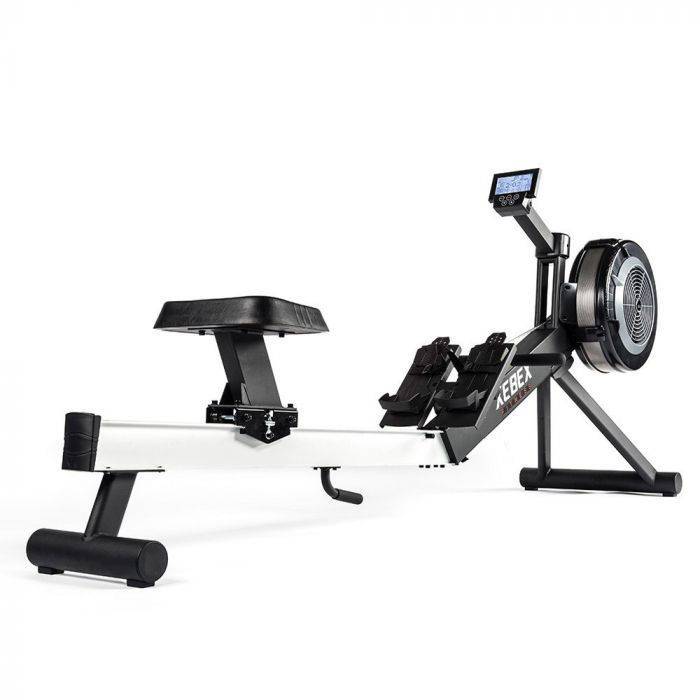
A rowing ergometer is one of the few cardio machines that earns its floor space twice over: it delivers a full-body conditioning stimulus, and it measures the work actually produced, so progress can be tracked objectively rather than felt. For a gym operator, a cross-training box, a hotel or a rehabilitation centre, that combination is what turns the rower from a passing trend into a permanent fixture. Here is what an ergometer really does, how to programme around it, and what to specify when you buy one for commercial use.
What exactly is a rowing ergometer?
The word ergometer is not marketing language. It means the machine measures the work produced: every stroke is converted into power, pace and distance on the console. That is the practical difference between a rowing ergometer and a piece of equipment that simply offers resistance. With an ergometer, two members on two identical machines can be compared, and a single member can be compared with themselves three months later. In a commercial setting, that is the whole point.
Air resistance is the format most widely installed in gyms and cross-training boxes. The flywheel has to move air, so resistance rises in proportion to the effort applied: the harder the pull, the harder the machine pushes back. Nothing has to be adjusted between a first-time member and a competitive athlete using the same rower one after the other. That self-regulating behaviour is exactly what interval programming needs, and it is why the air rower has become the default choice for group conditioning.
Compared with a treadmill, which loads the legs and leaves the upper body largely idle, the rowing stroke recruits the legs, the posterior chain, the trunk and the arms in one coordinated movement. It is also a non-impact pattern: the feet never leave the footplates and the body weight is supported throughout. That matters in any facility serving older members, deconditioned beginners or patients in rehabilitation.
Air, magnetic or water: choosing a resistance format
Air. The flywheel moves air and resistance follows the effort applied. Progressive, self-regulating and the standard in cross-training boxes and functional zones. It is audible, which is an asset in a class environment and a constraint next to a quiet hotel corridor.
Magnetic. Resistance is set from the console or a lever and stays constant whatever the stroke rate. Very quiet, which makes it the usual pick for hotel gyms, residential buildings and rooms adjacent to offices or bedrooms.
Water. A paddle turns in a tank. The feel is the closest to rowing on the water and the sound is a soft swish rather than a rush of air. Popular in boutique studios and premium settings where the equipment is part of the atmosphere.
None of the three is better in the absolute. The choice follows the room: noise tolerance, the type of session programmed, and the maintenance the site can realistically carry out itself.
Building cardio programming around the rowing ergometer
Technique comes before intensity. The stroke sequence is legs, then hips, then arms, and the reverse order on the recovery. Members who pull with the arms first tire within minutes, load the lower back and quietly stop using the machine. A short technique briefing at induction protects the member and the equipment at the same time, and it is the single cheapest thing an operator can do to raise usage of a rowing bank.
Once the sequence is right, the ergometer becomes one of the most flexible tools on the floor. Steady-state work builds an aerobic base for general members. Short, hard intervals suit group classes and cross-training conditioning. And because output is displayed as power, sessions can be benchmarked and repeated with real precision rather than by feel, which is what makes challenges and leaderboards workable. In box environments the rower is usually programmed alongside a ski ergometer so that pulling patterns alternate and wear is spread across the machine pool.
What a rowing ergometer brings to a commercial facility
Whole-body recruitment. The rowing stroke engages close to 85% of the body muscle mass in every repetition, the widest recruitment of any standard cardio machine. Members get a complete session in a short slot, which is a decisive argument in hotels, corporate gyms and any site where both floor space and member dwell time are limited.
One machine, every ability level. Because the movement is seated and non-impact, joint loading stays low. The same rower serves a competitive athlete and a member returning from injury, with no change of setting between them.
Cardiovascular conditioning. Regular rowing develops aerobic capacity and general cardiovascular fitness, which is why rowers are standard equipment in rehabilitation units and corporate wellness rooms as well as in performance gyms.
A footprint you can plan. A rowing ergometer occupies a long, narrow rectangle rather than a square one. Lay the cardio zone out around the length of the rail plus circulation space behind the seat, and check the manufacturer dimensions for the exact reference before you draw the plan.
Specifying a rowing ergometer for professional use
Start from the duty cycle, not the budget. A municipal sports hall open all day, a hotel gym used by a handful of guests each morning and a competition-oriented box do not place the same demands on a machine. Estimate the daily hours of use and the profile of the users before you compare models.
Specify the right class. Indoor equipment installed in a facility open to the public should be built and certified to EN ISO 20957-1 class S, the class written for supervised commercial installations. Class I is the professional class covering inclusive access: a different scope, not a level above class S. Equipment built to a lighter class will not survive a commercial duty cycle, whatever the specification sheet promises.
Look at the console before the frame. If you intend to run benchmark tests, group classes or remote coaching, the monitor has to display power and pace clearly and make the session data usable afterwards. A rower without usable data is not really an ergometer.
Plan installation and service. Check the dimensions of the model against your available run, confirm how the machine is anchored or moved for cleaning, and confirm parts availability before signing. Consumables such as handles, seat rollers, chains and belts are what determine the real cost of ownership over the life of the machine.
Why buy your rowing ergometers from Light In Fitness
Light In Fitness has been equipping professional facilities since 2013 and works only with commercial-grade cardio ranges. Our professional rowing machines cover air and magnetic formats, single and double stations, and indoor and outdoor installations, so the specification can be matched to the site rather than the other way round. The Bodytone BLAST-R air rower is a representative example of the air format most commonly installed in gyms and boxes.
Beyond the machine itself, our team works on the layout: how many rowers a zone can absorb, how they sit alongside the rest of the professional cardio range, and what flooring the zone needs underneath.
Frequently asked questions
What is the difference between a rowing ergometer and an ordinary rowing machine?
An ergometer measures and displays the work produced: power, pace and distance. A machine that only provides resistance cannot be used for benchmarking or for objective progress tracking, which is precisely what commercial operators and coaches need.
Is air resistance suitable for a mixed-ability membership?
Yes. Air resistance rises with the effort applied, so the machine adapts to the user rather than the reverse. That is why it is the most common choice in facilities where beginners and athletes share the same equipment throughout the day.
Can a rowing ergometer be used in rehabilitation?
Rowing is a seated, non-impact pattern with the body weight supported, which makes it a frequent choice in rehabilitation and senior programmes. The exercise prescription itself remains the responsibility of the clinician supervising the session.
How much space should I allow per machine?
Plan the full length of the rail, plus clearance behind the seat so the user can get on and off safely, plus circulation between machines. Exact dimensions vary by model: ask us for the figures for the reference you are considering.
In short
A rowing ergometer is a full-body cardio machine that produces measurable data, tolerates a mixed membership and fits into a narrow footprint. Specify it to EN ISO 20957-1 class S, choose the resistance format that matches how the machine will actually be used, and plan the zone around it rather than squeezing it in afterwards. Request a quote and our team will build a cardio configuration for your site.