Which Rowing Machine Is Best for CrossFit?
Le rameur à résistance à air domine en CrossFit parce que sa résistance monte proportionnellement à l'effort, sans plafond. Cette caractéristique convient aux efforts courts et intenses des WOD chronométrés. La mesure en puissance permet en outre de comparer les performances entre athlètes.
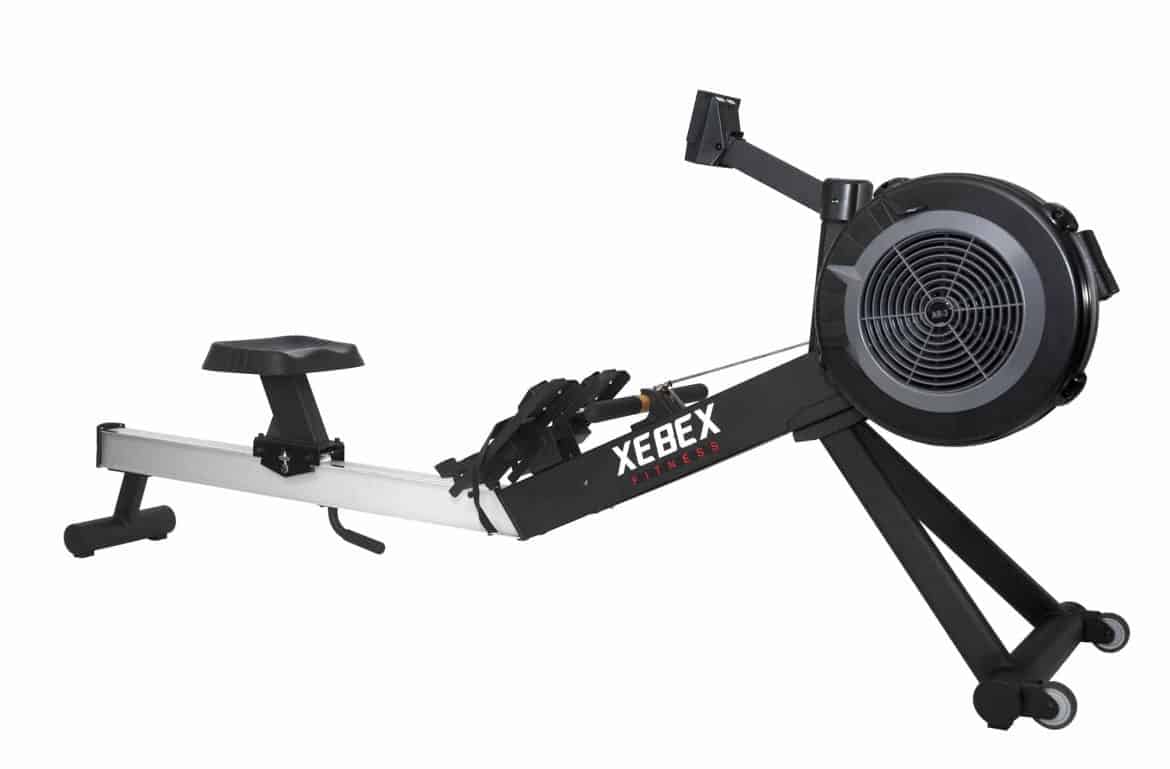
CrossFit is a very high intensity form of training that combines cardiovascular and strength work to raise general physical condition. The rowing machine is one of the pieces of equipment used most in the discipline: it appears in warm-ups, in benchmark workouts and in the middle of timed metabolic pieces. Which raises the question every box owner faces before opening or re-equipping: which rower actually holds up?
This is a purchasing decision, not a personal one. A rower in a box is used by dozens of athletes a day, at maximum effort, with no warm-up on the machine itself. The criteria below are the ones that separate a unit that survives that regime from one that does not.
Air resistance is the reason, not the detail
Air resistance rowers dominate in CrossFit for one structural reason: resistance rises in proportion to the effort applied, with no ceiling. Pull harder and the machine resists harder, indefinitely. There is no setting at which a strong athlete tops out the machine, which is precisely what happens on systems with a fixed maximum load.
That characteristic is what suits the short, maximal efforts of a timed workout. It also has a second consequence that matters in a competitive environment: because the effort is measured as power, performances can be compared between athletes on equal terms. A leaderboard means something only if the measurement means the same thing on every machine in the room. Our air-resistance range is grouped under Xebex air cardio.
Effective cardiovascular training
The first thing to verify is that the machine delivers genuine cardiovascular training. The rower is ideal for this, because it loads the cardiovascular system while recruiting several muscle groups at once, which is what allows a short piece to be a demanding one.
Muscle recruitment across the body
The second criterion is whether the machine lets athletes build and tone the body effectively. The rowing stroke recruits a large number of muscles: the abdominals, the glutes, the thighs, the muscles of the back and the muscles of the upper body. That is the whole argument for its place in a box, and it is why a rower earns its floor space where a single-pattern machine would not.
It follows that adjustable resistance is essential, so that different muscle groups can be worked in a way matched to each athlete’s level of fitness. In a box with a mixed membership, that adjustment is what allows the same machine to serve a first-week beginner and a competitor.
Comfort over long exposure
Comfort is underrated in specification and obvious in use. Athletes spend a lot of time on the rower, so it has to be ergonomic and provide adequate support. Look for a model with a comfortable seat and well-designed handles, which is what prevents joint injuries over repeated exposure.
In a commercial setting, the seat and the handle are also the two parts that show wear first. Check them physically before ordering rather than from a photograph.
Strength and durability
Robustness is not negotiable here. CrossFit is a very intensive activity and the machine will be worked hard. Choose a robust, quality model that will withstand wear and intensive use. In practice this is the criterion on which the cheapest offers fail: not on day one, but in the second year, when the flywheel housing, the chain or the damper start to need parts that are no longer stocked.
Ask about the availability period for spare parts before you ask about the price. The full professional range is listed under professional rowing machines.
Practicality and footprint
Some models are foldable, which is ideal if space is tight in your facility or if you want to be able to store the equipment easily. In a box that switches between class formats through the day, the ability to clear a row of machines off the floor in minutes changes what you can programme.
Ease of use matters just as much. Look for a machine with an LCD monitor that lets athletes follow heart rate, distance covered and calories burned. That display is what makes a workout scoreable, and an unscoreable machine quietly stops being used.
Ask a coach
Finally, it is worth asking a coach or a CrossFit professional for advice on choosing the best rower for your practice. They can point you towards brands with a solid reputation in the discipline, such as Xebex, which offers high-quality rowers suited to it. A coach who runs classes daily will tell you more about a machine’s failure points in ten minutes than any brochure.
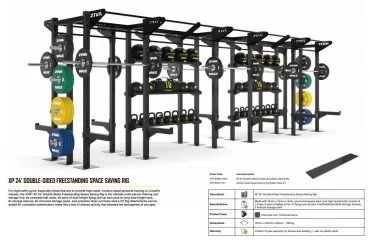
If you are equipping a complete training area rather than a single station, the rowers should be specified alongside the rig; see CrossFit and Hyrox rigs.
Frequently asked questions
Why do boxes standardise on air resistance?
Because resistance rises proportionally with the effort and never reaches a ceiling, and because power measurement lets athletes be compared on equal terms. Both properties matter more in a competitive group setting than in individual training.
How many rowers does a box need?
That depends on your largest class size and on how often rowing appears in your programming, both of which only you can measure. We size the quantity from your class schedule during the quotation rather than applying a generic ratio.
Are foldable models less robust?
Not inherently. The folding mechanism is simply one more assembly to inspect during servicing. If you need to clear the floor between classes, the practicality usually outweighs the extra maintenance point.
What should I check on a demonstration unit?
The seat and the handle for comfort, the resistance behaviour at a genuinely hard effort rather than a demonstration stroke, and the monitor readability from the position a judge would stand in.
Choosing your rowers
The best rower for CrossFit is the one that delivers effective cardiovascular training, works and tones the whole body, is comfortable, strong, durable and practical, and suits the level of fitness of the people who will use it. Weigh all of those criteria together and the shortlist becomes short very quickly.
Tell us your class sizes, your programming and your floor area and we will size the row for you: request a quote.
À lire aussi sur le même thème
- Air, Water or Magnetic Rowing Machine: Which to Choose for Your Gym
- Rowing haltères. L’exécution est tout !
- Functional Cross-Training and CrossFit Rigs: The Operator Guide
- Comment faire de l’exercice sur un vélo elliptique ? Plan de formation pour débutants
- Jambes parfaites : les meilleurs exercices pour les tonifier