Air, Water or Magnetic Rowing Machine: Which to Choose for Your Gym
Trois types de résistance existent en rameur : à air, à eau et magnétique. L'air monte proportionnellement à l'effort et convient aux salles et box ; l'eau produit un ressenti proche de l'aviron avec un bruit caractéristique ; le magnétique est le plus silencieux mais plafonne plus vite. Le choix se fait sur l'usage et la contrainte sonore.
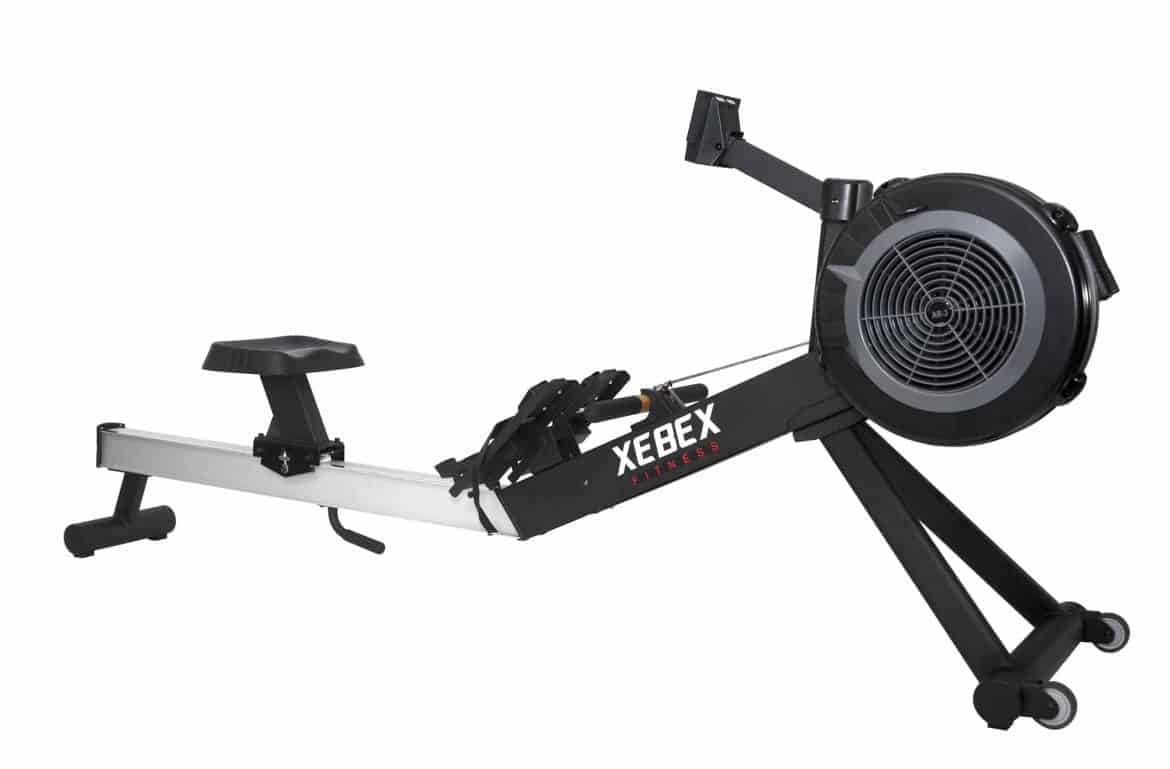
The rowing machine has become one of the most requested pieces of cardio equipment in commercial facilities, from full-service clubs to cross-training boxes, hotels and rehabilitation centres. It works most of the body at once and it is kind to joints, which is why it suits a mixed membership. But choosing between magnetic, water and air resistance is a genuine decision with consequences for noise, throughput and maintenance. This guide sets out how each type generates resistance, what that means on a commercial floor, and which specification points to check before ordering.
Why rowers earn their floor space
A rowing machine engages the legs, back, arms, core and chest in a single movement, which makes it simultaneously cardiovascular and muscular work. Because the stroke is seated and non-impact, it puts far less stress on the joints than running, so it can be programmed for users who cannot use a treadmill.
For an operator, the practical arguments are just as strong. A rower occupies a narrow footprint, most models stand upright for storage, and there is very little to go wrong mechanically. Explore the range of professional rowing machines.
The main resistance types
Air rowers
An air rower uses a flywheel turning in air, so resistance rises in proportion to the force applied to the handle. Pull harder and the machine pushes back harder, which is why air rowers suit every level from beginner to competitive athlete and why they dominate cross-training and competition formats.
The stroke is smooth and the feel is close to rowing on water. The trade-off is noise: air moving through the cage is audible, although modern machines include damping to reduce it. Construction is generally robust and built for heavy continuous use. See the air cardio range.
Water rowers
A water rower generates resistance with a paddle turning in a water tank, which produces the most realistic reproduction of the rowing stroke. As with air, the harder the stroke, the greater the resistance, so the adjustment is made by the athlete rather than by a dial.
The sound is the swoosh of moving water, which many facilities find pleasant rather than intrusive. Water rowers also tend to be the most attractive machines visually, which matters in a hotel lounge or a studio where the equipment is on show.
Magnetic rowers
A magnetic rower creates resistance with magnets acting on a flywheel, adjusted electronically from the console. This gives precise, repeatable levels, built-in programmes and progress tracking, which is useful where training is prescribed rather than freely chosen, such as rehabilitation or supervised group work.
Magnetic machines are the quietest of the three, and most are compact with a folding option. The limitation is that resistance does not scale with effort in the same way, so strong users reach the ceiling sooner than on air or water.
Mechanical and hydraulic rowers
Mechanical rowers use simple spring or chain mechanisms with a manually set load. Hydraulic rowers use cylinders in the arms, adjusted with a knob. Both are quiet, simple and compact, and both offer far less precise resistance than magnetic, water or air machines. They are entry-level equipment and are rarely the right specification for a commercial floor open to the public.
Comparison at a glance
| Type | Resistance | Noise | Best suited to |
|---|---|---|---|
| Air | Proportional to effort, no ceiling in practice | Audible airflow, damped on modern machines | Clubs, cross-training boxes, competition formats |
| Water | Proportional to effort, most realistic feel | Water swoosh, generally well accepted | Studios, hotels, spaces where the machine is on show |
| Magnetic | Electronically set levels, precise and repeatable | Quietest of the three | Rehabilitation, supervised programmes, noise-sensitive rooms |
What to check before ordering
Start from how the machine will be used. Intense self-paced training points to air; a rowing or paddling club audience points to water; precise resistance control and structured programmes point to magnetic. Then work through the specification:
- Maximum user weight. It governs stability and safety, and it also determines how long the machine survives on a busy floor.
- Resistance adjustment. Manual by knob or damper, or electronic from the console.
- Rail length. Check it accommodates your tallest users; a short rail cuts the stroke short and teaches poor technique.
- Console. A clear display of time, split, distance, stroke rate and calories, readable at a glance under gym lighting.
- Programmes and connectivity. Intervals, course simulations and Bluetooth pairing with training applications.
- Heart rate monitoring. Compatibility with chest straps for intensity control in structured sessions.
- Adjustable footstraps. They stop the feet slipping under load, which is essential for stable, correct stroke mechanics.
- Seat and rail quality. Rollers and rail finish decide how the machine feels after a year of use, not on day one.
- Transport wheels. Necessary wherever the room is reconfigured for classes.
- Device holder. A secure place for a phone or tablet during a session.
Do not forget the floor
A rowing bank needs a protective surface underneath. It shields the structural floor from wear and perspiration, gives a stable base, stops the machine creeping under a hard catch, and cuts the noise transmitted to rooms below. Specify thickness and material with the rest of the floor rather than as an afterthought. See the range of rubber gym flooring tiles.
Frequently asked questions
Which rower is best for a commercial gym?
Air rowers are the default for general commercial floors and cross-training, because resistance scales with the user and the build tolerates continuous use. Water and magnetic machines each win in specific contexts rather than universally.
Are rowers noisy?
Air machines are the loudest, water machines produce a softer sound, and magnetic machines are near-silent. Where a room sits above accommodation or offices, this often decides the specification on its own.
How many rowers should a facility have?
That depends on class formats and peak occupancy, which only the operator can measure. Count the users you need to serve simultaneously and specify from there.
What maintenance does a rower need?
Chain or belt inspection, rail cleaning, roller checks and, on water machines, treatment of the tank water. Follow the intervals given by the manufacturer for each model.
Choosing your rowing bank
Resistance type, quantity, console specification and flooring all follow from the room and the programming. Share the space and the intended use and the specification can be built from there. Request a quote for a costed proposal.