Xebex Air Rower: The Commercial Buying Guide
Le rameur Xebex fonctionne à résistance à air, avec une montée en charge proportionnelle à l'effort. Il sollicite environ 90 % de la masse musculaire sans impact articulaire. Sa conception sans moteur réduit la maintenance et supprime le raccordement électrique.
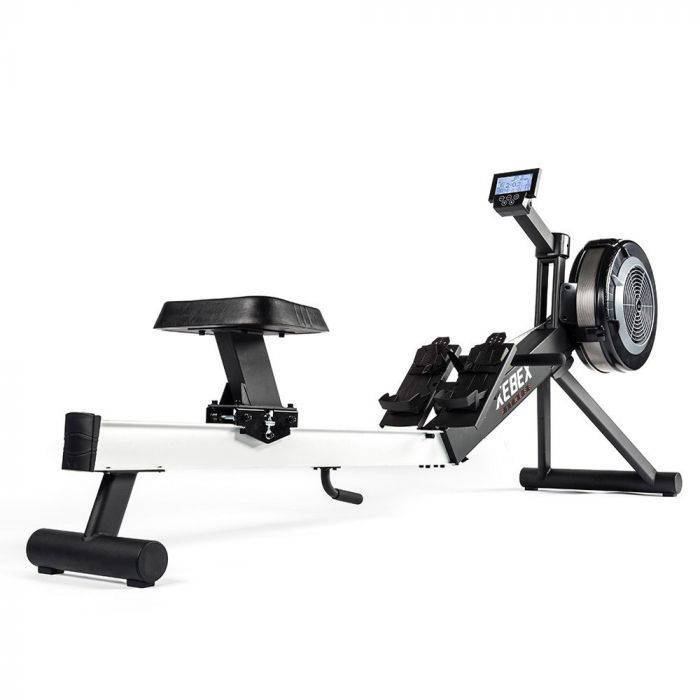
The Xebex rower has become one of the most widely specified cardio machines in cross training boxes, hotel gyms and rehabilitation centres, and for good reason: few machines deliver a genuinely full body session in as little floor space. This guide covers what the machine is, what it brings to a commercial training floor, how to get the most out of it, and the practical questions operators ask before ordering.
What the Xebex rower is
The Xebex rower is a versatile machine that reproduces the rowing stroke. It combines a sliding seat, a handle and air resistance, which gives a realistic and demanding session. Because resistance rises in proportion to the effort applied, the machine self-scales: a beginner and a competitive athlete can use the same unit back to back without any adjustment other than the damper setting. It is built to load the whole body, which is what makes the training effect so complete.
Two features matter specifically to operators. The machine has no motor, which cuts maintenance to a minimum and removes the need for a power connection, so it can be sited anywhere on the floor, including outdoor terraces and container gyms. And it recruits around 90 per cent of the body muscle mass in a single movement, with no joint impact.
What it brings to a training floor
1. Full body strengthening
The rowing stroke loads legs, arms, back, shoulders and trunk together. That makes it the single most efficient piece of cardio equipment for a facility short on space, because it replaces several machines in terms of what it trains.
2. Cardiovascular endurance
Trained regularly, the machine improves cardiovascular capacity. It strengthens the heart and lungs, improves the ability to carry oxygen and raises overall endurance, which is exactly what a mixed membership is looking for.
3. Low joint impact
Unlike running, rowing is low impact. The seat slides, so stress on knees, ankles and hips stays low. That makes the machine a safe option for members prone to injury or with joint problems, and it is why rowers earn their place in rehabilitation settings alongside gyms.
4. Calorie expenditure
The rower is an excellent tool for burning calories. Trained intensively, a session can reach up to 800 calories per hour, which puts it among the most productive machines on the floor for members focused on weight management.
5. Every fitness level on the same machine
From beginner to competitive athlete, the same unit serves everyone. Resistance is matched to the user capability and objective, which keeps the machine in use across the whole timetable rather than only during classes.
Getting the most out of the machine
1. Warm up first
Before a session on the rower, a few minutes of warm up prepares muscles and joints for the effort. This should be part of your class induction rather than left to the member.
2. Coach the posture
Seated on the machine, the back stays straight, the shoulders relaxed and the trunk engaged. Good posture avoids injury and makes the session considerably more effective. Poor posture on a rower is the most common fault on any gym floor and is worth a dedicated technique session.
3. Vary the intensity
Alternate hard efforts with active recovery. Interval structures stimulate the metabolism and improve conditioning more than steady state work alone, and they are what makes the rower work so well in group formats.
4. Follow a structured programme
Results improve when sessions follow a plan matched to the objective and the current level, rather than being improvised machine by machine.
5. Keep members hydrated
Water before, during and after the session. Siting a water point near the rowers is a small detail that changes how much they are used.
6. Listen to the body
As with any training, pain or discomfort means stopping immediately and seeking professional advice where needed.
Specifying rowers for a commercial site
Rowers are long machines: allow for the full footprint plus clearance behind the seat, and plan whether units will be stored vertically between sessions. For indoor commercial installations, specify equipment built to EN ISO 20957-1 class S, the class intended for supervised professional use. Air rowers are also noisier than magnetic machines, so their position relative to reception and to neighbouring rooms deserves thought at layout stage.
Our Xebex range is set out under Xebex air cardio, the wider selection under professional rowing machines, and the rest of the floor under professional cardio equipment.
Frequently asked questions
How is the resistance set?
Resistance is matched to the user capability and objective. A beginner starts lower and increases progressively as strength and endurance build. Because air resistance responds to the effort applied, the machine adapts within a session as well.
How long should a session be?
It depends on the objective and the level. For cardiovascular conditioning, at least thirty minutes of exercise a day, several times a week, is the usual guidance.
Is it suitable for older members?
Yes, it can be adapted for older members. Anyone with a health condition or a physical limitation should speak to a health professional before starting a programme on the machine.
Can members with back problems use it?
They can, but only after professional advice. A clinician or a qualified coach will indicate the adjustments needed to avoid aggravating the problem, and technique matters more here than on any other cardio machine.
Is it suitable during pregnancy?
It can be used during pregnancy, but a health professional should be consulted first so that the programme is adapted to the individual situation.
Equipping your facility
Light In Fitness supplies professional cardio equipment to gyms, cross training boxes, hotels, campsites, local authorities, clubs and rehabilitation centres. Tell us how many stations you need, the room they will sit in and the classes you run, and we will specify the configuration. Request a quote and our team will come back with a costed proposal.