How to build an outdoor gym park in your town
An outdoor gym park is one of the most cost-effective ways for a local authority to put free, year-round physical activity within walking distance of its residents. It is open at every hour, needs no staff on site, and serves teenagers, adults and older residents at the same time. Getting there takes more than ordering a few pull-up bars: the project has to be planned around its location, its users, the equipment mix, the applicable safety standards and a realistic funding route.
Start with the location
The first decision is where the park will sit. Two criteria matter above all others: the space actually available, and easy access for residents on foot, by bike or by public transport. A plot next to existing sports facilities, such as a sports hall, a pitch or a running track, is usually the strongest option, because it draws on an audience that is already there and shares parking, lighting and informal supervision.
Once a site is shortlisted, bring your planning department in early. Ground conditions, drainage, tree roots, buried utilities and the permissions attached to the plot all shape what can realistically be installed, and every one of them is cheaper to check before the layout is fixed than afterwards.
Consult residents and local clubs before you draw the layout
An outdoor gym that nobody asked for stays empty. Consulting residents, sports clubs and schools early does two things: it tells you which disciplines already have a following in the area, and it turns the future users into people who feel the park is theirs. Local associations are also the best source of information on the times of day the site will be busiest, which in turn drives decisions on lighting, surfacing and the number of identical stations you need.
Which equipment belongs in an outdoor gym park
A park designed for a whole town has to cover several practices rather than a single one. In practice, the core of the offer is built from three families of equipment:
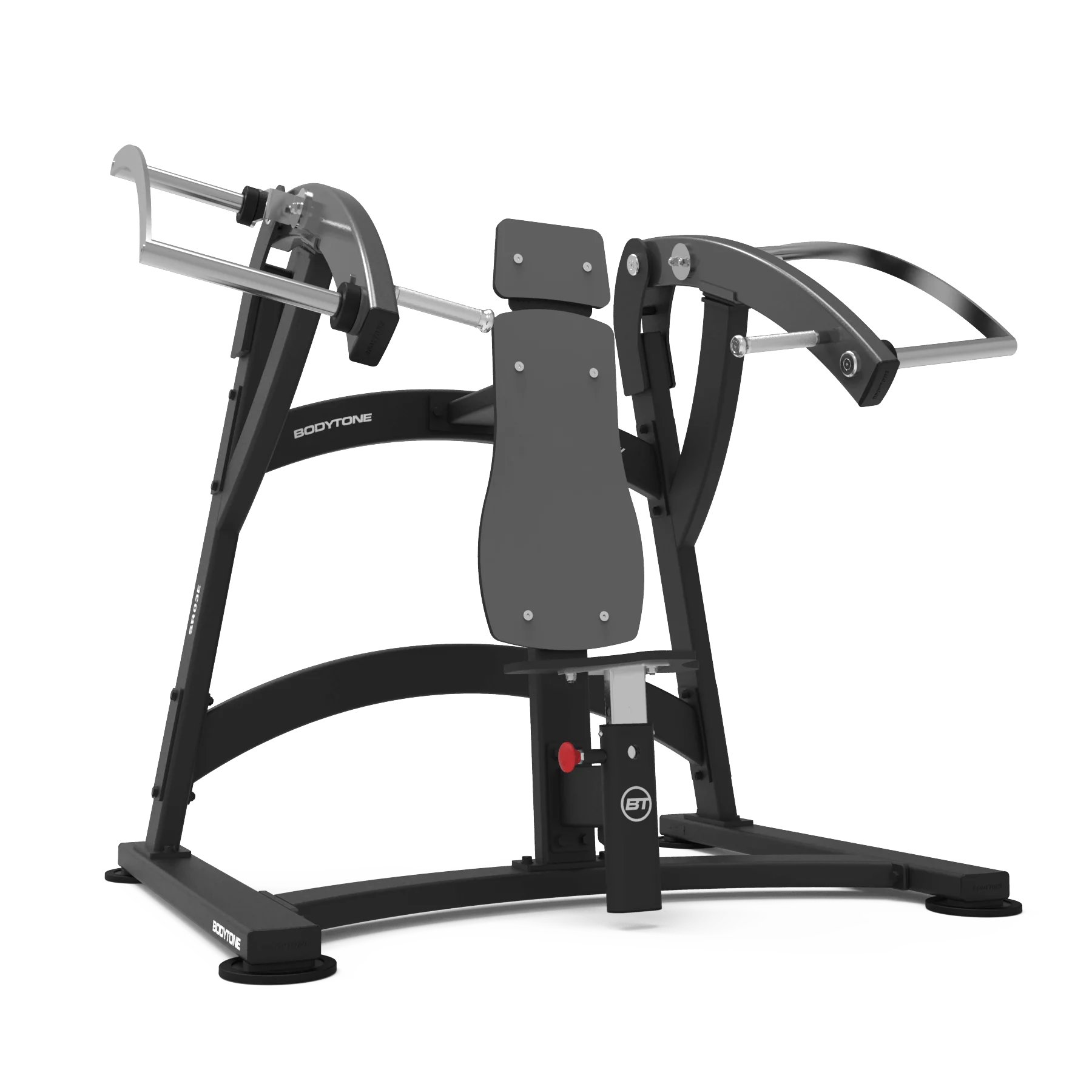
- Strength equipment: benches, parallel bars, wall bars and free-weight stations, which cover the classic strength-training patterns.
- Calisthenics and street workout rigs: pull-up bars, dip stations and multi-user frames that let a whole group train at once on a small footprint. Our street workout rigs are designed for exactly this kind of open-access use.
- Outdoor cardio: motorless treadmills, cross trainers and steppers built for permanent open-air installation, which complete the offer for users who are not looking for strength work.
Beyond that core, dedicated areas can be added for specific disciplines: gymnastics, climbing, boxing, squash or martial arts. These are worth designing with a specialist of each discipline so that the layout and the safety distances match how the sport is actually practised. The full range of open-air stations is set out in our outdoor gym equipment category.
The standards that apply outdoors
Outdoor equipment is not governed by the same references as an indoor gym. Permanently installed outdoor fitness equipment for adults falls under EN 16630. If the park includes a play area for children, that area is covered by EN 1176-1 for the equipment itself and EN 1177 for the impact-attenuating surfacing. The two families are never interchangeable: EN 16630 does not apply to children equipment, and a compliant adult station does not become a play structure because it sits in the same park. Where a mixed audience is expected, the cleanest solution is a clearly separated children zone, which is what our outdoor fitness equipment for children range is built for.
What goes around the training area
The stations themselves are only part of the project. Changing rooms and showers let users prepare and clean up before and after a session, which makes the park usable on the way to and from work. Seating and small stands allow spectators to follow competitions or demonstrations. Green space matters as much as the equipment: users train longer where there is shade and somewhere to recover.
Running and cycling loops laid out through the park give an outdoor training option that needs no equipment at all, and a children play area encourages physical activity from the youngest age while parents train nearby.
Funding the project
An outdoor gym park represents a significant capital investment for a local authority. Public grant schemes for sports facilities exist in most countries, but they are national or regional and their names, thresholds and deadlines differ from one market to another: check what your own national and regional sport funding bodies currently offer before you fix the budget. Partnerships with local businesses are a second route, and a sponsored station is an easy proposition to sell. Once the park is open, launch events and demonstrations are what turn a new facility into a used one.
Frequently asked questions
How much space does an outdoor gym park need?
It depends entirely on the stations selected and on the safety areas each one requires. Rather than starting from a surface figure, start from the equipment list and the number of simultaneous users you want to serve, then let the layout study give you the footprint.
Does an outdoor gym park need supervision?
Open-access parks are designed to be used without staff on site. What they do need is a maintenance and inspection routine, since the equipment is exposed to weather and to intensive shared use all year round.
Can the same park serve children and adults?
Yes, provided the two zones are physically distinct and each one is equipped to its own standard: EN 16630 for the adult fitness stations, EN 1176-1 and EN 1177 for the children play area.
Which equipment should a first phase include?
A calisthenics rig plus a small set of strength stations is the usual starting point, because it serves the widest range of users for the smallest budget and leaves room to extend the park later.
Planning your outdoor gym park
Building an outdoor gym park in your town comes down to five decisions taken in the right order: the location, the consultation, the equipment mix, the standards that apply, and the funding route. Light In Fitness manufactures and installs professional outdoor fitness equipment for local authorities, parks, campsites and residential developments, and has equipped more than 2,500 customers since 2013. Send us your plot and your user profile and we will come back with a layout and a costed proposal: request a quote.