The Freediving Method: The Complete Guide Inspired by World Champions
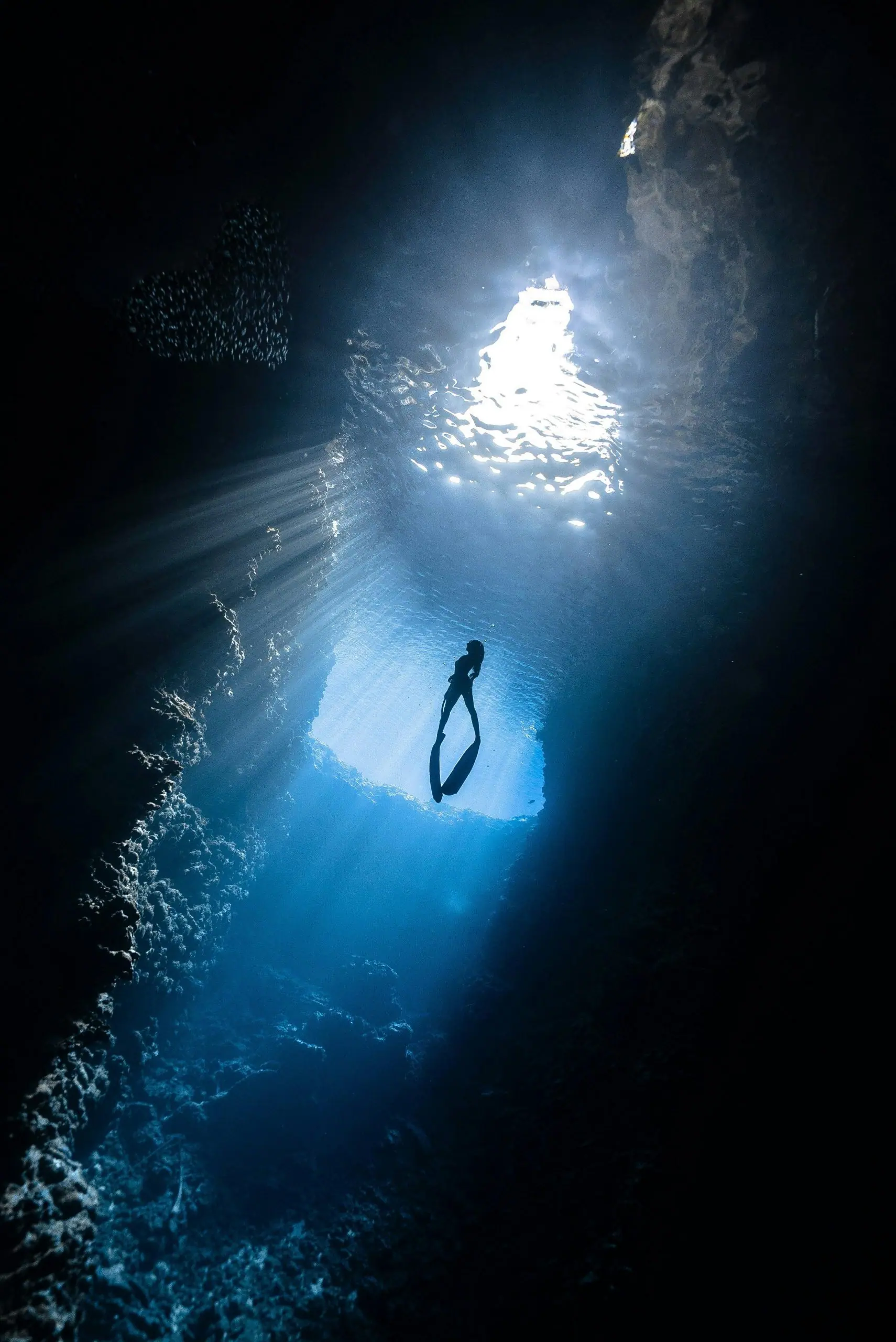
What if you could hold your breath not for a few seconds but for several minutes, staying calm, relaxed and in control of your emotions throughout? That is the promise of the freediving method, a discipline long reserved for world champions and now made accessible to everyone through simple, progressive and safe techniques.
Freediving is not only an extreme sport. It is a powerful tool for the mind, for health and for physical performance. Inspired by figures such as Arthur Guerin-Boeri, the French freediving world champion, the method allows anyone to extend their breath-hold safely, with immediate benefits: lower stress, better breath control, improved cardiovascular condition and a deep sense of calm.
In this complete guide you will find:
- the basics of freediving and why it fascinates so many people,
- the pillars of the method, meaning breathing, mindset and physiology,
- a progressive eight-week training plan,
- safety rules and medical precautions,
- the proven benefits for body and mind,
- and above all, how to integrate the method into daily life and into training.
Prepare to dive in, literally and figuratively, into a discipline where every inhalation and every exhalation becomes a key to extending your limits.
What is the freediving method?
The freediving method is a set of respiratory, physical and mental techniques that improve the ability to hold the breath for longer and more comfortably. Contrary to received wisdom, it is not aimed solely at professional divers or elite athletes: it can be practised by beginners, by fitness enthusiasts, or by anyone wanting better control of their breath and their stress.
The different types of freediving
- Static apnea: staying still, often lying in the water, and holding the breath as long as possible.
- Dynamic apnea: moving horizontally underwater, with or without fins.
- Depth freediving: descending vertically in open water, following a safety line.
All of these forms rest on a common foundation: preparatory breathing, relaxation and control of the mind.
An ancient discipline made modern
Practised since antiquity by pearl divers and by traditional freedivers such as the Japanese Ama, freediving is today a sporting discipline governed by federations and international frameworks such as AIDA and CMAS. The modernisation of the practice has made it possible to develop teaching methods that are both accessible and safe.
The promise of the method
With the right techniques, it is possible to go from 30 seconds to several minutes of breath-hold within a few weeks. That progress does not come from a radical change in the body, but from optimising the breathing, the mindset and the tolerance to CO2.
The fundamentals of the method
Breathing: the foundation
The central element is preparatory breathing. Drawn from yoga, from cardiac coherence work and from diaphragmatic breathing, it serves to:
- oxygenate the blood,
- lower the heart rate,
- release muscular tension,
- prepare the body for the breath-hold.
A typical exercise is 4-7-8 breathing: inhale for 4 seconds, hold for 7 seconds, exhale for 8 seconds.
Mindset and relaxation
In freediving it is usually the mind that gives way before the body. The method therefore integrates:
- visualisation, picturing yourself calm and light underwater,
- meditation, learning to accept the sensations linked to the lack of air,
- stress management, controlling the heart rate through the mind.
The physiological mechanisms
Freediving produces striking adaptations:
- Diving reflex: slowing of the heart, peripheral vasoconstriction.
- Increased CO2 tolerance: better resistance to the urge to breathe.
- Muscular adaptation: increased myoglobin, better oxygenation.
According to a study published in the Journal of Applied Physiology in 2018, regular freedivers can increase their lung capacity by an average of 15 per cent.
Why follow a structured method?
Fast but safe progression
Without a method, freediving can be dangerous, with risks of blackout and hypoxia. A supervised method provides a progressive framework that delivers striking results without putting health at risk.
Proven health benefits
- Stress reduction: close to the effects of meditation.
- Cardiovascular improvement: better oxygenation, lower resting heart rate.
- Stronger concentration: better control of oneself and of one’s emotions.
An ideal complement to fitness
The freediving method can be integrated into sports programmes to improve recovery, effort management and performance.
The method of a world champion
Arthur Guerin-Boeri as a model
A world champion in dynamic apnea, Arthur Guerin-Boeri has made the discipline accessible through a teaching method suited to beginners and to experienced practitioners alike.
The stages of the method
- Preparatory breathing, for relaxation
- Repeated short breath-holds, to accustom the body to CO2
- Extended static apnea
- Progression into dynamic apnea
- Supervised depth immersion
Measurable results
The method sets out to bring anyone to 2 to 5 minutes of breath-hold with appropriate training, beginners included.
Progressive eight-week training plan
| Week | Main objective | Typical exercises | Duration |
|---|---|---|---|
| 1 | Discovering the breath | 4-7-8 breathing, relaxation | 15 min per day |
| 2 | CO2 tolerance | Dry breath-holds, out of the water | 10 min per day |
| 3 | Static apnea | Progressive hold, 1 to 2 min | 2 sessions |
| 4 | Series of short holds | 30 to 45 sec, repeated | 3 sessions |
| 5 | Extending the time | 2 min plus visualisation | 2 sessions |
| 6 | Dynamic apnea | Pool, 10 to 15 m | 2 sessions |
| 7 | Consolidation | Combining static and dynamic | 2 sessions |
| 8 | Final test | Target 3 to 5 min | 1 supervised session |
Safety in freediving practice
- Never practise alone in the water: always with a buddy.
- Medical assessment beforehand, covering heart and lungs.
- No hyperventilation before a breath-hold.
- Follow the recommendations of the recognised federations, AIDA and CMAS, together with the national regulations applicable to the pool or open-water site where you train.
Everyday benefits of the method
- Stress management at work.
- Better concentration in study.
- A complement to sport, including running and strength training.
- Mental wellbeing, comparable to deep meditation.
How to choose a suitable method
- Criteria: a certified coach, safety, teaching quality.
- Where to practise: swimming pool, clubs, or open water with supervision.
- Equipment: mask, fins, wetsuit, and a mat for dry breathing work.
For a facility, that last point is the practical one: dry breath work needs a quiet, comfortable floor area rather than a room of its own, and it sits naturally next to the recovery offer. Our wellness and recovery equipment covers that side of a programme, and cold plunge baths are the station most often installed alongside breathing work.
Freediving and fitness: a winning pair
Integrating the freediving method into a fitness programme makes it possible to:
- improve recovery between sets,
- strengthen the mindset for intense sessions,
- boost cardiovascular performance.
For operators with water on site, the same logic extends into the pool, where the aquatic fitness equipment range supports supervised in-water work.
Taking action
Do not stay a spectator: try the method. Start with simple breathing exercises, set yourself a realistic objective, for example reaching 2 minutes within a month, and progress step by step.
Conclusion
The freediving method is not only a sporting technique: it is a tool for personal change. It teaches better breathing, stress management, mental strength and the safe extension of your limits. Accessible to everyone, it can become a valuable ally in daily life as much as in sport.
FAQ
1. What is the best freediving method for a beginner?
The one based on diaphragmatic breathing, relaxation and progressive breath-holds.
2. How long does it take to progress?
With regular training, 4 to 8 weeks are enough to go from 30 seconds to 2 or 3 minutes.
3. Is the method dangerous?
Not when it is supervised, practised with a buddy and governed by safety rules.
4. Which breathing exercises should be used?
4-7-8 breathing, cardiac coherence work, and series of dry breath-holds.
5. Does freediving improve sporting performance?
Yes: better breath management, optimised recovery, stronger mindset.
6. Can it be practised alone?
Never in the water. Exercises out of the water can be done alone.
7. What are the health benefits?
Stress reduction, cardiovascular improvement, better concentration.
Equipping the space for it
If you are building a recovery or breathing offer into a facility, the equipment brief is short but specific. Tell us the space and the programme and we will specify it: request a quote.
Light In Fitness
Light In Fitness is a professional fitness equipment supplier based in Tours, France, covering strength equipment, cardio equipment, recovery and sports flooring. Delivery terms, lead times and installation are quoted per project and per destination.
À lire aussi sur le même thème
- S275 and S355 Structural Steel: The Basis of Light In Fitness Strength
- Pourquoi mon tapis de course fait-il des à-coups et comment le réparer ?
- How to Design, Lay Out and Equip a Premium Pilates Reformer Studio
- Quels sont les avantages des roulements à bille NK de précision pour améliorer la performance et la durabilité des Barres Olympiques ?