5 Reasons the Squat Is Essential in Strength Training
The squat is the movement most strength programmes are built around, and it is also the movement that decides how a strength area has to be equipped. For a gym operator or a coach, the question is not whether to programme it but how to make it safe, repeatable and available to every member. Here are the five reasons the squat earns its place, and what each of them implies for the floor.
1. Complete muscular development
The squat is a compound exercise that recruits several muscle groups at once: quadriceps, hamstrings, glutes, lower back and the stabilising muscles of the trunk. The quadriceps take the descent, the glutes and hamstrings drive the ascent, and the trunk holds the position throughout. Programmed regularly, it builds overall strength and power rather than isolated leg volume, which is why it transfers into every other functional movement a member performs.
2. Strength and balance
Holding the pattern requires coordination between muscle groups, so the movement trains stability as much as force production. Under heavier loads the working muscles have to overcome real resistance, which stimulates growth and reinforces the legs. That combination is useful for athletes at every level, from a first-year member to a competitive lifter.
3. Posture and mobility
Squatting strengthens the lower back and opens the upper body, which helps correct the muscular imbalances behind poor posture. The descent also works the available range of motion at the hips, knees and ankles, a genuine benefit for members with restricted joint mobility, and a reason the movement appears in rehabilitation and senior programmes as well as in performance ones.
4. Metabolic demand
Because it recruits several large muscle groups simultaneously, the squat raises energy expenditure during the session and keeps it elevated afterwards. For a facility, that makes it a natural anchor for group classes aimed at body composition, and an efficient use of both floor time and floor space.
5. It scales to every level
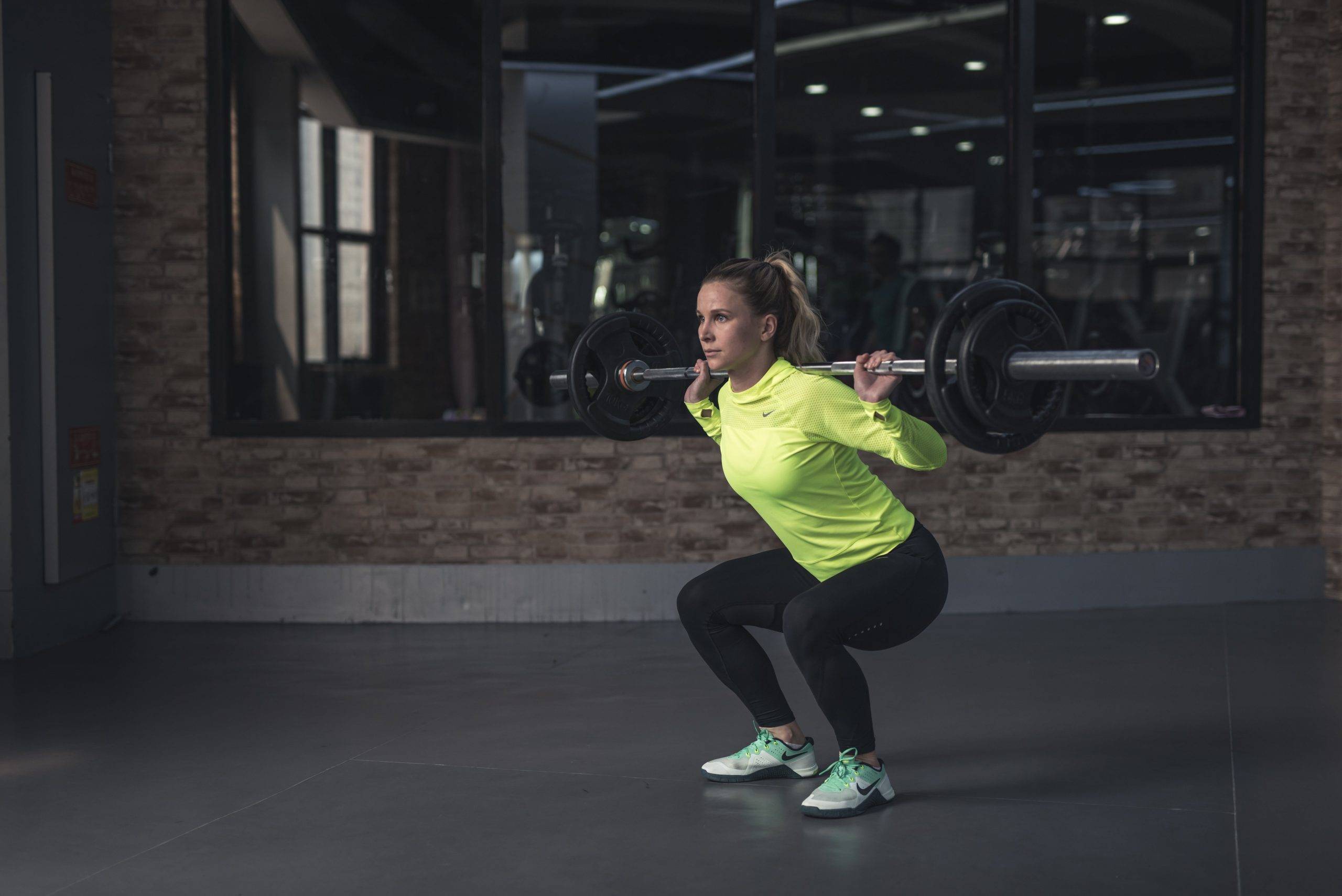
The same movement serves a beginner and an experienced lifter. Start with body weight, keeping the knees tracking over the toes and descending until the thighs are parallel to the floor. Once the pattern is solid, add load progressively with dumbbells or a loaded barbell, then introduce variations such as the sumo squat or the Bulgarian split squat to bias particular muscle groups. Advanced work adds jump squats, single-leg work and heavier barbell loading. Progression should stay gradual and be matched to each athlete, and anyone unsure how to build that progression should work with a qualified coach.
Technique and injury prevention
Good form is what keeps the movement safe under load. The back stays neutral and the trunk braced throughout, the knees track over the toes rather than collapsing inwards, and the descent is slow and controlled. A proper warm-up before squatting, including dynamic mobility work, prepares the muscles and increases the usable range of motion.
What the squat requires from your equipment
Programming the squat properly means equipping for it properly. Three items decide whether the movement can be run safely by a class rather than by one person at a time.
- A squat rack or power rack with adjustable safeties, so a member can fail a repetition without consequence.
- Olympic barbells and plates in enough quantity that a class does not queue for the bar.
- Weightlifting rubber flooring under the rack, which protects the slab and keeps noise down in a shared building.
All of this is indoor professional equipment and should be specified to EN ISO 20957-1 class S, the professional class, whenever it is used by members rather than by a single owner.
Frequently asked questions
How many squat stations does a gym need?
Count the largest class you programme and how many athletes you want under a bar at the same time. That number sets the number of racks, and it is almost always higher than operators expect.
Power rack or open squat stand?
A power rack with full safeties is the safer answer wherever members train without direct supervision. Open stands save space and suit coached sessions where a spotter is always present.
Does the flooring really matter?
Yes. Repeated loading and the occasional dropped bar are what destroy an unprotected slab, and impact-rated flooring is far cheaper than a floor repair.
Building your strength area
The squat is worth building a room around: it develops complete strength, improves balance, supports posture and mobility, raises metabolic demand and adapts to every level. If you are planning or refitting a strength area, send us your floor plan and the classes you run and we will propose a layout, the number of stations and a price. Request a quote and we will work it through with you.