Combining Strength Training and Running for Explosive Results

Running clubs, hotel gyms, municipal sports halls and cross-training boxes all hear the same question from their members: should they lift or should they run? The honest answer is both. Concurrent training, meaning resistance work programmed alongside running, builds athletes who are stronger and more durable than either discipline alone produces, and it changes what a facility needs on its floor.
This guide sets out how strength training and running fit into one weekly programme: the benefits you can expect, how to structure sessions across the week, which muscle groups deserve priority and the mistakes that quietly undo progress. It is written for the people who plan the programme and sign off the equipment budget, not only for the people who follow it.
Whether your members are runners who want to build muscle or lifters who want to extend their endurance, the same principles apply. Get the balance right and you improve retention, reduce injury-related drop-off and make better use of floor space you are already paying for.
Why combining strength training and running works
The two disciplines load the body in opposite ways, and that is precisely why they pair well. Running is a repetitive, low-load, high-repetition activity dominated by the cardiovascular system. Resistance training is a low-repetition, high-load activity dominated by the neuromuscular system. Programmed together, each covers the other’s blind spot.
Strength and endurance reinforce each other
Resistance training develops maximal force production; running develops the ability to sustain submaximal effort. A runner who squats and hinges regularly produces more force per stride and holds form longer when fatigue sets in. A lifter who runs recovers faster between sets because the aerobic base that clears metabolic by-products is better developed.
The practical outcome for a facility is a member who progresses on both fronts instead of plateauing on one. That progress is what keeps a membership alive past month three.
Higher total energy expenditure
Resistance training raises resting energy expenditure by adding and maintaining lean mass, so the body burns more even when the member is not training. Running adds a large acute expenditure in a short session. Combined, the two produce a higher weekly total than either on its own, and the elevated post-exercise oxygen consumption that follows hard resistance work extends the effect beyond the session itself.
For operators running body-composition or weight-management programmes, this is the argument for putting a cardio floor and a strength floor in the same room rather than treating them as separate offers.
Fewer injuries, fewer lapsed memberships
Running is a repetitive-impact sport, and most of its common complaints trace back to insufficient strength or stability rather than to running itself. Loading the glutes, hamstrings, quadriceps and calves improves joint stability, corrects the left-right asymmetries that repetitive gait exaggerates and improves posture under fatigue.
Every injury avoided is a member who keeps coming. Injury is one of the most common reasons cited for abandoning a gym subscription, so a facility that programmes strength work for its runners is protecting its own revenue as much as its members’ knees.
How to structure the weekly programme
The most common failure is not the content of the sessions but their arrangement. A few structural decisions do most of the work.
Define the objective first
Decide whether the member is chasing strength, endurance or a genuine balance of both, because the ratio of sessions follows from that answer. A runner preparing for a distance event keeps running as the primary stimulus and uses two short resistance sessions to support it. A member whose priority is strength inverts the ratio and uses running as conditioning and recovery work.
Written objectives also give your coaching team something to review against. Vague goals produce vague programmes and stalled members.
Alternate the load across the week
Spread the two types of session so that heavy lower-body work and hard running are not stacked on consecutive days. A workable pattern is resistance work on Monday, Wednesday and Friday with running on Tuesday, Thursday and Saturday, leaving one full rest day. Where a member trains both in the same day, put the priority discipline first while the nervous system is fresh.
This alternation also smooths demand on your equipment. A facility whose members all queue for the racks on Monday evening and the treadmills on Tuesday is a facility with an avoidable capacity problem.
Protect recovery
Concurrent training accumulates fatigue faster than either discipline alone, so scheduled rest is part of the programme rather than an absence of it. Build in at least one complete rest day, and use low-intensity work such as mobility, swimming or easy cycling on the lighter days.
Which muscle groups to prioritise
Balanced results come from covering the whole body rather than adding upper-body volume to a running habit and calling it cross-training.
Lower body
Running loads the legs heavily and unevenly, so the legs need the most deliberate attention. Squats, lunges, hip hinges, leg presses and leg extensions build the force capacity that translates into stride power. Standing and seated calf raises are worth programming specifically, because the calf complex absorbs a large share of ground contact forces and is routinely under-trained.
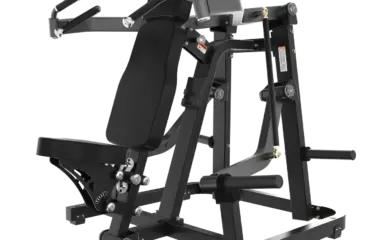
Selectorised leg equipment earns its place here: it lets a member load the pattern safely without a spotter, which matters in a facility where supervision is not constant. Our range of professional strength training machines covers the full lower-body sequence.
Upper body
Arm drive contributes to running economy and postural control, and upper-body work restores the balance that a legs-dominant sport erodes. Press-ups, pull-ups and bench pressing cover the pushing patterns; rows and horizontal pulling cover the back, which is what holds the torso upright once the member is tired.
Trunk and lower back
The trunk transmits force between the legs and the upper body and keeps the pelvis level through the gait cycle. Crunches, planks and leg raises address the anterior chain; back extensions and prone holds address the lumbar musculature. Trunk endurance, rather than trunk maximal strength, is what shows up in the last kilometre.
Common mistakes to avoid
Progressing too fast
The temptation at the start of a combined programme is to add running volume and training load at the same time. Increase one variable at a time. Start with light loads and short distances and build gradually, giving connective tissue, which adapts more slowly than muscle, time to catch up.
Treating rest as optional
Rest is where adaptation happens. Members who train hard six days a week without a genuine off day tend to stall, then get hurt, then disappear. Coaches should be as explicit about rest days as they are about session content.
Ignoring nutrition and hydration
Combined training raises both protein requirements, for muscular repair, and carbohydrate requirements, for the energy the running sessions demand. Hydration before, during and after sessions is equally basic and equally often neglected. Facilities that offer any nutritional guidance should make sure it accounts for the total training load rather than one discipline.
Equipping a facility for concurrent training
A floor that supports concurrent training needs both halves of the equation to be genuinely commercial. Indoor equipment intended for continuous use in a supervised or unsupervised professional facility should conform to EN ISO 20957-1 class S, the classification for professional-use equipment. Class I covers professional equipment designed for inclusive access; it is a separate professional category, not a higher intensity tier.
On the cardio side, running volume in a busy facility is unforgiving of consumer-grade machines: deck construction, motor rating and belt quality determine whether a machine survives its warranty period. Our professional treadmills are specified for that duty cycle.
On the strength side, plan for both selectorised stations, which move beginners through the patterns safely, and free-weight provision for members ready to load bilateral and unilateral lower-body work. The mix depends on your membership profile, your supervision model and the square metres available.
Frequently asked questions
Should strength work or running come first in the same session?
Put the priority discipline first, while the nervous system is fresh. If the member’s main goal is strength, lift first. If the goal is a running performance, run first and keep the resistance work supportive rather than maximal.
How many resistance sessions does a runner need?
Two well-constructed full-body sessions a week are enough to support most recreational running programmes. The limiting factor is usually recovery, not volume.
Does resistance training make runners heavier and slower?
At the volumes typical of a supportive programme, resistance training improves force production and running economy without meaningful mass gain. Substantial hypertrophy requires a training and nutritional approach that a runner following a supportive programme is not using.
What equipment does a small facility need to offer both?
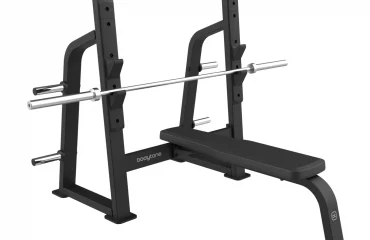
At minimum, a reliable treadmill line, a squat or power rack, an adjustable bench and a small selectorised group covering the leg press, leg extension, chest press and row patterns. That combination covers the entire programme described above.
Planning your equipment mix
Combining strength training and running is a programming decision before it is a purchasing decision, but the two are linked: a programme your floor cannot support will not be delivered. Mapping your weekly timetable against your available stations is the fastest way to find out what is actually missing.
Light In Fitness has supplied professional fitness equipment to gyms, hotels, sports halls, clubs and public facilities since 2013. Tell us your floor area, your membership profile and the programme you want to run, and we will put together a specification and a costed proposal. Request a quote and our team will come back to you with a configuration built around your site.