CrossFit or Strength Training: Which Should You Equip For?
CrossFit or classic strength training: the question divides members, coaches and, increasingly, the people who decide how a facility spends its floor space. Two approaches, two philosophies, two very different equipment lists. This guide compares them on the criteria that actually matter when you are choosing what to build, and ends where most operators end: with a floor that does both.
CrossFit: versatility as a training model
CrossFit is more than a discipline. It is a training model built on variety and general physical performance, combining strength, endurance, agility and coordination. Sessions are varied, usually run in a group, and aim at overall fitness rather than at one capacity.
What it offers
- Versatility and function. The movements are functional patterns that also appear in daily life: the squat, the deadlift, the pull.
- Short, intense sessions. A WOD, or Workout of the Day, typically runs 10 to 20 minutes, which suits members with limited time.
- Community. Training in a group builds mutual support and motivation, and it is the single strongest retention driver a box has.
- Visible progress. Intensive work brings a measurable improvement in endurance and strength within a few weeks.
What it demands
- Technique or injury. CrossFit requires clean technique, particularly for the shoulders and knees, which puts a real coaching load on the operator.
- Competitive pressure. Some members push to keep up with the group and let form slip, which is exactly when things go wrong.
In short: CrossFit suits members looking for all-round conditioning at high intensity, and operators able to staff it with qualified coaching.
Strength training: depth, control and shape
Strength training works muscle deeply and selectively, which suits members who want to add muscle mass and shape their physique. The pace is slower and the method is progressive overload, isolating and loading each muscle group deliberately.
What it offers
- Muscle mass. It is the direct route to gains in strength and volume.
- Adjustability. Every exercise can be tuned to the individual, with full control over the load.
- Lower injury rate. Movements are slow and controlled, which limits risk, provided posture is correct.
- Aesthetic targeting. Specific areas can be worked precisely, which is what a large part of any membership is actually there for.
What it demands
- Less variety. Repeating the same exercises can feel monotonous for some members.
- Equipment. It needs a properly equipped floor: strength training machines and free weights are not optional.
In short: strength training suits members chasing strength and muscle volume, with attention paid to each muscle group.
Side by side
| Criterion | CrossFit | Strength training |
|---|---|---|
| Goal | Overall physical conditioning | Muscle mass and maximal strength |
| Session length | 10 to 20 minutes for the WOD | 45 to 60 minutes |
| Risk | High if technique is poor | Moderate with correct posture |
| Variety | High, functional movements | Moderate, targeted exercises |
| Pace | Intense, often circuit based | Slow and controlled |
| Equipment | Rig, barbells, bumper plates, functional accessories, drop-rated flooring | Machines, benches and free weights |
| Group dynamic | Central to the format | Largely individual |
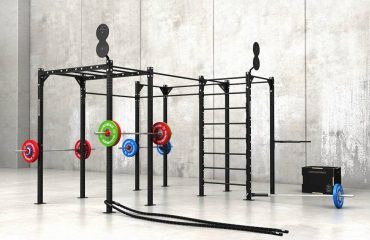
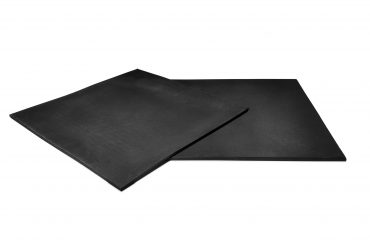
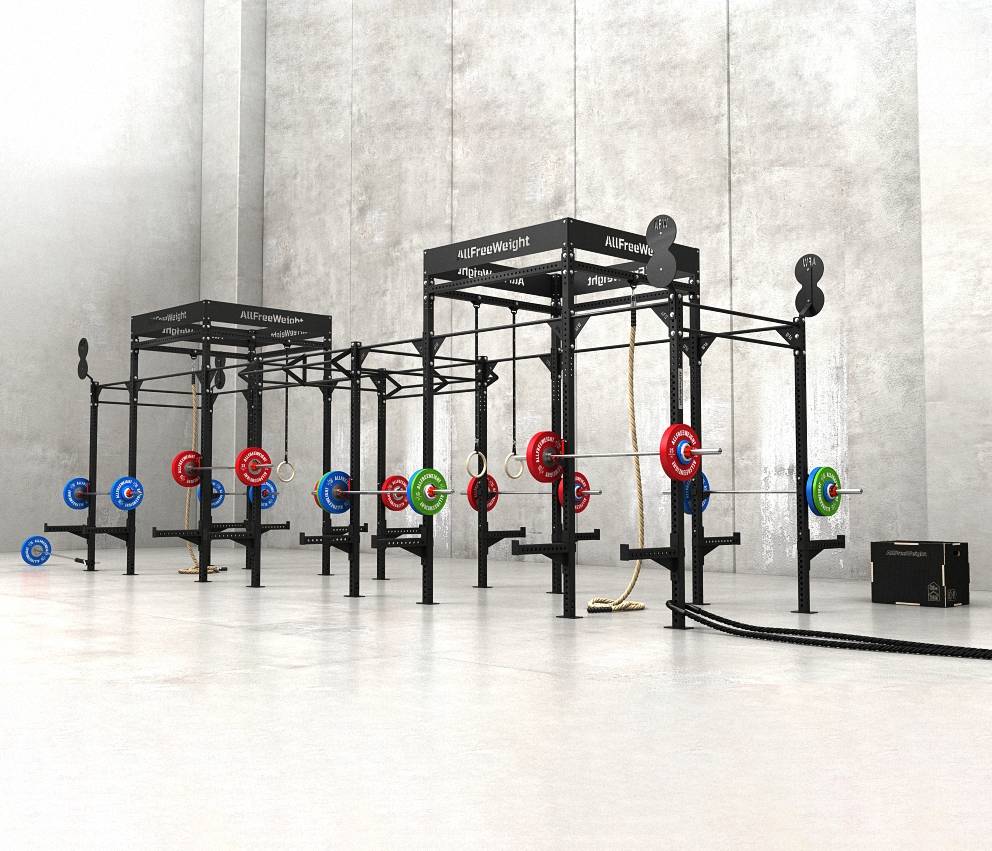
One line in that table deserves a comment, because it is often got wrong: CrossFit is not a low-equipment format. Bodyweight work is part of it, but a functional floor needs a CrossFit rig, barbells, bumper plates and a floor rated for dropped loads. What changes between the two models is not the amount of equipment, it is the type and the way it is laid out.
Which profile fits which model
A few pointers to sharpen the decision.
- Build for CrossFit if your members want short, intense sessions, all-round results in endurance, strength and mobility, a group atmosphere, and maximum efficiency from a crowded schedule.
- Build for strength training if your members want to control and target each muscle group, are after aesthetic results and muscle mass, prefer training alone at their own pace, and expect a fully equipped floor.
Why most facilities end up doing both
For members who want complete results, combining the two is the strongest option. A well-structured training week might include three strength sessions to target muscle groups precisely, and two CrossFit sessions to work endurance, explosiveness and coordination. The mixed approach takes the benefit of each discipline without cancelling out what makes either one work.
For an operator, that pattern has a direct consequence on layout: a cross-training cage or rig placed next to the strength floor, with a clearly separated drop zone, serves both memberships from one room instead of forcing a choice between them.
The professional view
Athletes and professional coaches commonly recommend alternating the two practices to improve sporting performance and reduce injury risk. The balance between strength, mobility and endurance produces a complete athletic profile, useful in competition and in daily life alike.
The expert advice is consistent: favour variety, but never at the expense of technique. Correct posture and well-executed movements are what make training both effective and safe, and on a commercial floor they are also what keeps incident reports empty.
Frequently asked questions
Which one burns more energy per session?
High-intensity circuit work generally has a higher energy cost per minute than a strength session built around heavy sets and long rests. Published figures vary widely with the protocol and the individual, so treat any single number quoted for either discipline with caution.
Can both share the same floor?
Yes, and most successful facilities do. The condition is separation: a drop zone with the right flooring, clear circulation, and enough distance between the rig and the machine floor so that a class does not block members using the machines.
Which needs more space per member?
CrossFit needs more free space per person, because the format is group based and the movements travel. A machine floor packs more stations into the same area but serves fewer people simultaneously during a class.
Which is safer for a general membership?
Guided machine work has a lower technical barrier and a lower risk profile for an unsupervised member. CrossFit is safe when it is coached, which is why the staffing model matters as much as the equipment list.
Making the choice, and equipping for it
Choosing between CrossFit and strength training comes down to who your members are and what your building allows. The first question to ask is whether you are equipping for overall conditioning or for targeted muscle development, and the honest answer for most facilities is both, in a proportion that depends on your catchment. Our team can size the two areas against your floor plan and your class schedule: request a quote and we will come back with a layout and a price.