Complete Gym Equipment for a Safe, Functional Facility
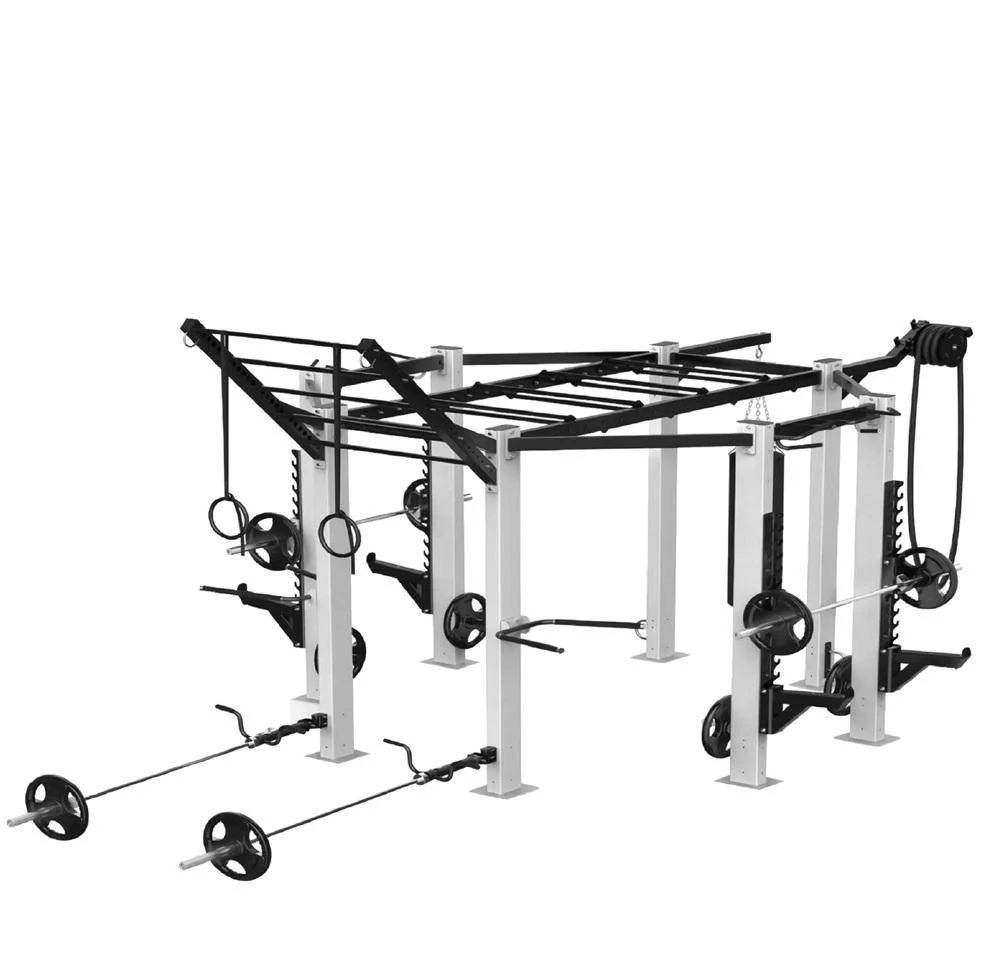
Fitting out a gym is one of the most strategic decisions an operator makes. The equipment you install defines what your members can train, how safely they can do it, and how long the floor will last before it needs replacing. Complete gym equipment has to be planned as a whole, not bought item by item, and every piece has to match the intended use of the room. This guide walks through the core building blocks of a professional gym fit-out and the practical rules that keep the layout functional and safe.
When operators compare suppliers, the total cost of the machines is usually the first number on the table. It should not be the only one. Durability and ease of use decide whether the equipment survives a full commercial duty cycle and whether members actually use it. The guidance below is written for facilities that have to serve very different strength and endurance profiles under the same roof.
Professional cross-training equipment: what to select for a commercial floor
Cross-training is one of the most popular disciplines in the world, and it is also one of the most demanding on hardware. Getting the selection right is not only a question of member results: it directly affects the health and safety of everyone using the floor.
Start with build quality and materials. Equipment for cross-training takes repeated dynamic loading, dropped bars and high-frequency use, so the structural steel, the welds and the finish all matter more than they do in a lightly used room. It also has to be comfortable to grip and to move around. At Light In Fitness you will find the full range needed to equip a cross-training floor, including pull-up bars, kettlebells, hooks and attachments, cages and wall-mounted stations. Our cross-training and Hyrox cages are designed for exactly this kind of continuous commercial use.
Pull-up bars: a compulsory set in a professional gym
If you want to build a serious cross-training facility, the basics have to be right before anything else: pull-up bars, plyo boxes and strength equipment.
Pull-up bars are among the single most useful items on the floor. They open up the whole upper body, chest, arms and shoulders, at a very low cost per user. When you select them, look closely at the material and the finish, because these bars have to resist wear and abrasion from chalk, sweat and constant hand contact. A multigrip quick-lock bar or a 33/42 dual-diameter bar covers the widest range of grips and hand sizes in one component.
Wall-mounted stations: a base for endless configurations
Your gym may be a great place to train, but members need genuine variety or they stop coming. A wall-mounted station is the most efficient way to add exercise options without adding floor area. It is a training station built around a wall and it supports a wide set of movements, from pressing and squatting to climbing work.
The advantages are straightforward: minimal floor footprint, better use of the room and ergonomics that work for a mixed membership. A wall-mounted structure is quick to assemble and can be installed indoors or outdoors, which makes it a practical answer for facilities with a terrace or a courtyard.
A wall-mounted station is also a base you can extend later. Our Hammer Tech attachments add a compact design and a very wide range of configurations. The modular rig system can be adapted to different functions and set to any element height, and it is built for personal training spaces, clubs, commercial gyms and other sports facilities. Operators working with limited depth often start with wall-mounted cross-training rigs and grow outwards from there.
Power racks and rigs: for a small studio as well as a large sports facility
Our power racks are available in freestanding and wall-mounted versions. Each one can work as the centrepiece of a small gym or as a multi-purpose station inside a large training centre. From the height and the finish colour through to the pull-up bar design, you can build an all-in-one system that lets members squat, press, lift and train with body weight in the same footprint. The full racks and cages range is designed to be extended as the facility grows rather than replaced.
Frequently asked questions
Where should I start when equipping a gym from scratch?
Start with the structures that define the floor plan: rigs, racks and wall-mounted stations. They fix the circulation and the safety distances. Accessories, cardio and free weights are then placed around them, not the other way round.
Freestanding or wall-mounted?
Wall-mounted stations save floor area and suit narrow rooms. Freestanding racks and rigs can be positioned anywhere and allow training on all sides, which is preferable when several groups train at the same time.
Can the equipment be extended later?
Yes, provided you choose a modular system from the start. A rig built on a standard profile accepts additional uprights, bars and attachments, so the facility can grow without replacing what is already installed.
What matters most for equipment durability?
The steel section, the quality of the welds, the surface treatment and the grip finish. These are what separate equipment that survives years of commercial use from equipment that does not.
Planning your fit-out
A complete gym fit-out works when the equipment list, the room dimensions and the intended use are designed together. Send us your floor plan and your member profile and our team will put together a full equipment proposal, including layout and configuration options. Request a quote and we will come back to you with a specification built around your facility.