How Much Does Professional Gym Equipment Cost?
Fitness is no longer a bonus, it is an expected amenity. Hotels, campsites, residential developments, local authorities, schools, clubs, rehabilitation centres and armed forces are all asked to provide a training space that actually works. So the question a professional buyer asks is rarely whether a fitness room is worth having. It is how much a facility built for daily, multi-user traffic really costs, and where that money goes.
Why there is no single price for a fitness room
Two projects with the same floor area can differ by a wide margin, because the budget is driven by use rather than by surface. A twenty-station room in a hotel used by a handful of guests each morning has nothing in common, mechanically, with the same room in a club running from six in the morning to ten at night. Duty cycle decides the frame thickness, the bearing quality, the upholstery, the belt and deck specification on a treadmill, and above all the expected service life. Equipment certified for professional, commercial use is engineered for continuous unsupervised operation by users of very different weights and abilities. That engineering is the single biggest line in any serious quotation.
The second driver is the mix. A cardio-heavy room and a strength-heavy room do not cost the same per square metre, and a room that has to serve both beginners and experienced lifters needs a broader range than a specialised box. Deciding the mix before pricing anything is the fastest way to control a budget.
Cardio equipment: the visible part of the budget
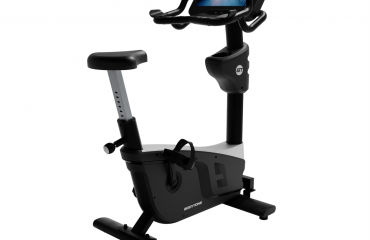
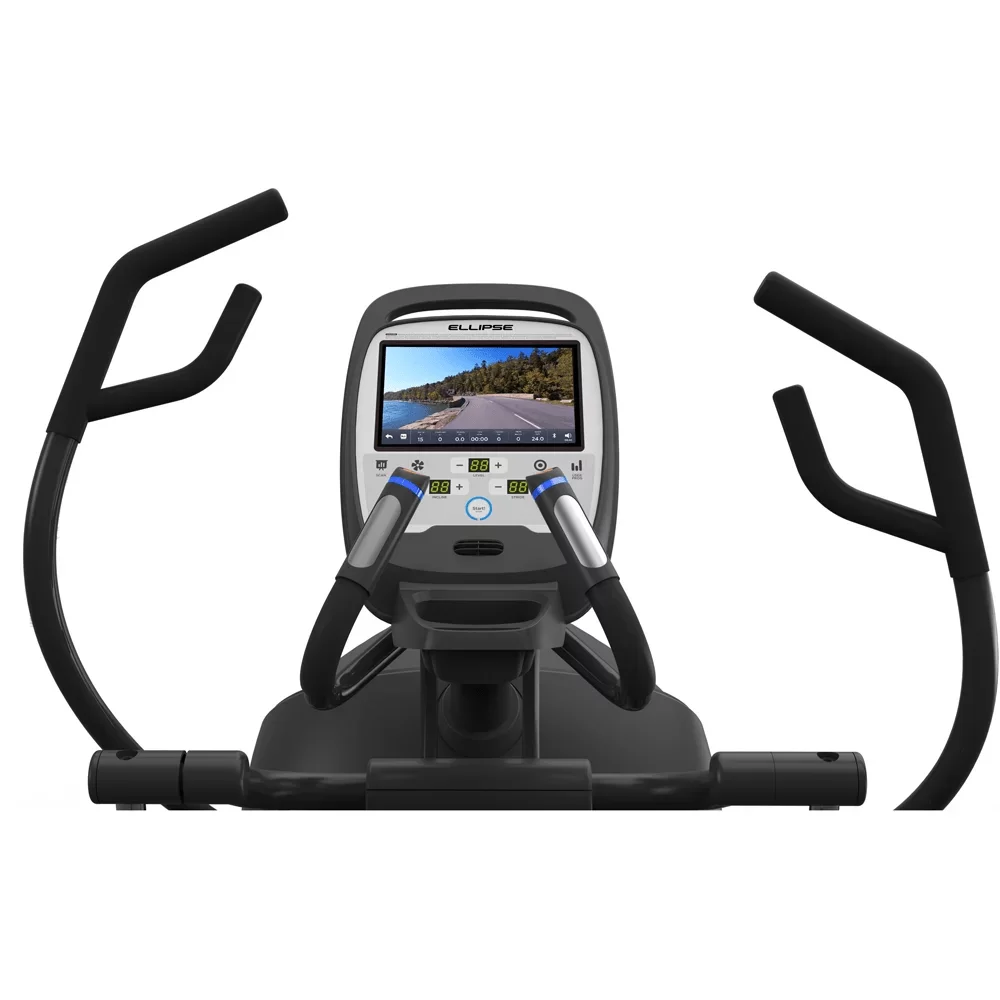
Cardio machines are what members see first and what breaks first when the specification is wrong. Treadmills, upright and recumbent bikes, indoor cycling bikes, cross trainers, rowers and ski ergometers cover very different price brackets, and within each family the gap between an entry-level commercial unit and a flagship one is largely a question of motor, frame, electronics and console. Consoles now carry a real share of the cost: connectivity, user profiles, session tracking and screen technology are genuine features, but they are also the easiest place to overspend when the audience will never use them.
A sensible approach is to specify the mechanical side generously and the electronics according to the actual audience. Our professional cardio equipment range is organised by family so a buyer can compare like with like before arbitrating.
Strength training: where use decides the specification
On the strength side, the arbitration is between selectorised machines, plate-loaded machines and free weights. Selectorised machines carry a higher unit price but they are the safest option for a mixed, unsupervised audience: guided movement, quick weight changes, low supervision requirement. Plate-loaded machines and racks cost less per station and suit trained users, but they need more floor space, more storage and more discs, which brings part of the saving back.
Multi-stations are often the right answer for a hotel, a campsite or a residence, because they concentrate several exercises into one footprint. In a club, a line of selectorised strength machines remains the reference for throughput and member safety. The choice is an operational one before it is a financial one.
The costs buyers forget
Three items are regularly missing from a first estimate and they are the ones that cause budget overruns.
Flooring comes first. A professional gym floor protects the slab, absorbs impact, cuts noise transmission and keeps machines stable. It is a structural part of the project, not a finish, and it is sized according to the zone: cardio, free weights, functional area and lifting platforms have different requirements.
Delivery, handling and installation come second. Heavy machines have to reach the room, which means access, lifts, doorways and floor loading have to be checked before ordering rather than after. Assembly on site, levelling and commissioning are real work and appear as such on a serious quotation.
Maintenance and spare parts come third. Over a full life cycle, the availability of parts and the responsiveness of technical support weigh more than the initial discount. A machine that stays out of service for weeks costs more than a slightly more expensive machine that never stops.
Controlling the budget without downgrading the room
The most effective lever is not negotiating the last percent, it is sequencing. Equipping the core of the room properly and adding secondary stations in a second phase produces a better facility than buying everything at once in a lower specification. The second lever is layout: a well-planned room needs fewer machines for the same perceived offer, because circulation, sightlines and zoning do part of the work. The third is honesty about the audience. Specifying a competition-grade line for a residence, or a light line for a club open fourteen hours a day, are the two classic ways of wasting money.
Finally, a quotation should be read as a whole. Equipment, flooring, delivery, installation, warranty and after-sales support form one economic package, and comparing only the machine prices between two offers is the surest way to compare nothing at all.
Frequently asked questions
Can domestic equipment be used in a shared gym?
No. Equipment intended for private use is not designed for the frequency, the load variation or the unsupervised context of a shared facility, and it will not stand up to it. Any space open to members, guests, residents, pupils or the public must be equipped with machines certified for professional use.
Should the budget go to cardio or to strength first?
It depends on the audience. Hotels, campsites and residences see cardio used first and should secure that side, then add a compact strength offer. Clubs and training centres usually build the strength area first, because that is where members spend the most time and where the differentiation happens.
Is flooring really necessary everywhere?
The specification varies by zone but a professional floor is needed throughout. It protects the building, reduces noise for neighbouring rooms, keeps equipment stable and makes the space safe to use. Skipping it usually costs more later, in slab repair and in complaints.
How is a reliable budget put together?
Start from the audience, the opening hours and the available surface, not from a catalogue. With those three elements a supplier can propose a coherent layout and a realistic quotation covering equipment, flooring, delivery and installation.
Get a costed proposal for your project
Every project has its own constraints of surface, access, audience and schedule, and those constraints are what turn a list of machines into a working facility. Send us the details of your site and our team will put together a complete proposal, from layout to installation. Request a quote and we will come back to you with a costed plan.