How to Choose Exercise Mats for Strength Training
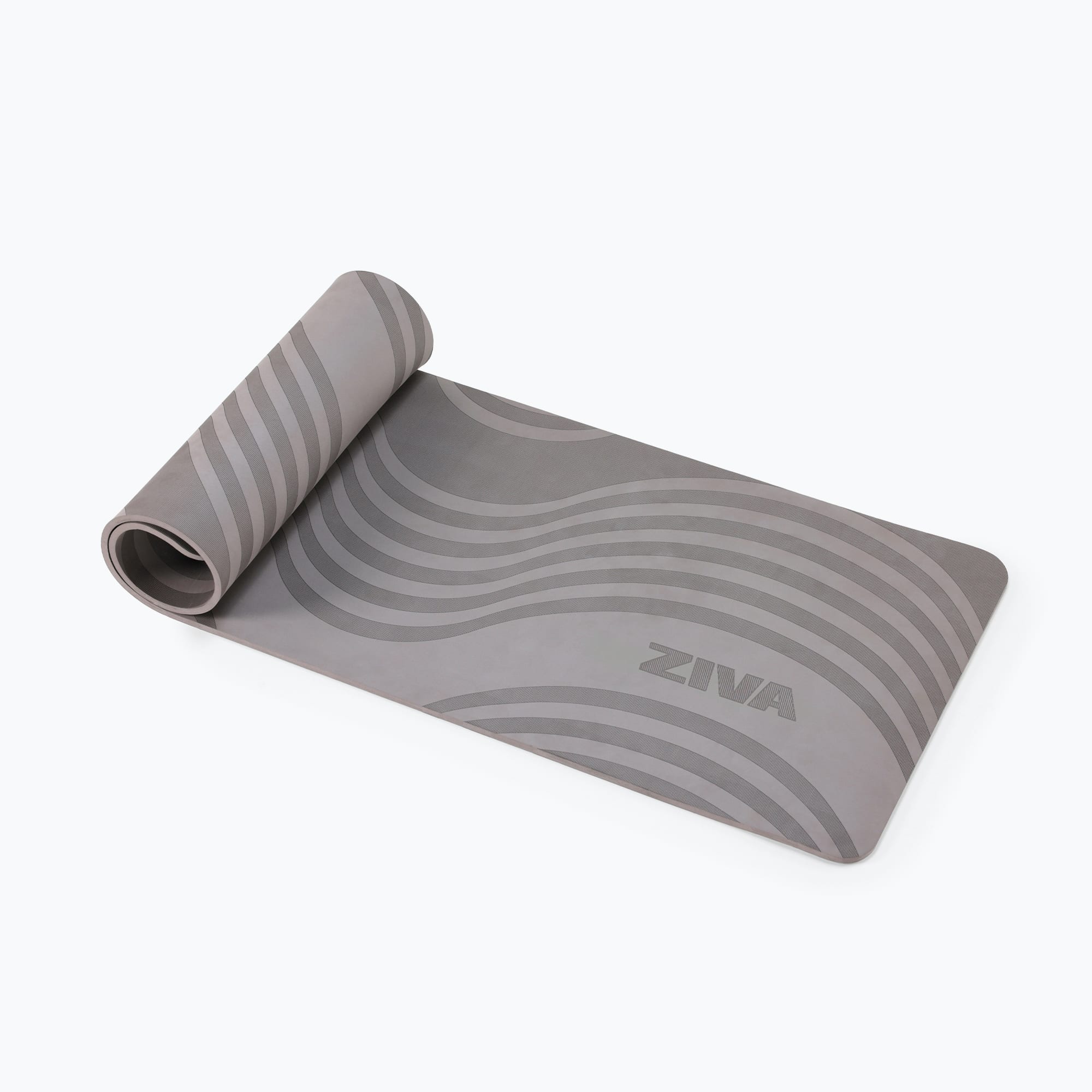
Mats are the cheapest item on a strength floor and the one that generates the most complaints. Choosing them properly protects your members, protects your floor and keeps your studio timetable running. For a club, a hotel fitness room, a school, a sports centre or a rehabilitation unit, the decision is not about comfort alone: it is about grip under load, thickness against impact, cleanability under a shared-use regime and how long the mat survives before it curls at the corners. Here is how professional buyers approach it.
1. Material
The material is the first and most consequential criterion.
- Rubber mats are valued for durability and impact resistance. They give reliable grip, which matters for loaded movements such as deadlifts and squats, and they tolerate dropped weight far better than any foam. They are the correct answer wherever load is involved.
- EVA foam and polyethylene mats are lighter and foldable, which makes them easy to move and store. They suit studio classes, mat work and circuits where the mat is put away between sessions, but they are not a free-weight surface.
On a commercial floor you will usually need both: a rubber surface in the loaded zones and lighter mats in the studio. See our fitness, gym and Pilates mats.
2. Thickness and padding
Thickness governs joint comfort and impact protection.
- A thicker mat gives better protection for high-impact work such as cross training or boxing.
- A thinner mat is more appropriate for yoga and stretching, where stability matters more than cushioning.
For strength training, a mat of roughly 1 to 2 cm is often the right compromise for intensive sessions: enough to protect the joints, thin enough to keep the user stable under load. Anything softer under a loaded lift becomes a stability problem rather than a comfort feature.
3. Grip and safety
Safety comes first, particularly where members lift. Choose a non-slip mat that holds position and prevents sliding during exercise. This matters especially for:
- dynamic movements;
- floor work for the trunk;
- general strength and conditioning work.
Check grip in two directions: the mat against the floor and the user against the mat. A mat that grips the user but travels across a polished slab is the more dangerous of the two failures.
4. Versatility across the timetable
If the same space hosts several disciplines, choose a mat that covers them.
- Fitness mats are designed to take a variety of activities, from cardio to strength work to group classes.
- Gymnastics mats give good protection across a wide range of exercises and fold away for practical storage.
- For combat sports and floor-based disciplines, roll-out matting covers a large area quickly and stores compactly. See our roll-out gym mats.
5. Dimensions and format
Match the format to the space and to the way the room is used.
- In a gym or sports hall, larger mats allow free movement and reduce the number of edges, which are the trip hazard and the first thing to wear.
- Where the space is shared or reconfigured, folding mats and interlocking puzzle tiles let you cover an area quickly and clear it just as fast. See our interlocking puzzle tiles.
Count storage into the decision: a mat with no dedicated storage ends up stacked against a wall, and a mat stacked against a wall deforms.
6. Cleaning and durability
Cleaning is a daily operational cost, not an afterthought.
- Materials such as natural rubber and hard-wearing textile covers are generally easier to clean and maintain, which matters when the mat is wiped down between every user.
- Confirm that the mat is specified for intensive use and that the cover is compatible with the disinfectants your team actually uses. Incompatible cleaning products destroy more mats than training does.
Mats are not gym flooring
A mat protects a user; a floor protects a building. They are different specifications and one does not substitute for the other. Where loads are dropped, the answer is a properly specified floor build-up rather than a thicker mat: see our weightlifting rubber tiles. Plan the two together and the mats last considerably longer.
Frequently asked questions
How many mats does a studio need?
Size from the largest class on the timetable, plus a margin for damaged units. Running out of mats mid-class is the fastest way to lose a class booking.
Rubber or foam for a hotel fitness room?
Foam mats are usually sufficient where there is no free-weight area. Where dumbbells are available, specify a rubber surface in that zone.
How long do commercial mats last?
That depends entirely on material, traffic and cleaning regime. Corner curling, delamination and permanent compression are the signals to replace, and they appear far earlier on mats cleaned with the wrong product.
Can mats be supplied in club colours?
Colour options vary by range and can affect lead time. Confirm at the specification stage rather than at the order stage.
Specifying your mats and flooring
The right specification balances material, thickness, grip, format and cleanability against the sessions you actually run. Send us your timetable, your room dimensions and your loaded zones, and our technical team will propose mats and floor build-up together. Request a quote for a costed proposal.
Réalisations documentées
- Dalles et sols sportifs : livraisons documentées – plusieurs chantiers
- Sol sportif extérieur, square Georges-Vallerey – Taverny (95)