Which Machine Is Best for Losing Belly Fat?
In short: no machine burns fat from a chosen part of the body. Spot reduction is not how the body mobilises fat, so no piece of equipment can target the waistline. What works is a calorie deficit supported by regular cardiovascular work and core strengthening. The machines that support it best on a commercial floor are the rowing machine, the cross trainer, the treadmill used in intervals and the air bike. This guide is written for operators who are asked the question every week at the front desk, and who have to decide what to put on the floor.
Why no machine targets the waistline
Fat is mobilised from the whole body, in a distribution that depends on genetics, sex, hormonal status and overall body composition. Abdominal exercises strengthen the rectus abdominis and the obliques and improve trunk stability and posture, which changes how the midsection looks and holds. They do not remove the fat lying over those muscles. Any equipment sold on the promise of localised fat loss is selling something the physiology does not deliver, and repeating that promise at the front desk costs a facility credibility.
The machines that actually move the needle
The rowing machine
The most complete single unit for this goal. One stroke combines a leg drive, a hip extension and an upper-body pull, so energy expenditure per minute is high while ground impact stays at zero. It suits heavier members and returning members better than running, and it takes very little floor space. If a facility can add only one machine for a weight-management programme, our professional rowing machines are the safest choice.
The cross trainer
Continuous, low-impact, whole-body work with the hands engaged. It is the machine members tolerate for the longest sessions, which matters more than peak intensity for total weekly expenditure. Our cross trainers allow both steady-state work and interval profiles on the same unit.
The treadmill in interval work
High-intensity intervals raise energy expenditure in a shorter session and are popular with time-poor members. On a commercial floor the requirement is a motor and a deck that survive repeated acceleration cycles, and a belt long enough for a full stride.
The air bike
Fan resistance rises with effort, so the machine self-regulates to the user rather than to a setting. It is the simplest way to run short, hard intervals with mixed-ability groups, which is why air resistance cardio has become standard in cross-training areas.
Core strengthening still has a place
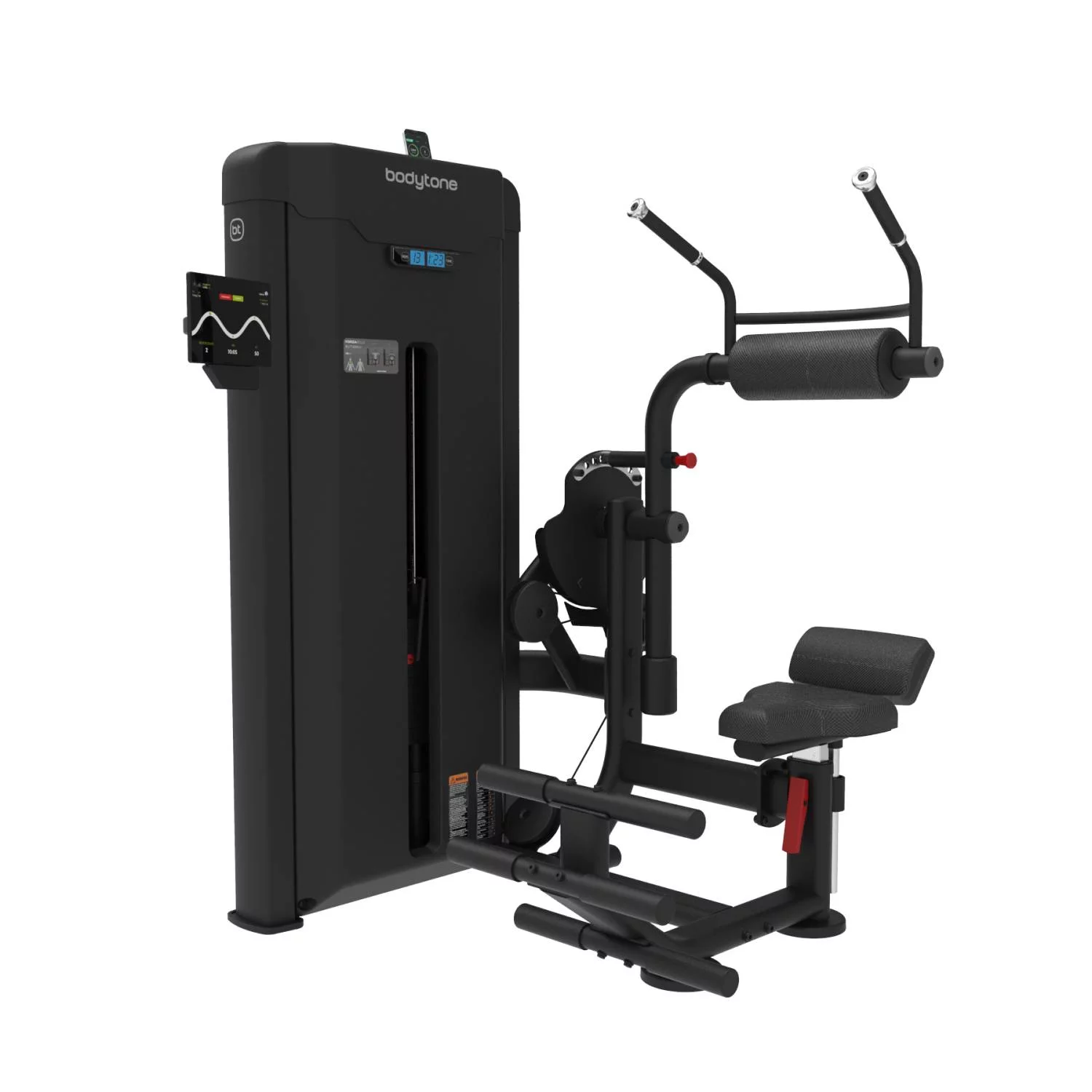
Abdominal and lower-back work will not burn local fat, but it improves posture, protects the lumbar spine under load and makes every other movement on the floor safer. Squats, lunges, loaded carries and compound lifts recruit the trunk heavily and add muscle mass, which raises resting energy expenditure. A dedicated abdominal station is worth having; presenting it as a fat-loss device is not.
What to tell a member who asks
A workable programme is three to four cardio sessions a week of thirty to forty-five minutes, two strength sessions, and a controlled diet that creates a moderate calorie deficit. A realistic rate of change is six to twelve weeks before the difference is clearly visible, with half a kilo to one kilo of body weight per week and two to four centimetres off the waist per month. Rates vary widely between individuals depending on metabolism, activity level and genetic predisposition, and members with a medical condition should be referred to a health professional rather than advised at the desk.
What this means for your equipment plan
Weight management is the single most common reason people join a facility, so the cardio zone carries the retention. Build it around low-impact units first, keep at least one machine per programme slot at peak hour, and place the cardio area where new members can reach it without walking through the free-weight zone. Everything on that floor should be certified to EN ISO 20957-1 class S, because these are the machines that run longest each day.
Frequently asked questions
Which machine should we recommend for abdominal fat loss?
The rowing machine for whole-body work with no impact, the cross trainer for long tolerable sessions, the treadmill or air bike for intervals. The choice matters less than weekly consistency and total energy expenditure.
Do abdominal exercises flatten the stomach?
They strengthen and stabilise the trunk. Removing the fat above the muscle requires an overall calorie deficit combined with cardio work.
How long before a member sees a change?
Typically six to twelve weeks with three to four cardio sessions a week and a controlled diet. Setting that expectation at sign-up prevents the drop-off that happens at week four.
Are vibration plates or passive devices worth installing?
Not for this objective. They do not produce the energy expenditure that fat loss requires, and floor space is better given to units members will use for thirty minutes at a time.
Plan the cardio zone with us
Tell us your surface area, your peak attendance and the profile of your members, and we will size the cardio zone accordingly. Request a quote for a costed layout.