Buying Professional Strength Training Machines for Your Facility
Buying strength training machines for a facility open to the public is a different exercise from buying equipment for private use. The machines have to survive continuous use, be safe for members training without supervision, and still be serviceable in five or ten years. Light In Fitness has supplied professional strength equipment since 2013 and delivers worldwide. This guide sets out what the professional strength range covers, how to match machines to your members, and what to check before you sign a quotation.
Professional strength training machines
Reliability and structural strength are the two properties that separate professional strength equipment from everything else. A selectorised station in a commercial gym is loaded and unloaded hundreds of times a day, often by users who drop the stack rather than lower it, and the frame has to absorb that for years without developing play in the joints or wear in the guide rods.
Ergonomics matter just as much, and for a commercial reason: a machine that is uncomfortable or awkward to adjust is a machine your members will walk past. Seat and pad adjustment ranges, clear movement paths and legible instruction plates decide whether a station earns its floor space.
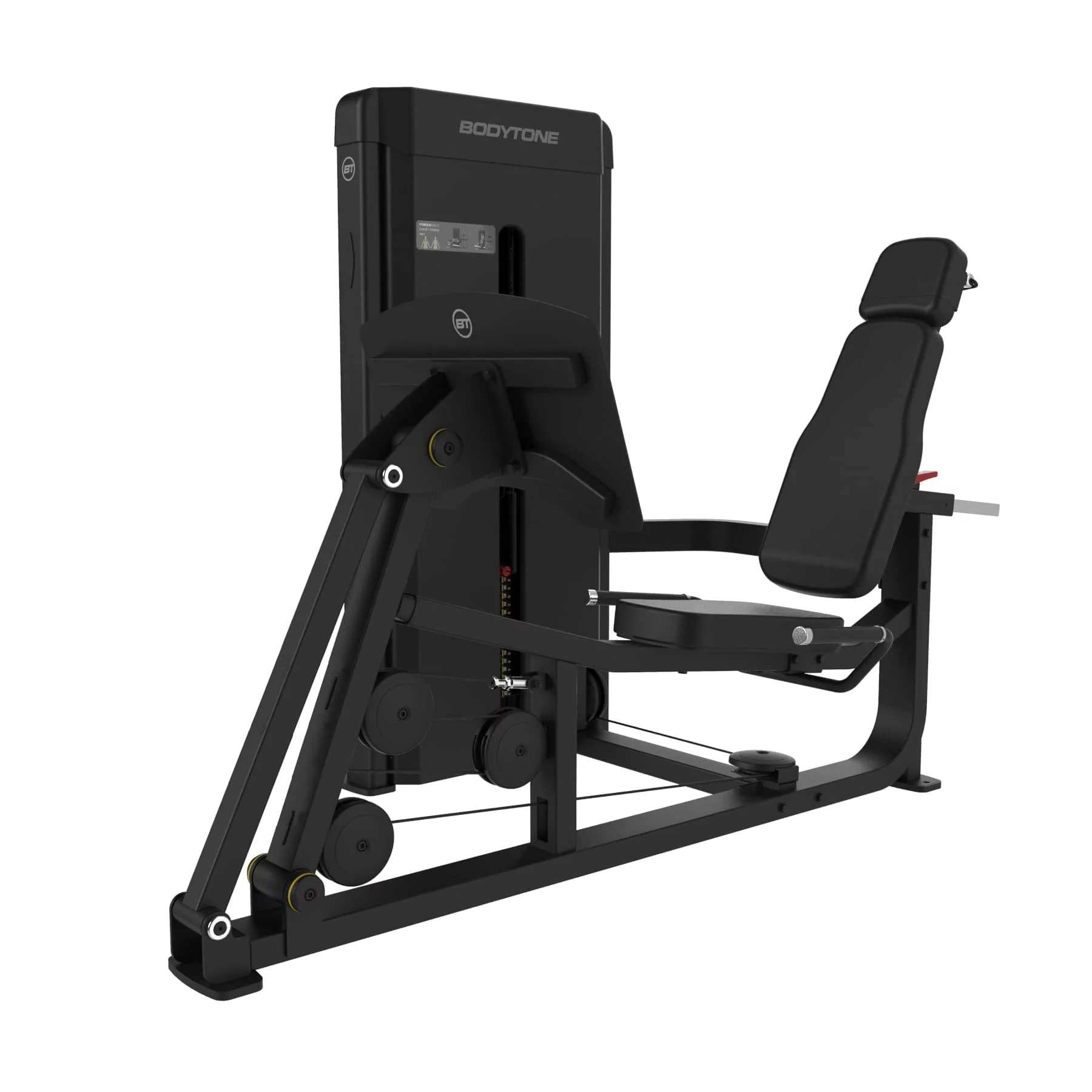
Light In Fitness supplies several professional ranges rather than a single brand, which makes mixed configurations possible where one manufacturer is stronger on a specific station type. The ranges carried include Light In Fitness, Bodytone, Cube, Reebok, Alpha and Ziva, among others. The full selection is presented in our professional strength training machines category.
Professional fitness equipment for your facility
A strength area is rarely bought machine by machine. Most projects are a complete fit-out: a fitness centre being built, a hotel wellness room being renovated, a club adding a floor, a municipal centre replacing equipment at end of life. The equipment then has to support individual training, supervised sessions, group classes, cross training and personal coaching, sometimes all in the same room at different hours.
That is why the range extends well beyond selectorised machines: Olympic lifting equipment, squat racks, benches of every configuration, plate-loaded stations and cable towers. A four-station cable tower such as the Etenon PC1001A serves four users at once on a footprint that a single machine would otherwise occupy, which is often the difference between a workable floor plan and an overcrowded one.
Choosing the right strength equipment for your members
The right configuration follows from who trains in your facility, not from a catalogue order. Three questions settle most of it.
Who uses the room, and with how much supervision? If your members mostly train alone and without coaching, selectorised machines with fixed movement paths should dominate: they are safe on a first visit and need no spotter. If you run a coached or performance environment, racks, benches and free weights carry more of the load.
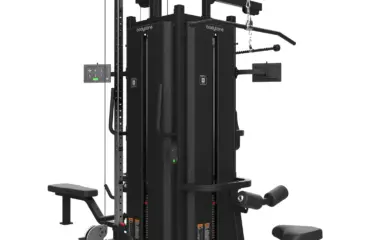
An all-in-one multi-station is often the right answer for a facility with limited space and mixed users. A single frame with multiple attachment points covers upper body, lower body and trunk work, and one station like the Bodytone multi-station can replace four or five separate machines when the room simply does not have the square metres.
What surface do you actually have? Floor area, ceiling height and access routes constrain the answer before anything else does. A squat rack needs vertical clearance a leg press does not; a heavy plate-loaded station may need a floor loading check; and every machine has to physically get through your door and up your stairs on delivery day.
What has to be covered on day one? A workable minimum covers the large muscle groups: a pushing station for chest and shoulders, a pulling station for the back, a leg station, and a free-weight zone with benches and adjustable dumbbells. Isolation machines are worth adding once those are in place, not before.
Quality, safety and standards
Professional indoor equipment is designed for class S use under EN ISO 20957-1, the studio class, and this is the reference to check for any machine going into a facility open to the public. It is the specification that distinguishes equipment built for continuous public use from equipment built for private use, and it is what your insurer and your local authority will expect if a question is ever raised.
Two further points are worth checking on any quotation, whichever supplier you buy from. First, the warranty: what is covered, for how long, and separately for the frame, the moving parts, the upholstery and the electronics. Structural warranties on professional strength frames are typically far longer than those on wearing parts, and a single headline figure usually hides that split. Second, spare parts: cables, pads, bearings and guide rods are consumables in a commercial setting, and a supplier who can send you a replacement pad in a week is worth more than one offering a slightly lower unit price.
Worldwide delivery
Light In Fitness delivers internationally and handles the logistics as part of the project rather than leaving it to you. Lead times, transport arrangements and installation conditions depend on the destination and on the configuration, so they are confirmed on the quotation for your specific project rather than promised in advance. Whatever the destination, the same team handles specification, the order and the follow-up.
Frequently asked questions
How many machines do I need for a given surface?
There is no reliable general ratio, because the answer depends on the machines you choose, the circulation space you need around each station and the peak occupancy you expect. Send us your floor plan and we will return a layout with the real footprints.
Can I mix brands in one strength area?
Yes, and most well-specified rooms do. Mixing lets you take the best station of each type instead of accepting a weak one because it came with the range. A single quotation covers the whole project regardless of how many manufacturers it involves.
Is second-hand equipment a reasonable option?
It can be, for structural items with no moving parts such as racks and benches. It is far riskier for selectorised machines, where cable, bearing and guide-rod wear is not visible on inspection and where a failure under load is a safety incident rather than an inconvenience.
What should I budget first?
Cover the major movement patterns before adding isolation machines, and keep a reserve for the flooring. Protective flooring is not optional under a free-weight zone or a leg press, and it is the item most often forgotten in a first budget.
Requesting a quotation
Send us the surface available, the profile of your members and your budget range, and our team will propose a configuration, position each machine on your plan and set out equipment, delivery and installation in a single quotation. You can start from the quotation request page or write to contact@lightinfitness.com.