Buying a Pickleball Court: The Complete Guide for Clubs and Operators

Pickleball is the fastest-growing racket sport of the moment. Born in the United States, it appeals across every age group thanks to its simplicity, its sociability and its fast rhythm. A hybrid of tennis, badminton and padel, it is played on a court smaller than a tennis court, with solid paddles and a perforated ball. Tennis clubs, sports associations, hotels, holiday parks and local authorities are all adding courts, and every one of them runs into the same question: how do you install a court that is compliant, durable and right for the project?
Buyers routinely underestimate what is involved. Between the official dimensions, the choice of surfacing, durability, budget and installation, there are several ways for a project to go wrong. This guide goes through the questions to settle before ordering.
1. Official dimensions and clearances
Playing area
A pickleball court must respect the official dimensions set by the international federation and adopted by the national federations: 13.41 m long by 6.10 m wide for the playing area.
Around that playing area, allow a safety zone of at least 2 metres on each side and 3 metres behind each baseline. Those margins are what make play flow and keep players away from fences and obstacles.
Net height
The net is lower at the centre than at the posts, and both figures are fixed by the current international rulebook. Take them from the rulebook edition in force at the time of your project and have your supplier confirm that the net and post set supplied matches it: this is a detail that decides whether a court can host sanctioned play.
What happens if the dimensions are wrong
A court built to the wrong dimensions can never be approved for official tournaments and degrades the playing experience permanently. Some suppliers offer undersized recreational courts without saying so. Ask for the marked-out dimensions in writing, on a drawing, before ordering.
2. Choosing the surface
The surface is the central element of a pickleball court. It has to deliver grip, playing comfort and resistance to the weather.
Acrylic surfacing, tennis type. A hard, fast, stable surface with excellent durability. The usual choice for clubs and competition-oriented sites.
Synthetic surfacing, turf or flexible resin. More cushioned for the joints and visually softer. A good fit for hotels, holiday parks and residential developments.
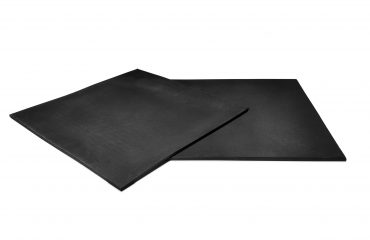
Modular surfacing, interlocking outdoor tiles, and PVC court rolls. Fast to install, minimal maintenance, and the most flexible answer where the ground is already sound. This is the format that lets a court be laid in days rather than weeks.
A poor surface choice produces slips, injuries and premature wear. Specify a surface certified as slip-resistant and rated for UV and weather exposure, and see the full pickleball surfacing range before deciding.
3. Structure and fencing
A court has to be solid and safe. Three items decide that.
An official net with easy tension adjustment. Robust galvanised posts that resist wind and intensive use. A mesh fence or ball-stop netting around the court to keep balls in play and out of neighbouring areas.
Low-grade posts deform quickly and a badly tensioned net ruins the game. Galvanised steel structures and certified official nets are what take intensive use without deforming.
4. Siting and landscape integration
Orientation. Avoid direct sun in the players’ eyes. In practice this usually means a north-south long axis, confirmed against your own site.
Wind exposure. A high fence may be needed on exposed sites; the ball is light and drifts.
Visual integration. Colours and finishes can be sober or bright depending on the setting, whether that is a natural park, a sports complex or a hotel garden.
A badly sited court becomes unusable for several hours a day. A technical site study before ordering is what prevents that.
5. Durability outdoors
A pickleball court is a long-term investment, and the failure modes of low-grade materials are predictable: surfacing that fades under UV, ground that cracks with frost, nets and posts that rust.
What to specify instead: surfacing designed for outdoor use, powder-coated anti-UV paint on metalwork, and galvanised or stainless steel structures.
A low-cost court often has to be renovated after three or four years, which means paying twice. Properly specified, an outdoor court is designed to last 10 to 15 years with minimal maintenance.
6. Budget and value
The cost of a pickleball court is not a single figure: it is a surfacing line, a net and post line, an optional fencing line, and a groundworks and installation line that depends entirely on the site.
The surfacing line can be priced directly. A complete PVC court roll of 18 x 9 m, 3 mm thick and suitable for indoor and outdoor use, is 4,375.00 EUR excluding VAT; the 15 x 7.2 m version of the same range is 3,150.00 EUR excluding VAT. Those figures cover the playing surface itself.
What varies from one project to the next is everything around it: the type of surfacing, whether fencing is included, the level of customisation, the condition of the existing ground and whether installation is carried out on site or by your own contractor. Groundworks are the line that most often breaks a budget, because levelling and drainage are discovered late.
Ask for those lines to be separated on the quotation. A single global figure hides which part of the project you can still adjust.
7. Maintenance
Maintenance on a well-specified court is light but not zero. Clean the surface regularly to remove leaves, sand and dust. Check the net and posts once a year. Repaint or refresh the lines after a few years of play.
A neglected court becomes dangerous, through slippery surfaces and torn nets. Specify a court designed for reduced maintenance and confirm that spare parts, net, tension system, post caps, remain available.
8. Logistics and installation
Installing a court is a technical project with a fixed sequence: feasibility study covering ground, orientation and available space; levelling and drainage; laying the surface and marking the lines; installing net, posts and fencing.
A poor installation can leave a court unusable or non-compliant. Confirm at quotation stage who carries out each step, whether that is our team, a local contractor or your own, and get the sequence in writing before the first delivery.
Frequently asked questions
What are the official dimensions of a pickleball court?
13.41 m long by 6.10 m wide for the playing area, with a safety zone of at least 2 m on the sides and 3 m behind the baselines.
Which surface should be chosen?
Acrylic for performance and club use, synthetic for comfort and a softer look, modular tiles or PVC rolls for fast installation and minimal maintenance.
What does a pickleball court cost?
The surfacing can be priced from the catalogue, from 3,150.00 EUR excluding VAT for a complete 15 x 7.2 m PVC court roll. Net, posts, fencing, groundworks and installation are quoted per project because they depend on the site.
Can a pickleball court be installed indoors?
Yes, with a surface suited to multi-sport halls. The same PVC roll formats are used indoors and outdoors, and a hall already fitted with a modular multi-sport court can often be line-marked for pickleball as well.
How long does a professional court last?
Between 10 and 15 years with regular maintenance.
How high is the net?
The net is set lower at the centre than at the posts. Take the exact figures from the international rulebook in force and confirm them with your net supplier.
Starting the project
A pickleball court is a real opportunity to attract new players and broaden the sporting offer of a club, a hotel or a public facility. It also has more variables than most buyers expect: dimensions, surfacing, durability, budget and installation all have to be settled before the order.
Send us the available area, the setting and the intended use, and we will return a specification with the surfacing, the net and post set and the options priced separately. Request a quotation to start.
Réalisations documentées
- Dalles et sols sportifs : livraisons documentées – plusieurs chantiers
- Sol sportif extérieur, square Georges-Vallerey – Taverny (95)