Custom Gym Equipment for Clubs and Fitness Facilities
Do you want to give your members a fitness experience they cannot get anywhere else? Standard equipment does not always answer the specific needs of a specific club. Imagine being able to configure every machine so that it fits your floor and your membership rather than an average of both. That is what custom-built equipment does, designed for your facility rather than for a catalogue.
In a market where differentiation decides who keeps their members, investing in custom equipment can be the difference. It fits the space you actually have, and it answers the needs of the people who actually train with you. This guide sets out what bespoke equipment can change in a club or gym, and how to specify it without wasting your budget.
The advantages of custom-built equipment
Investing in bespoke equipment for clubs and gyms brings several strategic advantages. First, customisation lets every machine align with the identity of your facility. You create a coherent brand environment, which reinforces recognition and recall among your members. Custom equipment also stands out in build quality: premium materials, careful finishing and reinforced structures give a longer service life than a standard machine.
Second, bespoke ergonomics play a decisive role in user satisfaction. By adapting contact points, working angles and resistance, you reduce injury risk and improve comfort. Over time that shows up as better retention and positive word of mouth. Finally, custom equipment is a genuine marketing argument, positioning your facility as one that is built around the real needs of its members.
None of that removes the compliance question. Indoor equipment installed in a facility open to the public must still be built to EN ISO 20957-1 class S, the professional class, whether it is a catalogue product or a one-off. Ask your manufacturer for the conformity documentation on the finished custom machine, not on the range it was derived from. Class I, where inclusive access is part of the brief, is a separate professional class for users with reduced mobility, not a tier above class S.
Personalising the fitness experience
Personalisation goes well beyond appearance. With bespoke equipment you can offer training programmes that target each member precisely. Whether the goal is strength, functional rehabilitation or intensive cardio work, a machine can be calibrated to the user profile: height, level, existing conditions or specific preferences.
The interactive side of modern equipment reinforces engagement. Integrated screens, performance sensors, real-time visual feedback and personalised guidance all support motivation. The result is that members feel considered individually, which increases attendance and overall satisfaction. Personalisation builds a strong link between the user and your brand, and positions your club as an operator that listens.
Fitting the space you actually have
Optimising floor area is a major issue for any club. Rooms with awkward dimensions, low ceilings, structural columns or listed facades quickly limit what standard equipment can do. Bespoke equipment lets you use every square metre: machines can be designed to sit into recesses, to nest against each other, or to fold away after use to free up circulation.
Modularity becomes a real asset here. Some custom equipment uses removable or folding elements, so a cardio zone can be turned into a group-class or recovery space in minutes. That flexibility increases the versatility of your room and gives members an environment that keeps changing, which is one of the most reliable ways to keep them curious.
Answering the needs of specific member groups
Every membership has different expectations: competitive athletes, older members, people in rehabilitation, complete beginners. Standard ranges cannot always cover that spread. With bespoke equipment you adapt resistance, range of motion and mechanical assistance to very different profiles.
A professional athlete may need a machine rated for extreme loads, while an older member needs a gentler unit with precise guidance to limit risk. Customisation lets you address all of those segments at once, which broadens the base of prospects your facility can realistically convert.
How to choose the right bespoke equipment
Choosing bespoke equipment needs a methodical approach. Start with a precise brief covering your members expectations, the configuration of your space and your total budget.
Then look for specialist partners able to offer modular, durable solutions that comply with the applicable safety standards. Assess after-sales availability and the possibility of technical updates, because both determine whether the investment lasts.
Assessing what your members need
The first step is to understand your membership in depth. Run surveys or individual interviews to identify the priority goals: mass gain, weight loss, rehabilitation, mobility, cardiovascular conditioning. Make sure the panel is representative and covers every profile, from experienced athletes to beginners and older members.
Once needs are collected, group them into homogeneous segments. That classification lets you define precise technical characteristics for each type of equipment: load, resistance range, assistance devices, exercise range. You are then in a position to order machines aligned with each segment rather than with a general average.
Working with specialist manufacturers
Once the needs are identified, the choice of manufacturer becomes decisive. Look for manufacturers with a track record in bespoke equipment for clubs and gyms. Check references, case studies and feedback from other facilities. A good manufacturer works with you from the design phase, offering prototypes, 3D simulations and on-site trials.
The collaboration has to be close: review progress regularly, adjust technical specifications and test the first units in real conditions. This co-design is what guarantees that the delivered machines match what you asked for and comply with the safety standards in force. Prefer suppliers with responsive after-sales support and extended warranties, which is what protects the investment.
Integrating current technology
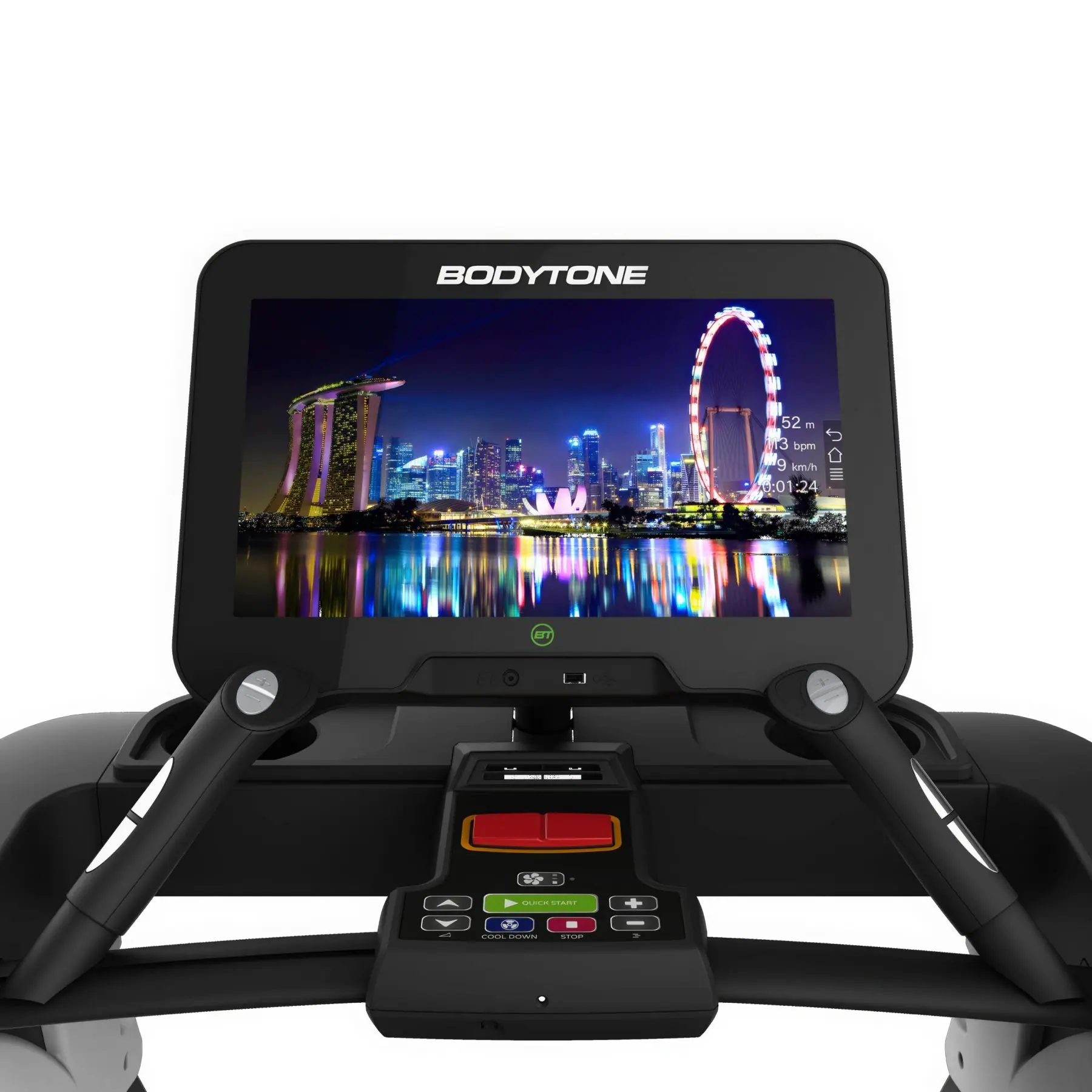
Connected fitness is now a real lever for attracting and keeping members. When specifying bespoke equipment, consider touchscreens, biometric sensors and mobile applications. These let users follow heart rate, energy expenditure or their progress through a personalised programme in real time.
Consider cloud connectivity in parallel: the data collected can be analysed to offer automated recommendations, personalised challenges or virtual coaching sessions. That digital dimension increases the appeal of your offer while giving members precise, motivating performance tracking. Each session becomes an interactive experience rather than a repetition of the last one.
Examples of innovative bespoke equipment
Several operators have already taken the step and installed genuinely novel solutions: electronically adjustable weight benches, or modular treadmills that fold on demand to free up floor area. Each innovation illustrates the flexibility that bespoke equipment allows, and lets you offer training routes that are constantly renewed.
Custom cardio machines
Custom cardio machines change what cardio training can be. Physically, these units are designed to suit the height, posture and pedalling or running cadence of each user. A custom treadmill can adjust incline, speed and cushioning according to previous performance and real heart rate.
Beyond the mechanical settings, connectivity enriches the experience. Predictive training programmes build on the user history and goals, while virtual coaching adjusts difficulty in real time. Integrated sensors measure indicators such as stride cadence or power output, giving precise and motivating feedback.
These machines can also be interfaced with mobile applications or community challenge platforms. Users compete on virtual routes, share statistics and take part in rankings, which reinforces overall engagement. For any club aiming at a premium cardio offer, custom machines are a strong differentiator.
Modular strength equipment
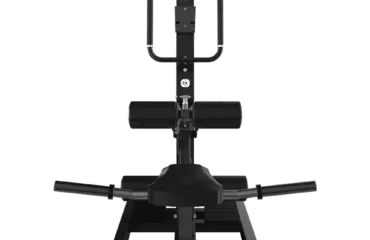
Modular strength equipment is designed to offer an open-ended range of exercise configurations while fitting the space available. Unlike a classic fixed station, these units use interchangeable modules: pulleys, bars, handles and adjustable load supports. A pull-up tower can become a bench press station or a single-arm row in a few minutes.
The main advantage is versatility and better use of the investment. One modular unit replaces several traditional machines, reducing both footprint and acquisition cost. Precise adjustment gives targeted muscular work, whether for the upper body, the lower body or the trunk. Each member can set resistance to their own level, which supports safe and effective progression.
Modularity also helps you optimise training zones: reconfiguring the room according to attendance or the class timetable becomes straightforward. You end up with a varied, dynamic offer that suits both demanding members and occasional users.
Accessories and connected technology
Beyond the machines, connected accessories enrich the experience and complete a bespoke installation. Smart mats measure applied pressure, weight distribution and postural work, giving real-time data that helps correct technique and avoid injury.
Connected suspension trainers integrate force sensors and repetition counters, so each set can be tracked precisely. Bluetooth skipping ropes synchronise with a smartphone to calculate energy expenditure and rotation speed. Interactive mirrors deliver virtual coaching sessions and correct posture through gesture recognition.
Combining these accessories with your custom machines creates a complete, immersive training route. Users get an overall picture that links cardio, strength and mobility inside one connected ecosystem, which supports both performance and long-term commitment.
What operators report after installing bespoke equipment
Several clubs report clear results after installing custom equipment. Modest-sized facilities have increased attendance by making better use of every square metre with modular machines. Others report better retention, particularly where they combined personalised training routes with connected tracking, which strengthens the sense of belonging among members.
Operators also describe longer sessions and a wider spread of machines used, together with fewer complaints of discomfort, which they attribute to ergonomics matched to their own membership rather than to an average user. If you are building a business case, ask your prospective supplier for figures from comparable facilities, with the methodology behind them, rather than accepting general market claims. Reference sites of a similar size and membership profile are worth far more in a board paper than a headline percentage.
Frequently asked questions
Is custom equipment more expensive than standard equipment?
Per unit, usually yes. Per square metre of productive floor, often not, because a modular or purpose-built unit can replace several standard machines and free up circulation space. Compare the two on total installed cost and on the number of members the layout can serve at peak time.
Does bespoke equipment still have to meet a standard?
Yes. Indoor equipment for a facility open to the public is built to EN ISO 20957-1 class S regardless of whether it is a catalogue item or a one-off. Ask for the documentation on the delivered machine.
How long does a custom project take?
It depends on the complexity of the design, the prototyping stage and the production run. Ask for a written programme with the design, prototype, production and installation phases dated separately, and confirm it against your own opening date.
Can custom and standard equipment be mixed?
That is the normal case. Most facilities use catalogue equipment for the core of the circuit and bespoke units where the room shape, the branding or a specific member group requires it.
Securing the future of your facility
Choosing bespoke equipment for your club means investing in the experience you offer and in the long-term viability of the business. By configuring each machine you give members something comfortable and motivating, while making better use of the space you pay rent on.
Do not let your club stand still: differentiate with solutions designed around your objectives and your members. Explore our professional strength training machines, the multi-station gyms and the cardio range to see the base ranges we build from, and the custom rig configurator for an example of configuration in practice. Then send us your floor plan and your brief and we will come back with a design and a cost. Request a quote.