How to Buy Professional Strength Equipment at the Best Price
Nobody wants to be halfway through a repetition under a heavy load and feel the machine give way. That single sentence is most of the argument for buying professional strength equipment properly, and it is why a purchase that looks like a price comparison is really a specification exercise with a price attached.
This guide covers the machine families a commercial buyer has to choose between, what the technical specification actually has to say, what a quality guarantee should cover, and the practical levers that bring the price down without bringing the specification down with it.
The types of strength machine to choose between
Very few buyers get the wish list they started with, and that is fine, because the job is to find the equipment that fits the requirement rather than the equipment that fits the fantasy. Broadly, a commercial strength floor is built from four families.
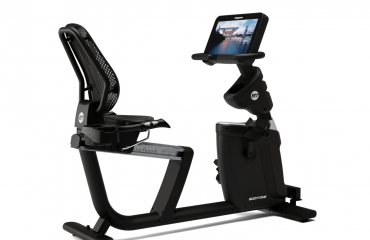
Cardio machines are not strength equipment, but they set the circulation of the room and they compete for the same floor budget, so they belong in the same conversation.
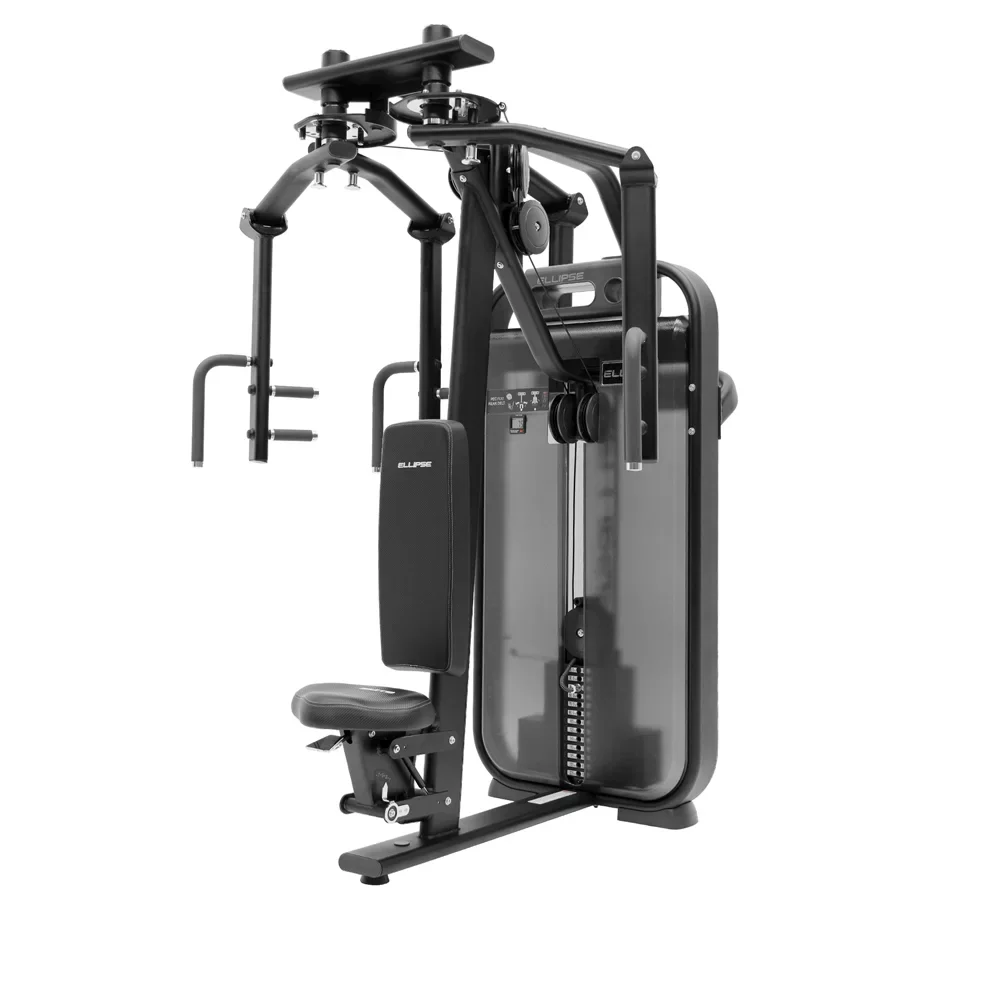
Selectorised machines are the guided, pin-loaded stations. They are the backbone of a general-population room because a member can change load in seconds and cannot deviate from the movement path. Our Gold Line selectorised machines sit in this family.
Squat racks and power racks carry the free-weight work. They cost less per station than a machine and require more supervision, and they are where a strength-focused facility puts its money. The squat racks and power racks range covers the standard commercial configurations.
Plate-loaded and Olympic equipment is the heavy end: converging machines, presses, hack squats. It suits a room with a serious lifting population and the space to give each station its own footprint.
Which of those four your money should go into depends on the membership you actually have, not the one in the brochure. A room serving a general population, a rehabilitation-adjacent clientele or a corporate site leans selectorised. A room serving lifters leans racks and plate-loaded. Most rooms are a mix, and the ratio is the real decision. Our full range of professional strength training machines covers all of it, and our advisers exist to work out that ratio with you rather than to sell you one end of it.
What the technical specification has to say
Marketing language about advanced technology is worth exactly nothing on a purchase order. What matters is what the specification sheet commits to.
Start with the standard. Indoor equipment intended for supervised commercial and institutional use is covered by EN ISO 20957-1 class S. That is what you ask for, and what should appear in writing. Do not accept a lower rating on a commercial floor: it describes a different duty cycle and a different testing regime, and it is not a cheaper version of the same thing. Class I, incidentally, is a professional class covering inclusive access rather than a grade above class S, so if you need equipment usable by people with reduced mobility, raise that as a separate requirement.
Then look at the parts that wear. Frames rarely fail; cables, bearings, upholstery and pads do. Ask what those are made of, whether they are stocked as spare parts, and what the lead time on a spare is. A station out of service for weeks waiting for a pad costs far more than the pad.
Then look at the load path and the adjustment range. A machine that only fits users between two narrow heights will be used by a fraction of your members regardless of how well it is built.
Quality guarantees and what they should cover
Quality standards should be as high as the ambitions of the room they are going into. In practice, that means asking three questions of any supplier.
What exactly is covered, and for how long? Frame, moving parts and upholstery usually carry different terms, and the headline figure normally refers to the frame alone.
What voids it? Commercial use, outdoor placement and third-party parts are the usual exclusions, and a warranty written for anything other than commercial use will not survive contact with a commercial floor.
Who carries out the work? A guarantee that requires you to ship a machine back is a different product from one that sends an engineer.
On the materials side, our strength equipment is designed without harmful components. That is a design statement about what goes into the machines rather than a broad environmental claim, and it is the kind of statement worth asking any supplier to put in writing rather than in an advertisement.
How to get the best price
Buying professional strength equipment without overpaying is entirely possible, and three levers do most of the work.
Compare properly. Comparing prices is always sensible, but compare like with like: the same standard, the same warranty terms, the same spare-parts commitment, the same delivery and installation scope. A quotation that excludes installation is not cheaper than one that includes it, it is just shorter.
Watch the offers. Special offers and reductions come round regularly, so it is worth checking the special offers page and our social channels before committing. Ex-display and end-of-series stations are frequently the same machine at a materially lower price.
Time the order. Buy outside the peak demand periods, which are the back-to-school season and the January resolution rush. You avoid the queue and you buy at a better moment in the cycle. For a facility fitting out a whole room, planning the order well ahead of opening is usually the difference between choosing equipment and taking what is available.
One lever that is not on the list is cutting the specification. A machine bought a class down is not a saving, it is a deferred replacement.
Frequently asked questions
Which standard should commercial strength equipment meet?
EN ISO 20957-1 class S, for indoor equipment in supervised commercial and institutional use.
Does a small club really need class S equipment?
Yes. The classification describes the intended duty cycle, not the size of the room. A small club with unsupervised access still needs equipment specified for commercial use.
How far ahead should equipment be ordered?
Ahead of the peak demand periods, and with enough margin before opening that the choice of equipment is yours rather than the market. Ask for lead times in writing at quotation stage.
What should be in a quotation?
The standard each item meets, the warranty terms per component group, the spare-parts commitment, and whether delivery and installation are included.
How do you decide the mix between machines and racks?
From the membership and the supervision model. General-population and rehabilitation-adjacent rooms lean towards selectorised machines; rooms serving lifters lean towards racks and plate-loaded stations.
Getting a quotation that compares
Choosing professional strength equipment takes time and a certain amount of patience, but the criteria are not mysterious: the right machine families for your membership, a specification that names EN ISO 20957-1 class S, a warranty you have actually read, and an order placed at a sensible moment in the year.
Send us the room dimensions, the membership profile and the budget envelope, and we will come back with a costed equipment list you can compare line by line against anything else on your desk. Request a quote to start.