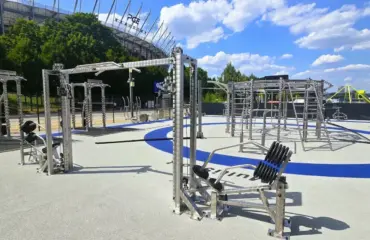
Which strength training machines are best for a professional gym?
There is no single best strength training machine, only the right mix for the floor you are equipping. A hotel fitness room, a municipal facility, a rehabilitation centre and a commercial gym all buy from the same catalogue and end up with very different equipment lists. What follows is how the main families compare, and what each one actually earns its floor space for.
Free weights: the base of every strength area
Dumbbells remain the most heavily used items on any strength floor. They cover upper body work in every direction, from biceps and triceps to chest and shoulders, they suit every level of user, and they occupy very little space per station. Their weakness is supervision: they demand more coaching and more discipline in putting weights back than any other category. Plan the racking at the same time as the weights, not after. See our fitness accessories range.
Benches
Benches are the cheapest way to multiply the number of exercises a strength area supports, which is why they belong in almost every specification. Adjustable models with handles and pulley attachments extend that further and let a single station cover targeted work that would otherwise need a dedicated machine. For a small room, benches are usually the highest return per square metre in the whole budget. See our weight benches.
Selectorised machines: guided load, minimal supervision
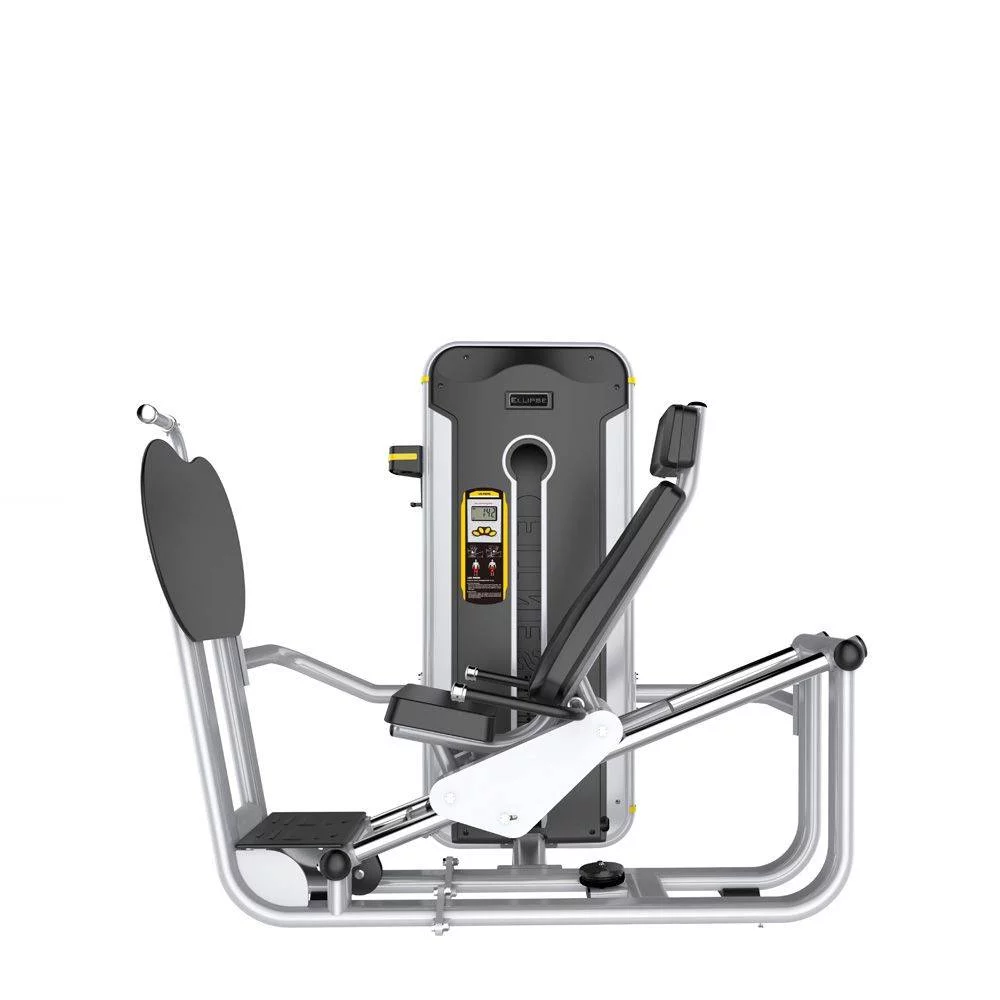
Machines with a guided load are the backbone of most commercial floors, and they are what beginners gravitate to first. The movement path is fixed, the load changes with a pin, and a new member can train a muscle group safely without a coach standing next to them. For any operator whose staffing is thin at off-peak hours, that argument alone justifies the line. Each machine targets a defined group, so the selection is really a question of which groups you want covered and in what order you can afford them. See our strength training machines.
Plate-loaded machines
Plate-loaded machines sit between free weights and selectorised equipment. The movement is guided, but the load is added as discs, which appeals to stronger and more experienced users and keeps the maintenance simple since there is no weight stack or cable to service. They are a common choice in cross-training rooms and in performance-oriented clubs. See our plate-loaded machines.
Multi-stations
A multi-station gathers several machines into one frame so that a single footprint covers most of the body. It is the standard answer for hotels, residential buildings, campsites and company gyms, where floor space is limited, use is unsupervised and the room has to serve very mixed abilities. See our multi-station gyms.
Cardio equipment counts as strength work too
Treadmills, exercise bikes and cross trainers are usually filed under endurance, but they also build and maintain muscle in the lower body while developing cardiovascular capacity. In practice they are also the machines that keep a mixed-ability membership coming back, which is why they normally take the largest share of a first fit-out. See our cardio equipment.
Targeted and specialist stations
Beyond the main families, most specifications end up with a handful of targeted stations. Roman chairs cover core work, step and squat-based stations are the usual request when glute and lower-body work is a selling point of the club, and recovery or electrostimulation devices appear in rehabilitation settings rather than in general fitness rooms. These are add-ons: they are worth buying once the base of benches, guided-load machines and cardio is in place, not before.
How to build the list
Start from the room, the expected number of simultaneous users and the level of supervision available, then allocate the budget in that order: benches and free weights, guided-load machines for the main muscle groups, cardio, then specialist stations. A gym that is short of one family and over-equipped in another always feels wrong to its members, whatever the total spend.
Frequently asked questions
What should a small facility buy first?
Adjustable benches, a dumbbell set with proper racking and a multi-station. That combination covers the whole body in the smallest possible footprint.
Selectorised or plate-loaded?
Selectorised for unsupervised and beginner-heavy floors, plate-loaded for experienced users and for rooms where low maintenance matters more than ease of use. Most commercial gyms run both.
How much cardio versus strength?
It depends on your membership, not on a rule of thumb. Tell us who uses the room and we will propose a split with you.
Get a specification for your project
Send us the dimensions of the room, the type of facility and the profile of your users, and we will come back with a costed equipment list: request a quote.