Which Outdoor Strength Training Machine Is Best?
Une machine de musculation extérieure se juge sur son matériau, son traitement anticorrosion et sa conformité à la norme EN 16630. L'acier galvanisé couvre la majorité des sites, l'inox s'impose en atmosphère saline ou chlorée. Le type de résistance, poids du corps ou charge réglable, se choisit selon le public visé.
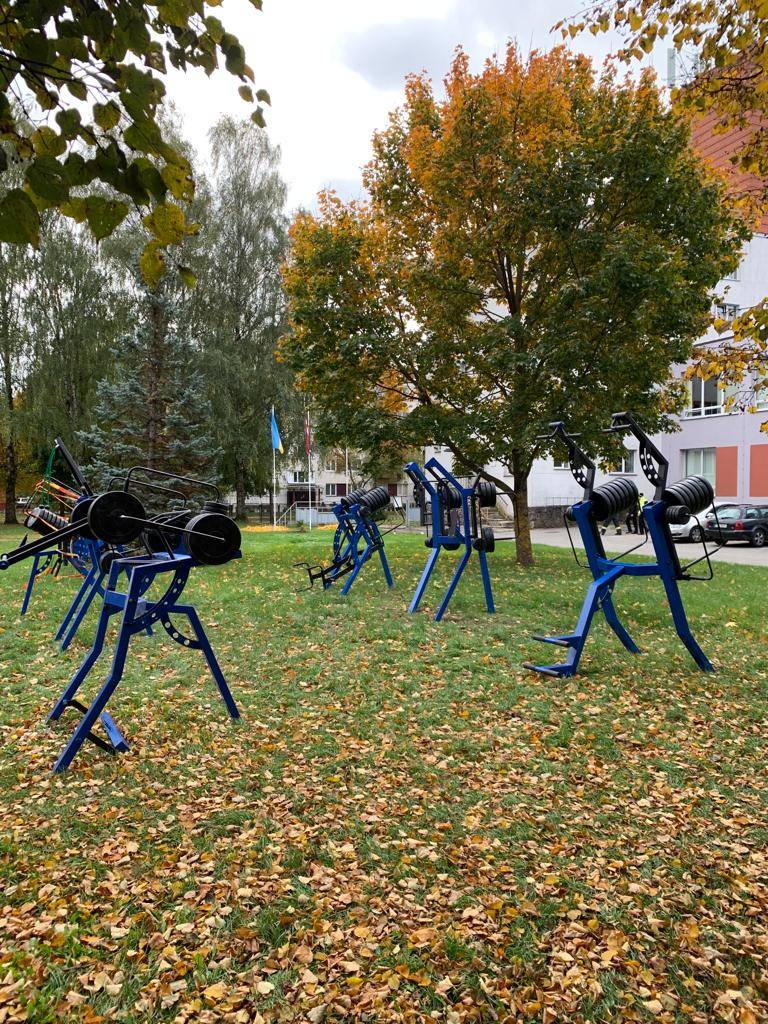
There is no single best outdoor strength training machine, and any supplier who names one without asking about your site is guessing. What exists is a right answer for a given location, a given user group and a given maintenance budget. An outdoor gym on a seafront promenade, a fitness area inside a holiday park and a strength circuit in a school yard are three different specifications built from the same catalogue. This guide sets out the criteria professional buyers actually use.
Start with the site, not the catalogue
Before comparing stations, describe the location honestly: exposure to salt, chlorine or industrial atmosphere, level of supervision, opening hours, expected footfall, and whether the area is overlooked or isolated. Those five points eliminate more product options than any feature list. A machine that performs well in a supervised sports club courtyard may be the wrong choice for an unsupervised public park open around the clock.
The user group matters just as much. A municipal fitness area serving the general public, a hotel or campsite installation used by guests of every ability, and a training circuit for a club or a uniformed service do not need the same resistance ranges or the same station mix. Browse the full outdoor gym equipment range with that profile in mind rather than starting from a favourite machine.
Material and corrosion protection decide the lifespan
Outdoor equipment is judged first on its material and its anticorrosion treatment. Galvanised steel covers the majority of inland sites and remains the standard choice for public parks, schools and sports grounds. In a saline or chlorinated atmosphere the picture changes: coastal promenades, seafront resorts and areas next to swimming pools call for stainless steel, which is why our stainless steel outdoor machines exist as a separate range rather than as an option.
Ask for the treatment to be described precisely, not with a marketing word. Fixings, adjustment pins and bearing points are where corrosion starts, so they deserve at least the same protection as the main frame.
The applicable standard: EN 16630
Permanently installed outdoor fitness equipment for adults falls under EN 16630. Compliance covers the structure, the accessible dimensions, the entrapment risks and the installation conditions, and it is what a public buyer will ask you to evidence. Treat it as a threshold, not a selling point: an installation that cannot be documented against the applicable standard is a liability for the operator, whatever the price looks like on paper.
Body weight or adjustable load
The type of resistance is chosen according to the intended audience. Body-weight stations – pull-up and dip bars, parallel bars, wall bars and multi-purpose frames – suit open-access sites, teenagers and general fitness circuits, and there is nothing to adjust or misuse. Adjustable-load machines make sense where users train with progression in mind: clubs, training circuits, and rehabilitation or conditioning programmes where a set resistance has to be reproduced from one session to the next.
In practice most complete installations mix the two, with a lower-body group of press, squat and leg extension stations, an upper-body group built around pull and push movements, and free structures for calisthenics work. A linear outdoor fitness trail spreads those groups along a route, which suits parks and campsites where the walking distance is part of the offer.
Frequently asked questions
How many stations does an outdoor fitness area need?
It depends on the surface available, the expected simultaneous users and the movement groups you want covered. Rather than a number, work backwards from the layout and the clearance each station requires around it, then confirm the total against the plan.
Does outdoor equipment need impact-absorbing surfacing?
Surfacing requirements follow from the equipment, the fall heights involved and the standard the installation is assessed against, so they are settled at design stage with the layout, not chosen afterwards.
Is galvanised steel enough near the coast?
In a saline atmosphere, stainless steel is the safer specification. Galvanising performs well inland but a seafront site exposes every fixing and joint to continuous salt loading.
Getting to a specification
Send us the site, its exposure, the user group and the surface available, and we will come back with a station mix, the material recommendation and a costed proposal: request a quote.