How to Choose a Professional Strength Equipment Range: Stacks, Cables, Frames and Warranty
A machine can look good, feel heavy and reassure a buyer on the showroom floor, and still age badly. In professional strength equipment everything is decided by the mechanics: what slides, what pulls, what absorbs load, and what stays rigid after tens of thousands of repetitions. A coherent range is also what keeps a facility feeling premium years after opening.
Here are the four criteria that separate a range you will still be happy with in year eight from one you will be replacing in year four.
The frame: the skeleton of the machine
Steel section and wall thickness, weld quality, and stability under eccentric load. A machine that flexes or rocks tires the user, changes the movement path and wears itself out quickly. Look at how the uprights are joined, whether the base is designed to be levelled on an imperfect floor, and how the surface is treated: a properly prepared powder coat survives years of sweat and disinfectant.
Cables, pulleys and weight stacks
Smoothness is not a detail. It determines comfort, the precision of the movement and the service life of the whole assembly. Ask about the cable construction and its rated breaking load, the diameter and material of the pulleys, and whether the pulleys run on sealed bearings rather than plain bushings.
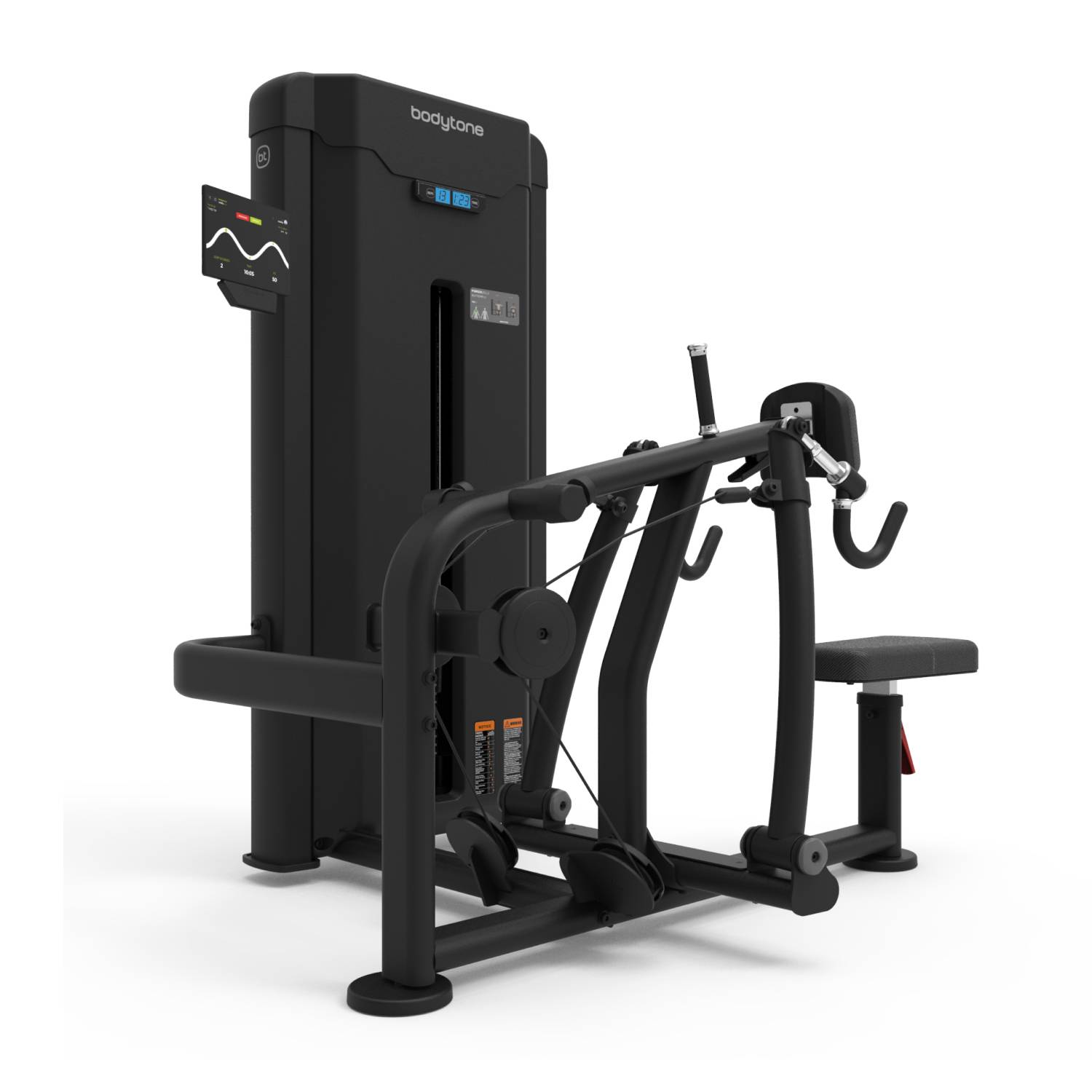
On selectorised machines, look at the stack itself: guide rods and their alignment, the plate material and the way the selector pin engages. Small stack increments matter for beginners and for rehabilitation work, where the jump between two plates can be the difference between a usable machine and an unusable one. Check that the stack is fully shrouded, which is a requirement for equipment used in facilities open to third parties.
Ergonomics: the blind spot
Simple adjustments, a coherent range of motion, and accessibility across body types. A machine that only fits one build serves one part of your membership. Adjustment should be possible from the seated position, marked clearly enough that a member can find their setting without a coach, and repeatable from one session to the next. Pop-pin and gas-assisted adjustments both work; unmarked adjustments do not.
This is also where inclusive access is decided. EN ISO 20957-1 class I is the professional class for equipment designed so that users with reduced mobility can transfer onto and operate the machine. It is a distinct professional class, not a tier above class S, and it is worth specifying deliberately rather than discovering later that no machine on the floor can be used from a wheelchair.
Warranty, parts and service
This is the B2B criterion above all others: parts availability, lead times, the cost of wear parts, and the existence of a service network that can reach your site. Ask how long spare parts remain available after a range is discontinued, whether cables, pads, grips and selector pins can be ordered individually, and what the warranty covers per component group rather than as a single headline figure. This is where operational peace of mind is actually won or lost.
Buy a range, not a shopping list
Machines from the same range share adjustment logic, upholstery formats, cable specifications and spare parts. That means one set of references for your maintenance, one visual identity on the floor, and a consistent experience for a member moving from one station to the next. Four brands on one floor multiply your service references without improving anything the member can feel.
See the professional strength training machines, the selectorised machines and the plate-loaded machines.
Frequently asked questions
Selectorised or plate-loaded?
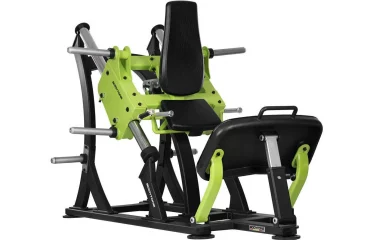
Selectorised machines lower the entry barrier and the supervision load, and they turn over faster in a class setting. Plate-loaded machines suit stronger members and cost less per station. Most commercial floors need both, in a proportion that follows the membership rather than the trend.
What should a quotation state about standards?
The standard and the class in full, for example EN ISO 20957-1 class S for indoor professional equipment. A document naming a standard number without a class is not telling you what you need to know.
How do I compare two ranges fairly?
Test the same movement on both, look at the cable and pulley specification rather than the marketing copy, ask for reference sites of a comparable size and age, and compare warranty terms component group by component group.
Specifying a range?
Light In Fitness has been supplying professional strength and cardio equipment to gyms, clubs, hotels, local authorities, schools and rehabilitation centres since 2013. Send us your floor plan and your membership profile and we will come back with a specified range and a costed proposal. Request a quote.