The 10 Essential Machines to Equip a Gym: From Minimum Viable to Premium
When a new gym opens, the temptation is to build a showroom. A profitable gym starts somewhere else: with a sound base of versatile, heavily used stations that produce results for members. Everything after that is an upgrade, made at the right moment, once attendance and membership profile have given you a clear direction.
This guide sets out that base in two steps: seven core stations that constitute the minimum viable floor, and three premium moves that turn a functioning gym into a distinctive one.
The minimum viable base
The objective here is to secure profitability with high-turnover stations that serve the widest possible range of member profiles, without leaving gaps in what people can programme.
The seven stations you cannot skip
- Dual cable crossover – total versatility: upper body, core work, accessory movements from one footprint.
- Lat pulldown – assisted pulling, back and lats, immediately accessible to beginners.
- Seated row – horizontal pulling for posture and complete back development.
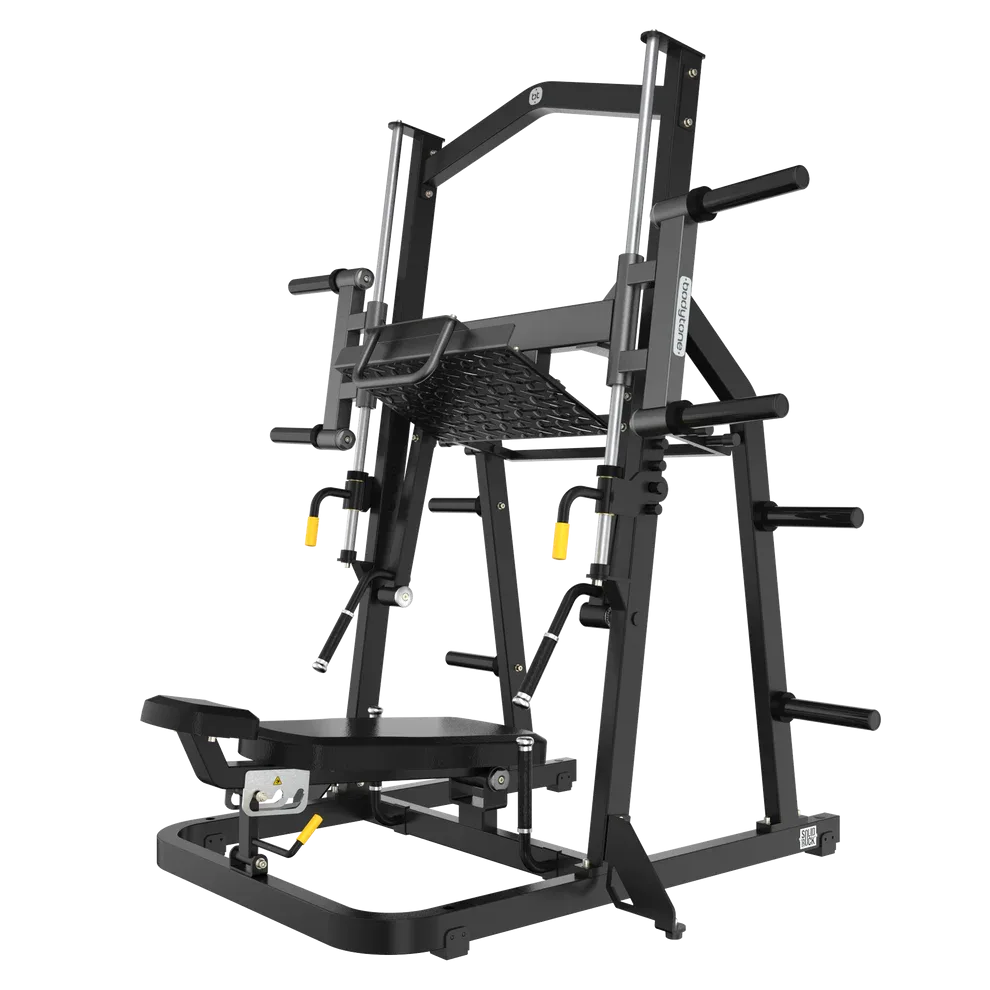
- Leg press, or an equivalent leg station – volume, safety and clear progression for the lower body.
- Adjustable benches – presses, dumbbell work, a range of angles from a single item.
- Rack or Smith machine – the choice depends on your positioning, your supervision model and your coaching offer.
- A free-weight dumbbell area – basic, but indispensable: fast, measurable results.
Most of these stations are available as guided-motion equipment, which is what a mixed and largely self-directed membership needs. The selectorised machines range covers the pulling and pressing stations above with a weight stack, and the squat racks and power racks range covers the rack decision.
Practical note. If you have to cut the budget, do not cut versatility. Cut the highly specific equipment first: a single-purpose machine that serves one movement is the easiest thing to add later, and the hardest to justify on day one.
The premium base
The objective changes here. You are moving up in order to create a more distinctive experience, to segment usage more precisely, and to raise perceived value, which is what feeds retention.
The three moves that actually change things
- More specific machines – converging machines and plate-loaded stations, which deliver the loading feel experienced members look for. See the plate-loaded machines range.
- A genuinely complete leg zone – quadriceps, hamstrings, glutes and calves each covered by a dedicated station rather than by one compromise machine.
- Signature stations – one to three machines that give the gym an identity and that members talk about elsewhere.
Practical note. Premium does not mean immediately. It means at the right time, once you know your public and your peak hours. A premium station installed before you understand your traffic is capital parked in the wrong corner of the floor.
The reasoning that prevents mistakes
Before stacking up machines, think in two passes: movement patterns first, then member profiles. That sequence is what stops you ending up with a good-looking gym that is impractical to train in.
1. Reason by movement pattern
- Pushing – chest, shoulders, triceps
- Pulling – back, biceps, posture
- Legs – strength, volume, safety
- Core – stability and injury prevention
- Cardio – conditioning, energy expenditure, general health
Every one of those five has to be covered before any of them is covered twice. A floor with three chest stations and no dedicated core provision reads as unfinished to anyone who trains regularly.
2. Reason by member profile
- Beginner – safety, easy set-up, guided movement
- Regular – progression, variety, comfort
- Advanced – load, performance, specificity
The mix between these three decides how much of your floor is selectorised and how much is free weight and plate-loaded. It is a commercial decision as much as a technical one.
Equipment is only half of it: layout
Good equipment also needs a good layout: circulation, safety and coherent zones. That is usually what separates a busy gym from a gym that actually works.
What layout optimisation covers
- Flow – entrances and exits, peak-time congestion, access to each zone
- Safety – spacing, clearances, dedicated free-weight areas
- Training logic – pushing, pulling and leg stations grouped so a session flows without crossing the room
- Experience – zones that draw people in, with high-turnover stations positioned where they do not create bottlenecks
A note on specification
Whatever the budget level, indoor equipment for a supervised commercial gym is specified to EN ISO 20957-1 class S. That is the professional class for equipment installed where members train without individual instruction, and it applies as much to the minimum viable base as to the premium one.
Frequently asked questions
Where do I start if the budget is tight?
Start with the versatile, high-turnover stations: cable crossover, pulldown and row, benches, rack or Smith, and dumbbells. Specific equipment comes afterwards, once you know your membership.
Rack or Smith machine to begin with?
It depends on your positioning: your supervision and coaching model, the average level of your members, and safety. Many gyms start with whichever is simplest to run day to day with the staff they actually have.
What separates a good-looking gym from a profitable one?
A combination: heavily used stations, fluid circulation and coherent zones. A good layout increases turnover per station, reduces friction and improves the member experience.
Does the premium base have to be bought at opening?
No. It is normally phased in once attendance data shows which zones saturate and which member profile dominates.
Building your equipment plan
An equipment plan is the intersection of three things: your budget, your floor area and your target membership. Send us those three and the base is specified around them, with the premium upgrades sequenced rather than bundled. Request a quote and a specialist will come back with a costed plan and a layout proposal.