The Seated Machine Biceps Curl: A Complete Guide for Operators
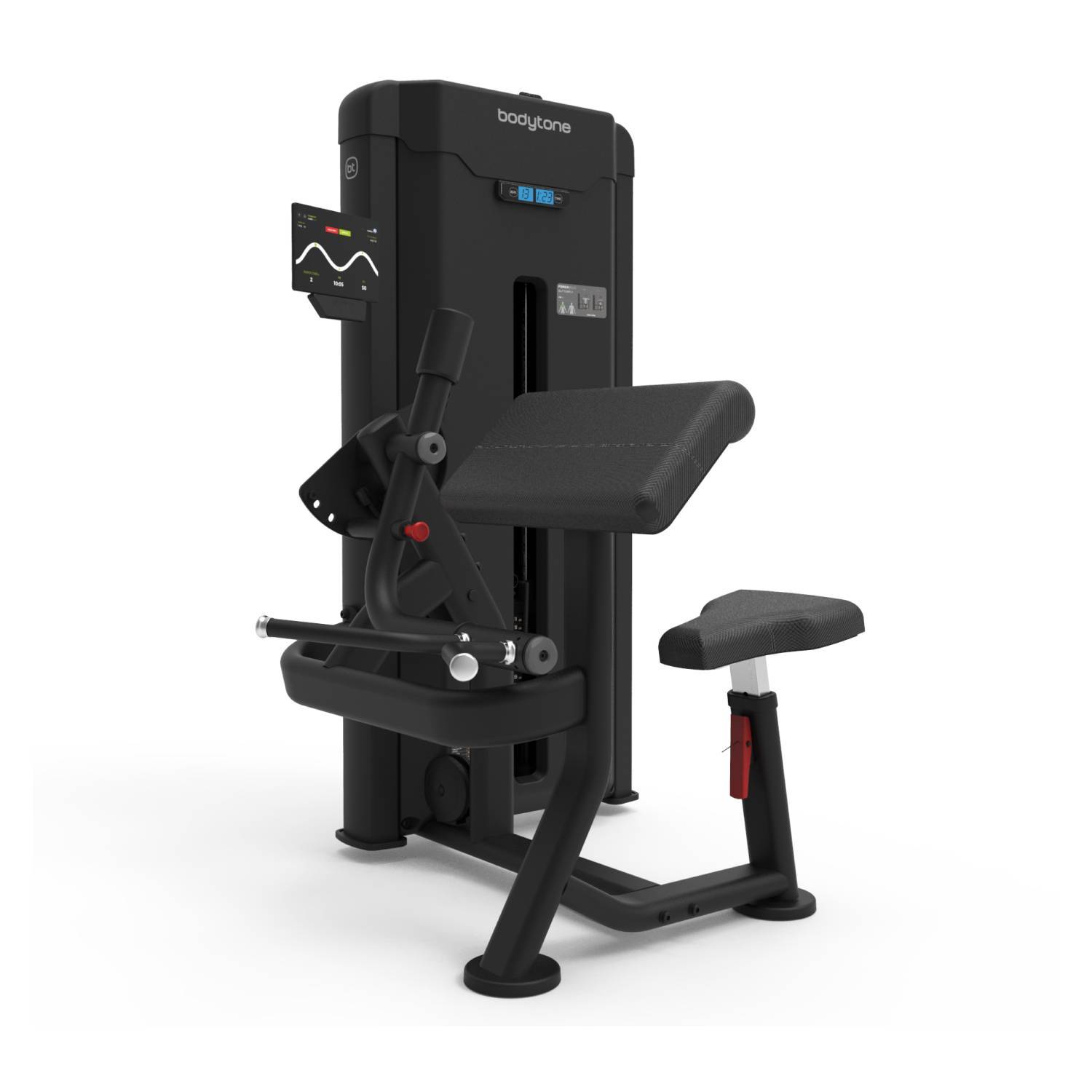
The seated machine biceps curl is one of the most requested isolation stations on a strength floor, and one of the most misused. Fixed on a pad, with the upper arm supported and the movement path guided, it removes the swing and the hip drive that a free-weight curl invites. For an operator, that means a station beginners can use unsupervised and experienced members can load heavily without a spotter. This guide covers what the machine does, how to set it up, and how it earns its square metres.
Why specify a seated biceps curl station
The value of the machine is selective isolation. The seat and the angled pad fix the shoulder and the elbow, so the load is taken by the elbow flexors rather than distributed into the trunk. Nothing can be cheated: if the weight is too heavy, the repetition simply stops, which is exactly the behaviour you want on a floor where not every user is coached.
That predictability is why the station appears in almost every commercial specification, from hotel and residential gyms to clubs and rehabilitation rooms. It delivers a controlled arm exercise with a short learning curve, low injury exposure and no floor space taken by dropped weights. On a guided-load machine the weight stack also makes progression legible for the member and for the instructor writing the programme.
Setting the machine up correctly
Four adjustments decide whether the exercise works, and all four belong in your induction script.
- Load selection. Start below the assumed working weight and build up. On an isolation movement, a load that forces the shoulder forward has already defeated the purpose of the machine.
- Seat height. The most neglected setting and the one that matters most. The seat is set so the elbow sits in line with the pivot of the lever arm; too low and the shoulder rounds forward, too high and the range of motion is lost.
- Grip. Hands close on the handles with the wrists neutral, not gripping loosely and not hyperextended.
- Execution. Controlled throughout, with the back supported and the chest open.
An instructor who checks seat height before load will prevent most of the technique faults seen on this station.
Coaching points that improve results
Three cues cover most of what members need to hear. Contract deliberately at the top of the movement rather than snatching the handle up. Resist on the way down instead of letting the stack fall, because the lowering phase is where much of the training effect sits. Keep the back against the pad and the chest open, so the shoulder does not creep forward as fatigue arrives.
Unilateral work is the useful progression. Training one arm at a time, starting with the weaker side, corrects the imbalance that a two-handed movement hides. It also doubles the time a single station is occupied, which is worth knowing when you plan how many units the floor needs at peak hours.
Complementary arm exercises on the same floor
The seated machine curl works best as part of a group of movements rather than alone. The barbell curl remains the simple, high-return classic. The concentrated curl isolates one arm and is unforgiving of poor technique, so it suits supervised sessions. The EZ-bar preacher curl adds a fixed pad and a wrist position that many members find more comfortable. The drag curl performed on a Smith machine gives a guided path with a different line of pull. A floor that offers a curl machine, a preacher bench and free weights covers every level of user without duplicating equipment.
Frequently asked questions
Does the machine replace free-weight curls?
No. It complements them. The machine gives a safe, guided path for unsupervised and beginner users; free weights add stabiliser work for experienced members.
How much floor space should be allowed?
Allow for the machine footprint plus seated access and circulation behind it. Isolation stations are usually placed along a wall run, which keeps the central floor free for compound work.
What should be checked during servicing?
Cable and pulley condition, pad stitching, the seat adjustment mechanism and the weight stack guide rods. On a station used continuously, pads and cables are the consumables.
Is one unit enough?
For a small facility, usually yes. Where members train in pairs or where unilateral work is programmed, occupancy time per user rises sharply and a second arm station is worth considering.
Specifying the station
Choose equipment declared in class S under EN ISO 20957-1: the frame, the bearings and the cable runs are dimensioned for a full opening day rather than occasional use. Our Bodytone Forza FH range includes the FH30 biceps curl station, and the wider selectorised machine range lets you match the rest of the arm and upper-body line to it. Send us your floor plan and expected attendance and we will size the strength line accordingly: request a quote.
À lire aussi sur le même thème
- Entraînement avec un médecine-ball – avantages, les meilleurs exercices pour l’abdomen et les arts martiaux
- 8 Meilleures Huiles Naturelles pour une Peau Saine et Rayonnante
- Optimiser vos Performances Sportives : Les Meilleurs Exercices pour Sculpter le Bas de votre Corps
- Progressive Overload: Programming Real Strength Progress in Your Facility