The best gym machines for a commercial facility
Le choix d'une machine dépend de l'objectif et du niveau d'encadrement, pas de la sophistication de l'appareil. Machines guidées pour une pratique autonome, charges libres pour la force et la stabilisation, cardio pour la dépense énergétique. La classe d'usage doit correspondre à la fréquence réelle d'utilisation.

The best gym machines: building an equipment mix that works
The right machine depends on the objective and on how supervised the training is, not on how sophisticated the equipment looks. Guided machines carry unsupervised practice, free weights build strength and stabilisation, cardio drives energy expenditure. Above all, the usage class has to match the real frequency of use. This guide walks through the machine families a commercial facility relies on, what each one contributes, and how a buyer should decide the mix.
Cardio: the volume of the room
Treadmills
The treadmill remains the most used station in almost every facility, from brisk walking to sprint work, and it suits every level of fitness. Recent commercial models carry preset programmes, interactive displays and heart rate monitoring. It is also the station with the highest maintenance load in a commercial room: belt, deck and motor are the wear path, and the deck specification is what decides whether a machine survives continuous use. Where a facility serves rehabilitation or senior populations, low starting speed and handrail design matter more than top speed.
Cross trainers
The cross trainer combines movements from running, cross-country skiing and cycling, loading the upper and lower body at once while minimising joint impact. Multiple resistance levels and incline options let one machine cover very different sessions, from steady cardio to interval work. In a mixed facility it is the station members with joint problems can still use, which is why it earns its floor space even where the treadmill count is high.
Rowing machines
The rower is consistently underrated. It recruits close to 85% of the body musculature and burns a significant number of calories in a short time, and the smooth movement keeps the injury risk low. It scales from beginner to experienced athlete on the same machine, which is exactly what a commercial room needs from a station that will be used by everyone. Rowers are also the cheapest way to add high-intensity capacity to a small cardio area.
Exercise bikes
Upright and recumbent bikes are the easiest cardio stations to use correctly without instruction, which makes them the default in hotels, corporate gyms and rehabilitation settings. Resistance adjustment, heart rate sensors and performance displays are standard on commercial ranges. Recumbent versions extend the population that can train safely, and belong in any room serving older or deconditioned members.
Strength: guided stations and multi-station gyms
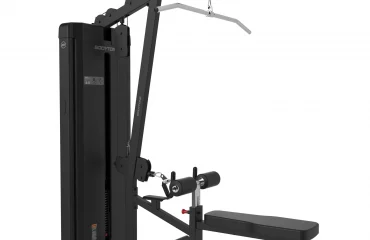
Multi-station gyms bring several exercises into one frame: press stations, cable columns, pull-up bars and more. They are the right answer where floor area is limited and where several members need to train at once without a coach on the floor, which describes most hotel and corporate installations. In a larger commercial gym they complement rather than replace individual stations, because a busy floor needs machines that can be used in parallel rather than one frame that queues.
| Family | What it delivers | Best suited to | Catalogue |
|---|---|---|---|
| Treadmills | Walking to sprinting, highest usage rate | Clubs, hotels, rehabilitation | Treadmills |
| Cross trainers | Full body cardio, no impact | Mixed populations, joint-sensitive members | Cross trainers |
| Rowing machines | High intensity, near full body recruitment | Functional areas, small cardio zones | Rowing machines |
| Multi-station gyms | Several exercises in one footprint | Hotels, corporate gyms, compact rooms | Multi-station gyms |
How to decide the mix
Start from the objective of the facility rather than the catalogue. Ask who trains here, at what hours, with how much supervision, and what the peak-hour headcount is. A hotel gym used by twenty guests a day and a club with three hundred members at peak do not need the same equipment, even when they occupy the same floor area.
- Objective. Cardio, strength, or both, and in what proportion for your actual membership.
- Space. Usable floor area after circulation, ceiling height, column positions, and access for delivery and service.
- Usage class. Indoor stationary training equipment for supervised commercial use falls under EN ISO 20957-1 class S. Class I is a professional class for inclusive access, a different scope rather than a higher grade.
- Supervision. The less staffed the room, the more it should lean on guided machines that are safe to use without instruction.
- Budget over the life of the equipment. Purchase price, wear items, spare parts availability and who carries out the service.
Getting the most out of the installation
Equipment that is well specified and badly maintained ends up in the same place as equipment that was badly specified. Clean machines after use to remove sweat and dirt, lubricate moving parts according to the manufacturer instructions, and check screws and bolts regularly so mechanical play is caught before it becomes damage. In a commercial facility this belongs in a written maintenance schedule with a named owner, not in a general intention.
Frequently asked questions
Which machines are best for cardio?
Treadmills, cross trainers and exercise bikes cover the range: the treadmill adapts to every intensity level, the cross trainer engages upper and lower body at once, the bike suits beginners and advanced members alike. All three improve cardiovascular health and drive energy expenditure.
What suits a facility with limited floor area?
A multi-station gym, which delivers several exercise types in one compact footprint. Pair it with one or two cardio stations chosen for the population rather than for the specification sheet.
What can be trained on a rowing machine?
Pulling work for the back and shoulders, leg drive for the thighs and calves, and cardiovascular endurance. It is one of the few stations that covers all three in the same movement.
How is the number of stations decided?
From peak-hour attendance and the layout study, not from a ratio. Count the members present at the busiest hour, decide what proportion of them will be on cardio, and size from there.
Specifying your equipment mix
Light In Fitness supplies professional cardio, strength and functional ranges to gyms, hotels, clubs, municipalities, schools, rehabilitation units and armed forces, and has equipped commercial facilities since 2013. Send the floor plan, the peak-hour attendance and the member profile, and the mix can be sized around them. Request a quote for a costed proposal.